7 Proven Benefits of Manual Handling Training in Dubai for Teams
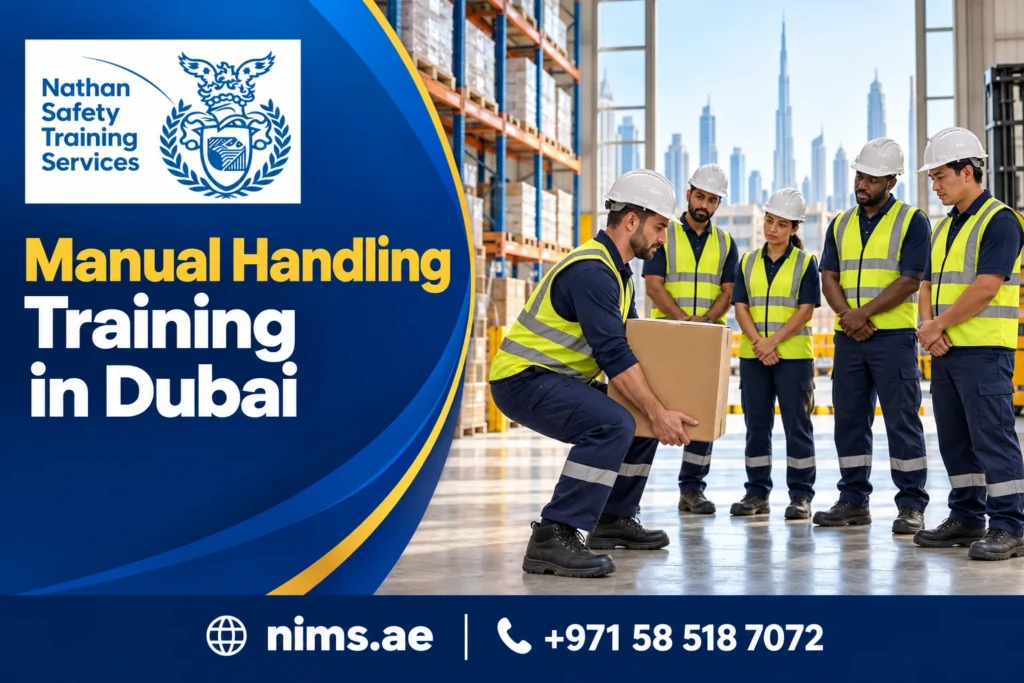
Manual Handling Training in Dubai helps companies cut lifting injuries, lower sick leave, and keep their sites compliant. If your teams lift, carry, push, or pull loads every day, this training is one of the smartest safety investments you can make.
This guide is written for business owners, HR managers, and HSE managers in the UAE. It explains seven clear benefits your company gets when employees are trained properly and how NIMS delivers the training for your whole team.
In this article, you will learn:
- What manual handling training covers and why it matters for UAE employers
- The 7 proven benefits for your teams and your business
- Which industries and job roles need it most
- How NIMS trains your employees and returns them to work certified and job-ready
What Is Manual Handling Training and Why Does It Matter in the UAE?
Manual handling means moving any load by hand or body force. That includes lifting, lowering, carrying, pushing, pulling, and holding.
A manual handling course in Dubai teaches workers how to do these tasks without hurting themselves. It mixes short theory with hands-on practice, so people learn by doing.
Why it matters for employers in the UAE:
- Lifting and carrying are among the most common causes of back, shoulder, and knee injuries at work.
- Many sites in Dubai run on heavy physical work: construction, warehousing, logistics, hospitality, and facility management.
- Hot weather adds fatigue, which raises the chance of strains and poor lifting posture.
- Main contractors, free zones, and large clients often ask suppliers to show proof of safety training before work starts.
In short, untrained lifting is a hidden cost. It shows up later as injuries, sick days, delays, and lost contracts.
7 Proven Benefits of Manual Handling Training in Dubai for Your Teams
Here is what changes when your employees complete structured, practical training.
1. Fewer Workplace Injuries
The first and biggest benefit is workplace injury prevention. Most lifting injuries happen because of poor posture, rushing, or loads that are too heavy for one person.
Training teaches workers to:
- Check the load before lifting it
- Use safe lifting techniques such as bending the knees and keeping the load close
- Ask for help or use equipment when a load is too heavy
- Avoid twisting while carrying
Fewer injuries mean fewer first aid cases, fewer incident reports, and less stress for supervisors.
2. Lower Risk of Long-Term Back and Joint Problems
Not every injury happens in one moment. Repeated poor lifting slowly damages the back, neck, and shoulders.
These are called musculoskeletal disorders (MSDs). They often lead to long sick leave and, in some cases, workers who can no longer do physical jobs.
Good training builds healthy habits early, so your experienced staff stay fit and stay with you longer.
3. Reduced Costs for Your Business
Every injury costs money, even small ones. Think about:
- Medical bills and insurance claims
- Paid sick leave
- Overtime or temporary staff to cover absences
- Project delays and missed deadlines
A one-time training investment is far cheaper than repeated injury costs. Many companies see the return within months through fewer lost workdays.
4. Stronger Compliance With Client and Regulatory Requirements
UAE employers have a duty to provide a safe workplace. Training is a key part of meeting HSE compliance in UAE projects and audits.
Trained, certified staff help you:
- Pass client and main contractor safety audits
- Meet free zone and authority expectations
- Show records during ISO 45001 or internal HSE reviews
- Qualify for tenders that require proof of safety training
When a client asks for training records, you can share them right away.
5. Better Productivity and Fewer Delays
Safe workers are often faster workers. When people know the right way to lift, they waste less energy and make fewer mistakes.
You also get:
- Fewer damaged goods from dropped loads
- Smoother teamwork during team lifts
- Less downtime after incidents
This matters most in warehouses, logistics hubs, and busy construction sites where every hour counts.
6. A Stronger Safety Culture Across Teams
Training does more than teach lifting. It changes how people think about safety.
After training, employees are more likely to:
- Speak up when a task looks unsafe
- Report near misses early
- Remind co-workers to lift correctly
This kind of workplace safety culture reduces risk across every task, not just manual handling.
7. Higher Staff Morale and Retention
Workers notice when a company invests in their health. It builds trust and loyalty.
Teams that feel safe tend to:
- Stay longer with the company
- Take fewer unplanned days off
- Work with more confidence
For HR managers, that means lower hiring and onboarding costs over time.
Which Industries and Job Roles Need It Most?
Any team that moves loads by hand needs this training. In Dubai, demand is highest in these sectors:
- Construction and civil engineering: laborers, helpers, steel fixers, and masons (construction safety training)
- Warehousing and logistics: pickers, packers, loaders, and storekeepers (warehouse safety training)
- Facility management: cleaners, technicians, and maintenance crews (facility management safety training)
- Hospitality and events: housekeeping, kitchen, banquet, and setup teams (hospitality safety training)
- Healthcare: nurses, porters, and patient care assistants (healthcare safety training)
- Food manufacturing and retail: production line staff and shelf stockers (food manufacturing safety training)
- Data centers and MEP: technicians moving servers, panels, and equipment
Office teams can benefit too. Moving files, printers, and furniture causes more back strain than most people expect.
If your company works across several of these areas, corporate safety training in Dubai that covers many roles in one program saves both time and budget.
What Does the Training Cover?
A good program is practical, short, and easy to follow, even for workers with basic English. Core topics usually include:
- What manual handling is and common injuries it causes
- Basic body mechanics: how the spine, muscles, and joints take load
- Manual handling risk assessment using the TILE method (Task, Individual, Load, Environment)
- Step-by-step safe lifting, lowering, and carrying
- Safe pushing and pulling of trolleys, pallets, and carts
- Team lifting and clear communication during shared lifts
- Using mechanical aids such as trolleys, hand pallet jacks, and hoists
- Posture, stretching, and ergonomics in the workplace
- Employer and employee responsibilities
- Hands-on practical sessions with real loads
At NIMS, Manual Handling Training in Dubai blends live, interactive lessons with practical drills. Trainers are experienced professionals from the industries they teach, so examples match your actual worksite.
How NIMS Trains Your Team: A Simple Process for Companies
NIMS works directly with companies. You send your employees, we train them, and they return to your site certified and ready to work safely.
Here is how it works:
- Share your requirements: tell us the number of employees, their job roles, and your preferred dates.
- Get a tailored plan: we match the course content to your industry and the loads your team handles.
- Schedule group batches: sessions are planned around your shifts to keep operations running.
- Train with a practical focus: experienced trainers deliver theory and hands-on practice.
- Receive certified employees: each trained worker gets a certificate, and you receive records for audits and client submissions.
Why companies in the UAE choose NIMS for HSE training in Dubai:
- Trainers with real industry experience, not just classroom knowledge
- ISO 9001, ISO 14001, and ISO 45001 certified organization
- Trusted by brands such as Al Habtoor, Gargash, Daikin, TK Elevator, and Binghatti
- One partner for many courses, from first aid and fire safety to forklifts and working at height
- Need safety staff too? NIMS also provides HSE manpower supply for projects across the UAE
Every trained employee leaves with manual handling certification, giving your HSE team clear proof of competence.
Signs Your Company Needs This Training Now
Not sure if it is the right time? Book training soon if any of these sound familiar:
- Workers often complain of back, neck, or shoulder pain
- You have had lifting-related incidents or near misses this year
- New hires are joining without any safety induction
- A client or main contractor has asked for training certificates
- You are preparing for an ISO 45001 or safety audit
- Goods are frequently dropped or damaged during handling
- Sick leave is rising in your operations or warehouse team
Even one of these points is a signal. Acting early is always cheaper than dealing with an injury later.
To strengthen your overall program, pair this course with forklift operator training and hazard and risk assessment training.
Frequently Asked Questions
Is manual handling training mandatory in Dubai?
UAE employers must provide a safe workplace and train workers on the risks of their jobs. Many clients, main contractors, and free zones also require proof of training before work starts. For any team that lifts or carries loads, it is treated as a basic requirement.
How long does the course take?
Most manual handling courses run from a few hours to one day. The exact duration depends on your team size, job roles, and how much practical work you need. NIMS confirms the schedule when planning your batch.
Can you train a large group of employees at once?
Yes. NIMS plans group batches for companies and can split large teams across several sessions so your operations keep running.
Do employees receive a certificate?
Yes. Each employee who completes the course receives a certificate. Your company also gets training records for audits and client submissions.
Who should attend?
Anyone who lifts, carries, pushes, or pulls loads at work. This includes laborers, warehouse staff, cleaners, technicians, kitchen teams, healthcare staff, and supervisors.
How often should employees be retrained?
Refresher training is commonly done every one to three years. Retrain sooner after an incident, a change in tasks, or new equipment. This keeps your employee safety training in UAE up to date.
Does NIMS offer other courses for the same team?
Yes. NIMS offers a wide range of HSE courses, including first aid, fire safety, working at height, forklift, rigging, and confined space training. Combining courses for one team saves time and keeps all records in one place.
Protect Your Team and Your Business: Book Your Training Today
Manual Handling Training in Dubai gives your company seven clear wins: fewer injuries, fewer long-term health problems, lower costs, easier compliance, better productivity, a stronger safety culture, and happier staff.
The sooner your team is trained, the sooner you see the results.
NIMS makes it simple for companies:
- Send your employees for training
- We train them with practical, industry-focused sessions
- They return to your site certified and job-ready