Home / Manual Handling Training
Manual Handling Training In dubai, abu dhabi & Across the Uae
Manual Handling Training in Dubai, Abu Dhabi & Across the UAE
Manual handling is a normal part of work in many industries. Employees may need to lift boxes, carry materials, move equipment or push trolleys as part of their daily tasks. When these activities are done incorrectly, they can cause back pain, muscle strain and other injuries.
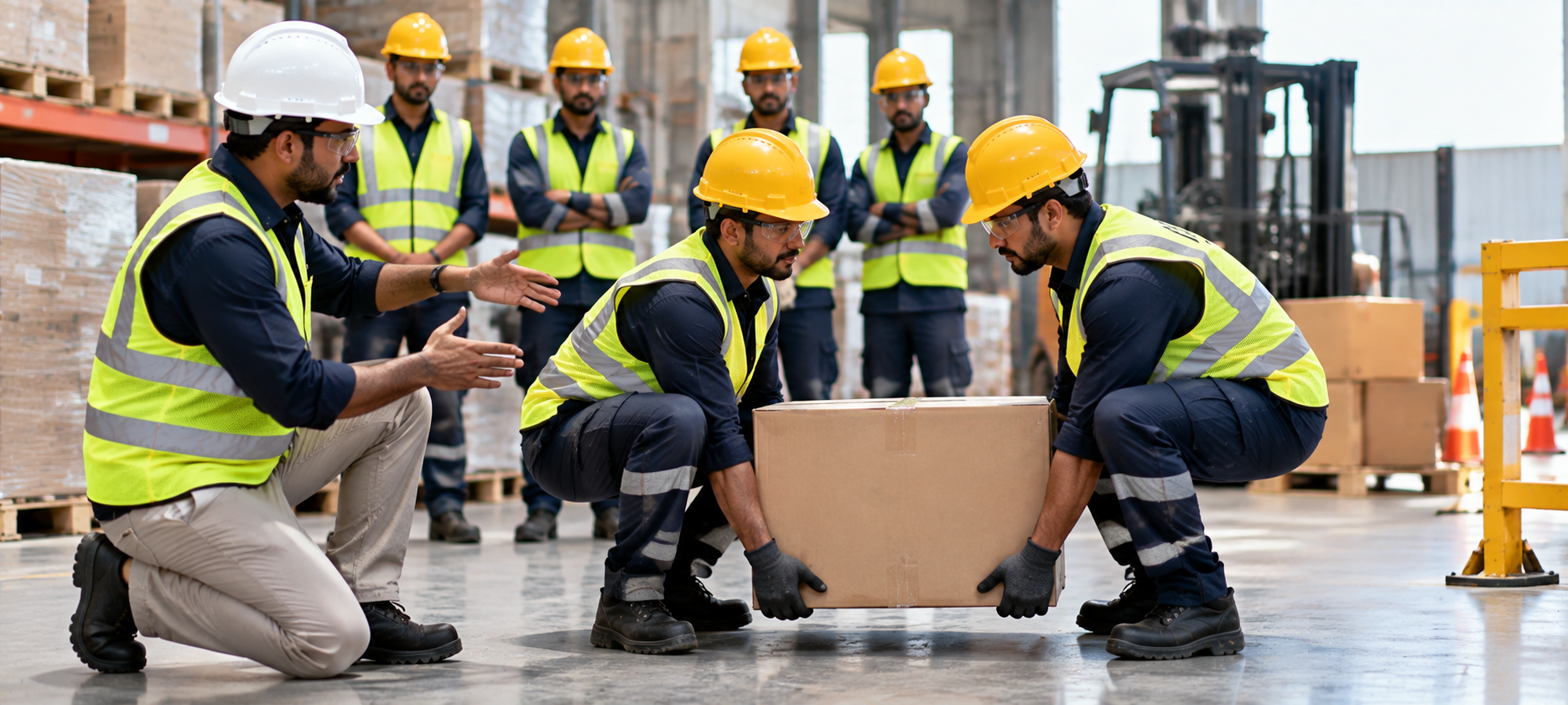
NIMS provides Manual Handling Training in Dubai, Abu Dhabi and across the UAE for employees who are involved in lifting, carrying, pushing, pulling or moving items at work.
The training focuses on simple and practical ways to handle loads safely. Employees learn how to lift properly, avoid unnecessary strain and reduce the chances of injury during their day-to-day work.
Why Manual Handling Training Is Important
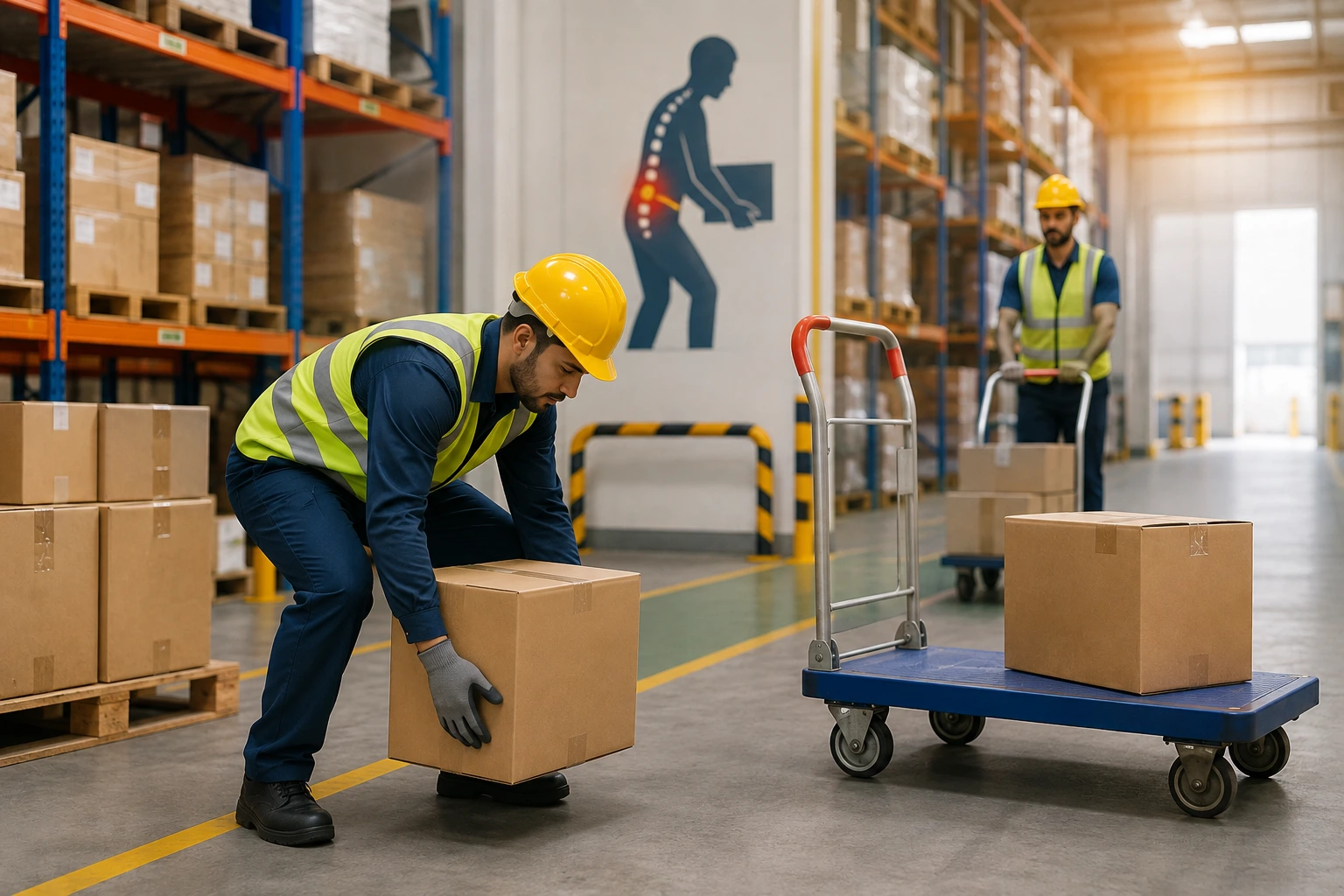
Manual handling injuries do not always happen because of one heavy lift. Many injuries develop gradually through repeated lifting, poor posture, twisting, awkward movements or handling loads that are difficult to control.
Employees may also get injured when they try to lift something alone that should have been moved using mechanical assistance or with the help of another person.
Proper Manual Handling Training in the UAE helps employees recognise these risks before starting a task.
Good training can help reduce the chances of:
- Back injuries
- Muscle strains and sprains
- Shoulder injuries
- Neck pain
- Hand and wrist injuries
- Joint problems
- Slips, trips and falls while carrying loads
- Injuries caused by dropped objects
- Long-term musculoskeletal disorders
The aim is simple: assess the load first and use the safest practical way to move it.
What Is Manual Handling?
Manual handling includes more than lifting.
It can involve:
- Lifting
- Lowering
- Carrying
- Pushing
- Pulling
- Holding
- Moving
- Supporting
- Repositioning loads
A load may be a carton, tool, machine component, hospital supply, furniture item, housekeeping trolley, luggage, food container, construction material or any other object handled by an employee.
The risk depends on the weight and shape of the load, the employee’s posture, the distance involved, how often the task is repeated and the condition of the workplace.
What You Will Learn
The NIMS Manual Handling Training Course introduces participants to common lifting and handling risks through simple explanations and practical demonstrations.
In healthcare environments, manual handling awareness can benefit support staff handling equipment, supplies and materials. Where patient handling is involved, organisations may require additional specialised patient-moving procedures and training.
The course is also relevant to:
- Construction and contracting
- Oil and gas
- Petrochemical industries
- Manufacturing
- Warehousing and logistics
- Facility management
- Hotels and hospitality
- Hospitals and healthcare
- Retail and supermarkets
- Food production
- Restaurants and catering
- Automotive workshops
- Aviation and airports
- Marine and ports
- Utilities
- Data centres
- Offices and commercial buildings
- Residential communities
- Schools and educational facilities
- Maintenance and engineering companies
- E-commerce and distribution centres
Manual Handling Training Across the UAE
NIMS supports organisations looking for Manual Handling Training in Dubai, Manual Handling
Training in Abu Dhabi, Manual Handling Training in Sharjah, Manual Handling Training in Ajman,
Manual Handling Training in Ras Al Khaimah, Manual Handling Training in Fujairah, Manual Handling
Training in Umm Al Quwain and Manual Handling Training in Al Ain.
Training can support companies operating in major commercial, logistics and industrial locations
such as Jebel Ali, JAFZA, Dubai Investment Park, Dubai South, Al Quoz, Dubai Industrial City, Dubai
Logistics City, Business Bay, Mussafah, KEZAD, Ruwais, Hamriyah Free Zone, Sharjah Industrial Area,
SAIF Zone and other locations across the UAE.
Corporate and workplace training can also be particularly useful for companies with large
workforces who need a consistent approach to safe lifting and material handling.
Manual Handling, Ergonomics and Safe Lifting
Manual handling and workplace ergonomics are closely connected.
Employees who spend long periods bending, reaching, carrying or working in awkward positions can
place unnecessary strain on the body even when the objects being handled are not particularly
heavy.
For this reason, Manual Handling and Ergonomics Training should encourage employees to think
about the entire task, not only the weight of the load.
Before moving an item, employees should consider where it needs to go, whether the pathway is
clear, whether assistance is needed and whether equipment such as a trolley or lifting aid would
make the task safer.
Courses Offered
- First Aid Course - CPR and AED
- Confined Space
- Fire Safety Awareness
- Scaffolding Inspection
- Scaffolding Erection & Dismantling
- Flagman Safety
- Chemical Safety and Handling Training
- Hazard and Risk Assessment
- Rigging and Slinging Training
- Traffic Safety
- Hand and Power Tools Operator
- Electrical Safety
- Lock Out and Tag Out (LOTO)
- Accident Incident Investigation
- Lifeguard Training
- Advanced Risk Assessment & Compliance Service
- Behavior-Based Safety Workplace Safety Consulting
- Construction Site Safety Induction Training
- Emergency Response Team Training
- Excavator Operator Training
- Forklift Operator Training
- H2S Awareness & Breathing Apparatus Training
- Hot Work Safety Training
- Incident Reporting & Root Cause Analysis Service
- MEWP Operator Training
- Mobile Crane Operator Training
- Permit to Work System Training
- Rope Access Training
- Working at Height & Fall Protection Safety Training
- Oil & Gas Safety Training
- Fire Warden Training
- Manual Handling Training
- Banksman Safety Training
- Gas Tester Training
- Defensive Driving Training
- HAZMAT Awareness Training
- Machine Safety and Machine Guarding Training
- Spill Response and Spill Control Training
- Welding Safety Training
Need expert advice? Speak to our team today
FAQ
What is Manual Handling Training and why is it important in the UAE?
Manual Handling Training UAE teaches employees safe techniques for lifting, carrying, pushing, pulling and moving loads at work. It reduces back injuries, muscle strains and musculoskeletal disorders, which are among the most common workplace injuries across construction, logistics and manufacturing.
What are the most common manual handling injuries in industrial workplaces?
The most frequent manual handling injuries include lower back strains, herniated discs, shoulder injuries, muscle tears, joint damage and repetitive strain injuries. Many develop gradually through poor posture, awkward movements and repeated lifting without proper technique.
What does TILE stand for in manual handling risk assessment?
TILE is a risk assessment framework used in Manual Handling Training: Task, Individual capability, Load characteristics and Environment. It helps employees systematically evaluate manual handling risks before starting any lifting, carrying or moving activity in the workplace.
Who should attend Manual Handling Training in the UAE?
Manual Handling Training is suitable for warehouse operatives, construction workers, maintenance technicians, healthcare support staff, logistics drivers, manufacturing employees, hospitality workers and anyone who regularly lifts, carries, pushes or pulls loads as part of their job.
Is there a maximum safe lifting weight under UAE health and safety regulations?
No single legal weight limit applies universally in the UAE. Safe load limits depend on the task, individual capability, load shape and workplace environment. Manual Handling Training teaches employees and supervisors to conduct proper risk assessments before each handling activity.
What manual handling techniques are taught during NIMS training?
NIMS Manual Handling Training covers the kinetic lifting method, team lifting procedures, safe load assessment, use of mechanical handling aids, correct posture for pushing and pulling, safe stacking techniques and body positioning to reduce strain and injury risk.
When should mechanical aids be used instead of manual lifting?
Mechanical handling aids such as pallet trucks, trolleys, hoists and forklifts should be used whenever loads exceed safe manual limits, are awkward to grip, require repeated carrying over distance or when the work environment makes safe manual handling impractical.
Can Manual Handling Training reduce workplace injury claims and lost time?
Yes. Organisations that invest in Manual Handling Training UAE consistently report fewer musculoskeletal injuries, reduced lost-time incidents, lower workers’ compensation costs and improved employee confidence when handling loads during daily work activities.
Is Manual Handling Training relevant for office environments?
Yes. Office employees who handle filing boxes, move furniture, manage supplies or operate in a storage area can still suffer manual handling injuries. NIMS can tailor the programme to the specific tasks and load types in any work environment.
Can NIMS deliver Manual Handling Training in Arabic?
Yes. NIMS delivers Manual Handling Training in Arabic, English or bilingual format across Dubai, Abu Dhabi and the UAE, ensuring all employees fully understand safe lifting techniques regardless of their primary language or educational background.
What industries benefit most from Manual Handling Training in Dubai?
Construction, warehousing, logistics, manufacturing, healthcare, hospitality, retail, oil and gas, facility management and food processing all benefit significantly from Manual Handling Training, as employees in these sectors regularly handle loads during their daily operations.
How long is the NIMS Manual Handling Training programme?
The standard NIMS Manual Handling Training course runs for approximately half a day and includes theoretical content, practical demonstrations and hands-on exercises. Longer programmes with supervisor-level risk assessment training are also available on request.
Does Manual Handling Training cover the use of back support belts?
Yes. The course addresses back support belts and explains that they are not a substitute for correct lifting technique. Proper training, task design and mechanical aids offer more effective protection against manual handling injuries than PPE alone.
Related NIMS Safety Training
Organisations can combine Manual Handling Training with other NIMS programmes depending on their workplace activities.
Relevant courses may include:
Hazard and Risk Assessment Training, Rigging and Slinging Training, Forklift Operator Training, Hand and Power Tools Training, Construction Site Safety Induction Training, Working at Height Training, Chemical Safety and Handling Training, First Aid CPR & AED Training, Permit to Work Training, Electrical Safety Training, Lockout Tagout Training, Scaffolding Training and Accident & Incident Investigation Training.
- First Aid Course - CPR and AED
- Confined Space
- Fire Safety Awareness
- Scaffolding Inspection
- Scaffolding Erection & Dismantling
- Flagman Safety
- Chemical Safety and Handling Training
- Hazard and Risk Assessment
- Rigging and Slinging Training
- Traffic Safety
- Hand and Power Tools Operator
- Electrical Safety
- Lock Out and Tag Out (LOTO)
- Accident Incident Investigation
- Lifeguard Training
- Advanced Risk Assessment & Compliance Service
- Behavior-Based Safety Workplace Safety Consulting
- Construction Site Safety Induction Training
- Emergency Response Team Training
- Excavator Operator Training
- Forklift Operator Training
- H2S Awareness & Breathing Apparatus Training
- Hot Work Safety Training
- Incident Reporting & Root Cause Analysis Service
- MEWP Operator Training
- Mobile Crane Operator Training
- Permit to Work System Training
- Rope Access Training
- Working at Height & Fall Protection Safety Training
Manual Handling Training in Dubai, Abu Dhabi & Across the UAE
Manual handling is a normal part of work in many industries. Employees may need to lift boxes, carry materials, move equipment or push trolleys as part of their daily tasks. When these activities are done incorrectly, they can cause back pain, muscle strain and other injuries.
NIMS provides Manual Handling Training in Dubai, Abu Dhabi and across the UAE for employees who are involved in lifting, carrying, pushing, pulling or moving items at work.
The training focuses on simple and practical ways to handle loads safely. Employees learn how to lift properly, avoid unnecessary strain and reduce the chances of injury during their day-to-day work.
Why Manual Handling Training Is Important
Manual handling injuries do not always happen because of one heavy lift. Many injuries develop gradually through repeated lifting, poor posture, twisting, awkward movements or handling loads that are difficult to control.
Employees may also get injured when they try to lift something alone that should have been moved using mechanical assistance or with the help of another person.
Proper Manual Handling Training in the UAE helps employees recognise these risks before starting a task.
Confined Space Course Modules
Good training can help reduce the chances of:
- Back injuries
- Muscle strains and sprains
- Shoulder injuries
- Neck pain
- Hand and wrist injuries
- Joint problems
- Slips, trips and falls while carrying loads
- Injuries caused by dropped objects
- Long-term musculoskeletal disorders
The aim is simple: assess the load first and use the safest practical way to move it.
What Is Manual Handling?
Manual handling includes more than lifting.
It can involve:
- Lifting
- Lowering
- Carrying
- Pushing
- Pulling
- Holding
- Moving
- Supporting
- Repositioning loads
A load may be a carton, tool, machine component, hospital supply, furniture item, housekeeping trolley, luggage, food container, construction material or any other object handled by an employee.
The risk depends on the weight and shape of the load, the employee’s posture, the distance involved, how often the task is repeated and the condition of the workplace.
What You Will Learn
The NIMS Manual Handling Training Course introduces participants to common lifting and handling risks through simple explanations and practical demonstrations.
In healthcare environments, manual handling awareness can benefit support staff handling equipment, supplies and materials. Where patient handling is involved, organisations may require additional specialised patient-moving procedures and training.
The course is also relevant to:
- Construction and contracting
- Oil and gas
- Petrochemical industries
- Manufacturing
- Warehousing and logistics
- Facility management
- Hotels and hospitality
- Hospitals and healthcare
- Retail and supermarkets
- Food production
- Restaurants and catering
- Automotive workshops
- Aviation and airports
- Marine and ports
- Utilities
- Data centres
- Offices and commercial buildings
- Residential communities
- Schools and educational facilities
- Maintenance and engineering companies
- E-commerce and distribution centres
- Manual Handling Training Across the UAE
Why Choose NIMS?
NIMS delivers health and safety training in Dubai and across the UAE for employees working in construction, industrial, commercial, infrastructure, oil and gas and other sectors.
The focus of the Fire Warden course is practical understanding. Participants learn what they are expected to do when an alarm sounds, how to support an evacuation and how to recognise conditions that could increase fire risk before an emergency occurs.
Whether you need to train newly appointed fire wardens, refresh the knowledge of an existing team or strengthen your workplace emergency preparedness programme, NIMS can support your organisation’s training requirements.
FAQ
1. What is Confined Space Course Training?
Confined Space Course Training is designed to educate workers on the hazards associated with confined spaces and the safe procedures required for entry, work, and emergency response. The course covers hazard identification, risk assessment, entry permits, atmospheric testing, and rescue planning.
2. Who should attend the Confined Space Course Training?
This course is ideal for workers, supervisors, safety officers, maintenance personnel, contractors, and anyone who may enter, supervise, or manage work activities in confined spaces.
3. What topics are covered in the Confined Space Course Training?
The course covers confined space identification, hazard assessment, atmospheric monitoring, oxygen deficiency and toxic gases, entry permits, lockout/tagout procedures, PPE requirements, ventilation methods, rescue plans, and roles and responsibilities.
4. Why is Confined Space Training important?
Confined spaces can present serious hazards such as toxic gases, oxygen deficiency, engulfment risks, and restricted exits. Confined Space Training helps workers recognize these dangers, follow safe entry procedures, and reduce the risk of injuries and fatalities.
5. Will I receive a certificate after completing the Confined Space Course Training?
Yes, participants who successfully complete the Confined Space Course Training will receive a certificate of completion, demonstrating their understanding of confined space hazards, safety requirements, and safe work practices.