
Confined Space Training in Dubai, UAE Complete Guide to Certification, Safety, and Career Benefits
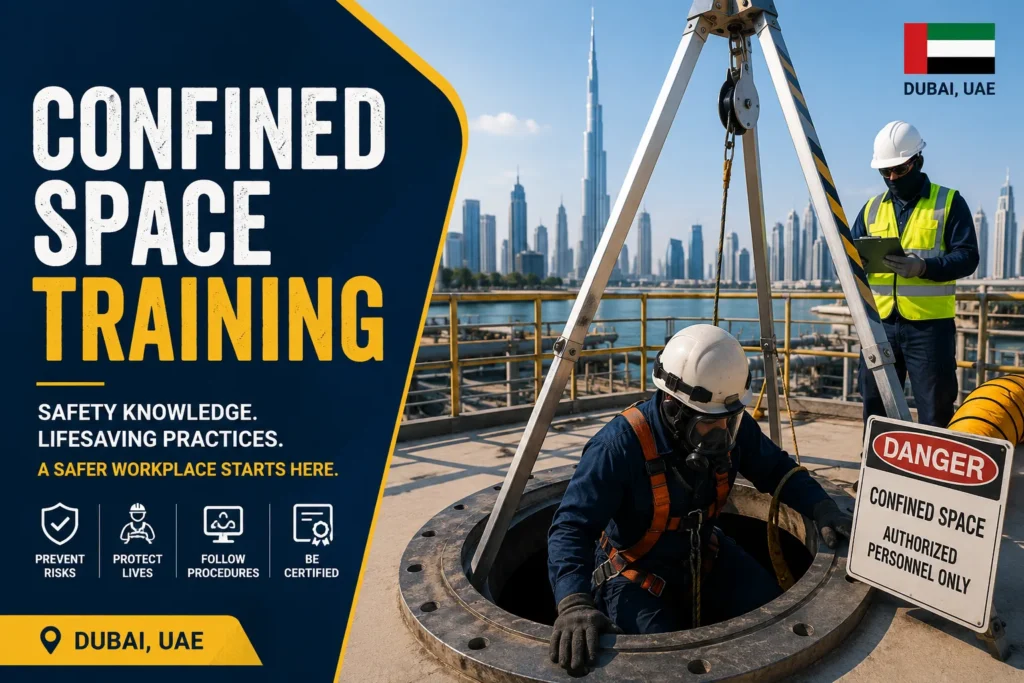
Confined Space Training in Dubai, UAE
Confined Space Training is one of the most important workplace safety courses for individuals working in construction, oil and gas, manufacturing, utilities, marine operations, facilities management, and industrial maintenance. The training helps workers identify hazards, follow safe entry procedures, respond to emergencies, and comply with workplace safety requirements.
If you are looking for Confined Space Certification in Dubai, Confined Space Course in UAE, or Confined Space Safety Training, this guide explains everything you need to know about the training, its benefits, course content, career opportunities, and why certification is essential for workplace safety.
What Is a Confined Space?
A confined space is an area that:
● Is not designed for continuous human occupancy
● Has limited entry and exit points
● May contain hazardous atmospheres
● Can create risks for workers during entry or work activities
Examples include:
● Storage tanks
● Silos
● Pipelines
● Sewers
● Manholes
● Tunnels
● Utility vaults
● Boilers
● Pressure vessels
● Excavations with restricted access
These environments may contain toxic gases, low oxygen levels, flammable vapors, or physical hazards that can lead to serious injuries or fatalities if proper precautions are not followed.
Why Confined Space Training Is Important
Working in confined spaces presents unique dangers that cannot always be seen with the naked eye.
Common Confined Space Hazards
● Oxygen deficiency
● Toxic gas exposure
● Flammable atmospheres
● Engulfment hazards
● Heat stress
● Mechanical hazards
● Electrical hazards
● Poor ventilation
● Restricted movement
● Difficult rescue conditions
Proper Confined Space Safety Training helps workers recognize these dangers before entering a confined area and apply the correct control measures.
Who Should Attend Confined Space Training in Dubai?
This course is suitable for:
● Construction workers
● Maintenance personnel
● Technicians
● Electricians
● Mechanical workers
● Supervisors
● Safety officers
● Facility management staff
● Oil and gas personnel
● Utility workers
● Marine and offshore workers
● Industrial plant operators
Anyone who enters, supervises, monitors, or manages confined space activities can benefit from Confined Space Certification in UAE.
What You Will Learn During Confined Space Training
A professional Confined Space Course in Dubai covers both theoretical knowledge and practical safety procedures.
1. Understanding Confined Spaces
Participants learn:
● Definitions of confined spaces
● Types of confined spaces
● Legal responsibilities
● Industry safety requirements
2. Hazard Identification
Topics include:
● Atmospheric hazards
● Toxic gases
● Oxygen-deficient environments
● Fire and explosion risks
● Physical hazards
3. Risk Assessment
Participants learn how to:
● Identify workplace hazards
● Evaluate risks
● Implement control measures
● Reduce exposure to dangerous conditions
4. Permit-to-Work (PTW) Systems
Training covers:
● Entry permits
● Authorization procedures
● Documentation requirements
● Safe work practices
5. Atmospheric Testing and Monitoring
Workers learn:
● Gas testing procedures
● Continuous monitoring methods
● Safe exposure limits
● Use of gas detection equipment
6. Personal Protective Equipment (PPE)
Topics include:
● Respiratory protection
● Safety helmets
● Protective clothing
● Harness systems
● Rescue equipment
7. Roles and Responsibilities
Training explains the duties of:
● Authorized entrants
● Attendants
● Entry supervisors
● Rescue personnel
8. Emergency Response and Rescue
Participants learn:
● Emergency communication
● Rescue procedures
● Evacuation techniques
● Incident response planning
These essential skills help workers perform confined space activities safely and effectively.
Benefits of Obtaining a Confined Space Certification in Dubai
Earning a Confined Space Certificate provides several advantages.
Enhanced Safety Awareness
Workers gain the knowledge needed to identify hazards before entering confined spaces.
Improved Career Opportunities
Many employers in Dubai and across the UAE require Confined Space Certification for workers involved in industrial operations.
Compliance with Safety Requirements
Certified workers help organizations maintain safer workplaces and comply with industry safety standards.
Increased Confidence
Training prepares participants to work safely in high-risk environments and respond effectively during emergencies.
Reduced Workplace Incidents
Proper Confined Space Safety Training helps minimize accidents, injuries, and operational disruptions.
Industries That Require Confined Space Training
Construction Industry
Workers frequently encounter:
● Utility chambers
● Excavations
● Tanks
● Underground structures
Oil and Gas Industry
Personnel may work inside:
● Storage tanks
● Pressure vessels
● Process units
● Pipelines
Manufacturing Facilities
Common confined spaces include:
● Production tanks
● Mixing vessels
● Processing equipment
Utilities and Infrastructure
Workers often enter:
● Sewers
● Water treatment systems
● Drainage networks
● Pump stations
Marine and Offshore Operations
Confined spaces may include:
● Ballast tanks
● Cargo holds
● Engine rooms
Career Opportunities After Confined Space Certification
Completing a Confined Space Training Course can support career growth in positions such as:
● Safety Officer
● HSE Assistant
● Maintenance Technician
● Industrial Worker
● Construction Worker
● Permit Receiver
● Confined Space Attendant
● Entry Supervisor
● Facility Maintenance Professional
● Oil and Gas Technician
Employers increasingly seek workers who possess verified safety competencies and professional certifications.
How to Choose the Best Confined Space Training Provider in Dubai
Before enrolling, consider the following factors:
Qualified Instructors
Choose trainers with practical industry experience.
Practical Training
Look for courses that include hands-on demonstrations and real-world scenarios.
Industry-Relevant Content
The curriculum should cover:
● Hazard Assessment
● Entry Permits
● Gas Testing
● Risk Assessment
● Emergency Response
● Rescue Procedures
Recognized Certification
Ensure participants receive a recognized Confined Space Certificate upon successful completion.
Confined Space Training at NIMS Dubai
NIMS UAE offers professional Health and Safety Training Courses in Dubai designed to improve workplace safety and competency.
The Confined Space Training Course covers:
● Confined Spaces
● Confined Space Programs
● Hazard Assessment
● Entry Plans
● Entry Permits
● Control Measures
● Roles and Responsibilities
● On-Site Rescue
● Emergency Procedures
● Gas Monitoring Techniques
The program is designed to help participants understand confined space hazards and apply appropriate controls before entry. Upon successful completion, participants receive a Confined Space Certification.
Conclusion
Confined Space Training in Dubai, UAE is an essential safety qualification for anyone working in high-risk industrial environments. The course equips participants with the knowledge and practical skills needed to identify hazards, follow safe entry procedures, use protective equipment, conduct risk assessments, and respond effectively during emergencies.
Whether you work in construction, oil and gas, manufacturing, facilities management, utilities, or marine operations, obtaining a Confined Space Certification in Dubai can improve workplace safety, enhance employability, and support long-term career development.
For individuals seeking professional Confined Space Training in Dubai UAE, choosing an experienced training provider such as NIMS UAE can help ensure you gain the practical knowledge and certification needed to work safely and confidently in confined space environments.
Frequently Asked Questions (FAQs)
What is Confined Space Training?
It is a workplace safety course that teaches workers how to safely enter, work in, and exit confined spaces while controlling associated hazards.
Who needs Confined Space Certification in Dubai?
Workers, supervisors, safety officers, technicians, and anyone involved in confined space activities should obtain certification.
What hazards are covered in the course?
The training covers atmospheric hazards, toxic gases, oxygen deficiency, fire risks, physical hazards, and emergency response procedures.
Is practical training included?
Most professional confined space programs include practical demonstrations and emergency response exercises.
Why is confined space certification important?
Certification demonstrates competence, improves safety awareness, and helps workers meet employer and industry requirements.