
Home / Gas Tester Training
Gas tester Training In dubai, abu dhabi & Across the Uae
Gas Tester Training in UAE for Confined Space, Oil & Gas and Industrial Work
Before anyone enters a confined space, starts hot work or works in an area where hazardous gases may be present, the atmosphere has to be checked properly.
That job cannot be based on guesswork.
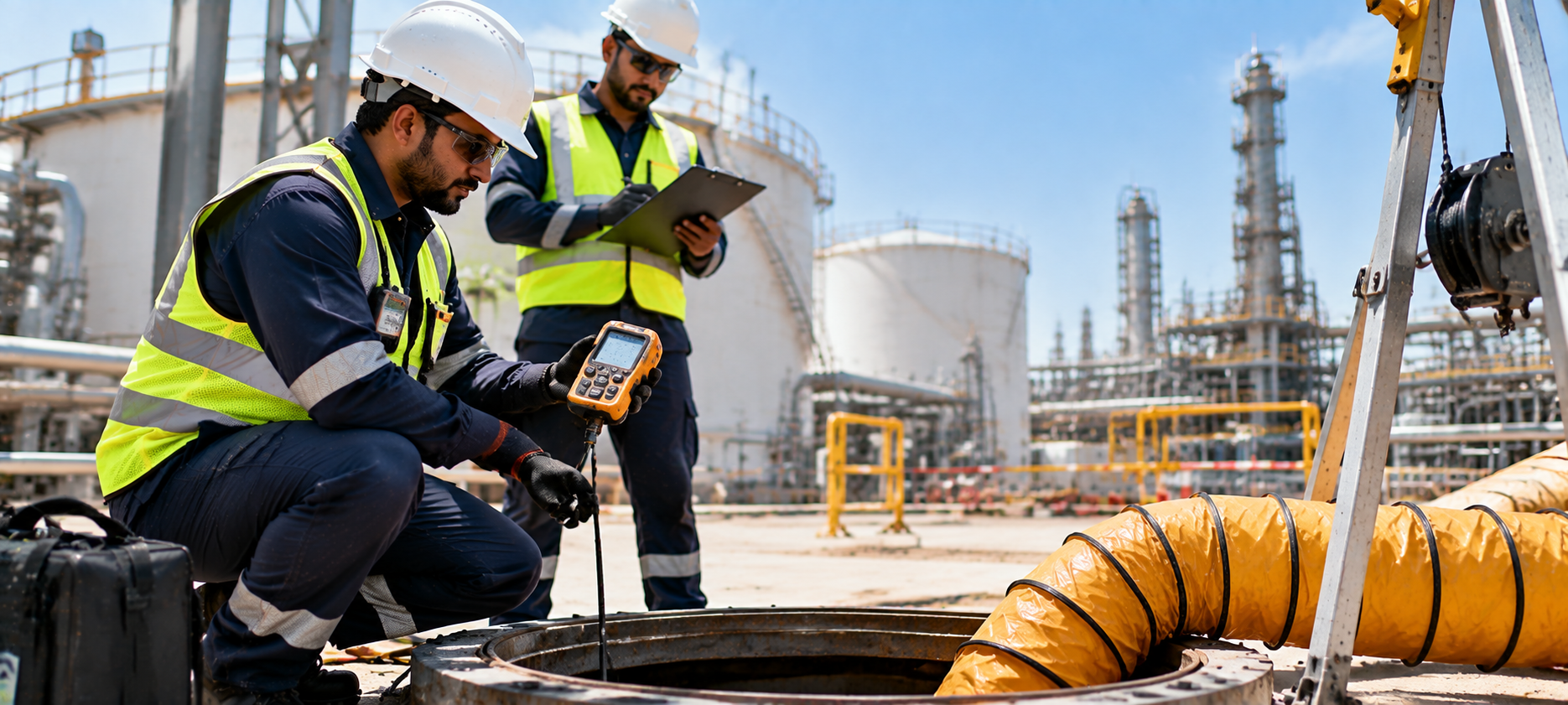
NIMS provides Gas Tester Training in Dubai, Abu Dhabi and across the UAE for employees who are responsible for checking oxygen levels, flammable gases and toxic gases before and during high-risk work.
The course is designed for practical site use. Participants learn how gas testing equipment works, how to take readings correctly, what the readings mean and when a job should not be allowed to continue.
For contractors working in oil ; gas, EPC, petrochemical, utilities, marine, construction and industrial environments, this is an important part of safe work control.
When Gas Testing Is Required
Gas testing may be required before work starts and at different stages while the job is in progress.
Typical situations include:
- Confined space entry
- Tank entry
- Vessel entry
- Manhole work
- Sewer and drainage work
- Hot work
- Welding and cutting
- Maintenance shutdowns
- Process plant maintenances
- Pipeline work
- Excavations in potentially hazardous areas
- Work near hydrocarbons or chemicals
- Cleaning of tanks and process equipment
- Work in poorly ventilated spaces
In many high-risk workplaces, the gas tester works closely with the permit issuer, confined space attendant, supervisor, HSE team and work crew.
What Does an Authorized Gas Tester Do?
An authorized gas tester checks whether the atmosphere is safe enough for work to begin and whether conditions remain acceptable while the work continues.
The role normally involves:
The role normally involves:
Checking oxygen levels
Too little oxygen can cause unconsciousness or death. Too much oxygen can increase fire risk.
Checking flammable gases and vapours
Flammable atmospheres can ignite when exposed to sparks, heat or open flames.
Checking toxic gases
Depending on the workplace, this may include gases such as hydrogen sulphide, carbon monoxide and other hazardous substances.
Recording readings
Gas test results need to be clearly recorded where required as part of the Permit to Work or
confined space entry process.
Stopping unsafe work
If readings are outside acceptable limits, work should not continue until the atmosphere has been made safe and retested.
What Participants Learn During the Course
The NIMS Gas Tester Training programme covers the main areas employees need to understand before carrying out atmospheric testing.
Gas hazards
Participants learn why dangerous atmospheres develop and how gases can collect inside tanks, pits, vessels and other enclosed areas.
Oxygen testing
The course explains oxygen deficiency, oxygen enrichment and why oxygen readings should always be checked carefully.
Flammable atmosphere testing
Participants learn the basic meaning of Lower Explosive Limit (LEL) and why combustible gas
readings are important before hot work or confined space entry.
Toxic gas monitoring
The training introduces common toxic gas hazards that may be encountered in industrial
environments, including H2S and carbon monoxide.
Gas detector use
Participants learn the basic operation of portable gas detectors and multi-gas monitors, including pre-use checks and correct sampling methods.
Bump testing and calibration awareness
The course explains why gas detectors must be checked and maintained properly before use.
Correct testing sequence
Gas testing should follow a logical process. Participants learn how the atmosphere should be tested and why different levels or sections of a space may need to be checked.
Continuous monitoring
Some jobs require atmospheric conditions to be monitored throughout the work rather than only before entry.
Response to alarms and unsafe readings
Participants learn what action should be taken when a detector gives an alarm or when readings move outside the safe operating range.
Gas Tester Training and Confined Space Work
Gas testing is closely linked to confined space safety.
A confined space can appear completely normal while still containing an atmosphere that is
dangerous to breathe or capable of catching fire.
Examples include:
- Storage tanks
- Process vessels
- Sewers
- Manholes
- Silos
- Pits
- Chambers
- Utility vaults
- Pipelines
- Drainage systems
Before entry, the atmosphere may need to be checked for oxygen, combustible gases and toxic substances.
NIMS already provides Confined Space Training and H2S Awareness & Breathing Apparatus Training, making Gas Tester Training a strong addition for organisations managing confined space and hazardous atmosphere risks.
Industries That Commonly Need Gas Tester Training
Oil & Gas
Gas testing is widely used during maintenance, shutdowns, tank entry, pipeline work, drilling
support and other high-risk activities.
EPC and Construction
EPC contractors may require trained gas testers for confined spaces, hot work and project activities
involving hazardous atmospheres.
Petrochemical and Process Plants
Process vessels, tanks and production areas can contain flammable or toxic gases even after
equipment has been isolated.
Marine, Ports and Shipyards
Tank entry, vessel maintenance, cleaning and hot work often require atmospheric testing.
Utilities and Infrastructure
Gas testing may be needed during work in manholes, chambers, sewer systems, pumping stations and underground utility spaces.
Manufacturing and Heavy Industry
Maintenance teams working around tanks, furnaces, chemical processes and enclosed plant areas may also require gas testing competency.
The course is also relevant to refineries, power plants, chemical facilities, wastewater treatment plants, terminals, storage facilities, offshore support operations and industrial maintenance contractors.
Who Should Attend?
Gas Tester Training is suitable for:
- Authorized gas testers
- HSE officers
- Safety officers
- Permit receivers
- Permit issuers
- Confined space attendants
- Standby personnel
- Maintenance technicians
- Mechanical technicians
- Operations personnel
- Supervisors
- Foremen
- EPC contractor employees
- Oil & gas workers
- Shutdown and turnaround teams
- Emergency response personnel
Employees who are expected to operate gas detection equipment should understand both the instrument and the hazards they are checking for.
A Strong Fit for Oil & Gas and EPC Contractors
Gas testing is often part of a wider system of work control.
For example, a contractor carrying out hot work inside a process facility may need:
1. A valid Permit to Work
2. Risk assessment and method statement
3. Isolation or LOTO where required
4. Gas testing
5. Fire prevention measures
6. Continuous atmospheric monitoring where necessary
7. Emergency arrangements
Because of this, Gas Tester Training is often taken alongside courses such as:
- Confined Space Training
- H2S Awareness & Breathing Apparatus Training
- Permit to Work Training
- Hot Work Safety Training
- Chemical Safety & Handling Training
- Lock Out Tag Out Training
- Hazard & Risk Assessment Training
- Emergency Response Team Training
- Fire Safety Training
These areas already form part of NIMS' wider UAE HSE training portfolio.
Train Employees to Read the Atmosphere Before Starting the Job
A gas detector only gives a reading. The person using it has to understand what that reading means.
NIMS Gas Tester Training gives participants the practical knowledge needed to check an
atmosphere, recognise dangerous conditions and communicate the results clearly before high-risk work begins.
For organisations involved in confined spaces, oil & gas operations, EPC projects, industrial
maintenance or shutdown activities, trained gas testers form an important part of safe work
planning.
Gas Tester Training Across the UAE
NIMS provides training support for organisations looking for:
Gas Tester Training in Dubai
Gas Tester Training in Abu Dhabi
Gas Tester Training in Sharjah
Gas Tester Training in Ajman
Gas Tester Training in Ras Al Khaimah
Gas Tester Training in Fujairah
Gas Tester Training in Umm Al Quwain
Gas Tester Training in Al Ain
The programme is particularly relevant for companies and contractors operating around Jebel Ali, JAFZA, Dubai Industrial City, Dubai Investment Park, Mussafah, KEZAD, Ruwais, Habshan, Shah, Hamriyah Free Zone, SAIF Zone, Fujairah industrial and port areas and other oil & gas and industrial locations across the UAE.
Courses Offered
- First Aid Course - CPR and AED
- Confined Space
- Fire Safety Awareness
- Scaffolding Inspection
- Scaffolding Erection & Dismantling
- Flagman Safety
- Chemical Safety and Handling Training
- Hazard and Risk Assessment
- Rigging and Slinging Training
- Traffic Safety
- Hand and Power Tools Operator
- Electrical Safety
- Lock Out and Tag Out (LOTO)
- Accident Incident Investigation
- Lifeguard Training
- Advanced Risk Assessment & Compliance Service
- Behavior-Based Safety Workplace Safety Consulting
- Construction Site Safety Induction Training
- Emergency Response Team Training
- Excavator Operator Training
- Forklift Operator Training
- H2S Awareness & Breathing Apparatus Training
- Hot Work Safety Training
- Incident Reporting & Root Cause Analysis Service
- MEWP Operator Training
- Mobile Crane Operator Training
- Permit to Work System Training
- Rope Access Training
- Working at Height & Fall Protection Safety Training
- Oil & Gas Safety Training
- Fire Warden Training
- Manual Handling Training
- Banksman Safety Training
- Gas Tester Training
- Defensive Driving Training
- HAZMAT Awareness Training
- Machine Safety and Machine Guarding Training
- Spill Response and Spill Control Training
- Welding Safety Training
Need expert advice? Speak to our team today
FAQ
What is Gas Tester Training and who needs it in the UAE?
Gas Tester Training UAE prepares authorised personnel to safely check atmospheric conditions in confined spaces, tanks, vessels and work areas before and during high-risk activities. It is essential for HSE officers, confined space supervisors, permit issuers and technicians in oil and gas, EPC and industrial environments.
What three gases are checked during atmospheric testing before confined space entry?
Atmospheric testing must check oxygen level, flammable gas or vapour concentration and toxic gas concentration. Common toxic gases monitored include hydrogen sulphide H2S, carbon monoxide CO and other hazardous substances relevant to the specific workplace and process environment.
What is the safe oxygen level for confined space entry?
Safe oxygen levels for confined space entry are between 19.5% and 23.5%. Below 19.5% indicates oxygen deficiency, causing rapid unconsciousness. Above 23.5% creates an oxygen-enriched atmosphere that significantly increases fire and explosion risk during any hot work activity.
What does LEL mean in gas testing?
LEL stands for Lower Explosive Limit — the minimum concentration of flammable gas in air that can ignite. Entry into confined spaces and hot work activities are typically not permitted above 10% of the LEL to provide a safe working margin.
When is gas testing required on industrial and oil and gas sites in the UAE?
Gas testing is required before confined space entry, tank and vessel entry, manhole work, hot work, welding and cutting, pipeline maintenance, excavations near hydrocarbons, process plant shutdowns and any activity in poorly ventilated spaces where hazardous atmospheres may accumulate.
How does an authorised gas tester differ from a confined space attendant?
A gas tester is specifically trained to operate gas detection equipment, interpret atmospheric readings and confirm whether conditions are safe to proceed. A confined space attendant monitors the entrant from outside the space. On many sites, one person fulfils both roles after completing appropriate training.
What is a bump test and why is it important before gas testing?
A bump test exposes the gas detector to a known concentration of test gas to confirm the sensors respond correctly before use. NIMS Gas Tester Training UAE emphasises that a bump test should be conducted every day gas detection equipment is used to verify sensor function.
What should a gas tester do if an alarm activates during work inside a confined space?
If a gas detector alarms during work, the crew must immediately evacuate the confined space or work area without delay. The area is isolated, ventilation is reviewed, and gas testing is repeated before any re-entry is permitted under the confined space entry permit.
What is hydrogen sulphide H2S and why is it particularly dangerous?
H2S is a colourless, highly toxic gas with an initial rotten-egg odour that quickly deadens the sense of smell at dangerous concentrations. It is common in oil and gas, sewer, wastewater and petrochemical environments and can cause rapid unconsciousness and death at high levels.
Does Gas Tester Training cover confined space entry procedures?
Yes. NIMS Gas Tester Training UAE addresses confined space entry requirements as part of the wider permit-to-work system, helping gas testers understand their role within the full confined space team including the attendant, supervisor and permit issuer.
How often must gas testing be repeated once work has started?
Gas testing must be repeated at regular intervals throughout the job — not only at the start. NIMS training covers continuous monitoring requirements, when re-testing should occur, particularly after breaks, equipment changes, ventilation adjustments or any change in work activity.
What gas detection equipment is covered during NIMS training?
NIMS Gas Tester Training covers portable multi-gas detectors and single-gas monitors, sensor types including catalytic bead and electrochemical cells, pre-use bump testing, correct sampling technique, reading interpretation, alarm response and basic equipment maintenance and calibration awareness.
Which industries in the UAE require Gas Tester Training?
Gas Tester Training is essential in oil and gas, petrochemical, refining, EPC, marine, offshore, utilities, water treatment, construction involving underground work, industrial maintenance, tank cleaning, chemical processing and any sector where employees may encounter hazardous or oxygen-depleted atmospheres.
Book Gas Tester Training in Dubai, Abu Dhabi & Across the UAE
Contact NIMS for Gas Tester Training, Authorized Gas Tester Training, AGT Training, Gas Detection Training, Confined Space Gas Testing Training and Atmospheric Gas Testing Training in the UAE.
NIMS can also support related Confined Space, H2S, Permit to Work, Hot Work, Chemical Safety and other industrial HSE training requirements.
- First Aid Course - CPR and AED
- Confined Space
- Fire Safety Awareness
- Scaffolding Inspection
- Scaffolding Erection & Dismantling
- Flagman Safety
- Chemical Safety and Handling Training
- Hazard and Risk Assessment
- Rigging and Slinging Training
- Traffic Safety
- Hand and Power Tools Operator
- Electrical Safety
- Lock Out and Tag Out (LOTO)
- Accident Incident Investigation
- Lifeguard Training
- Advanced Risk Assessment & Compliance Service
- Behavior-Based Safety Workplace Safety Consulting
- Construction Site Safety Induction Training
- Emergency Response Team Training
- Excavator Operator Training
- Forklift Operator Training
- H2S Awareness & Breathing Apparatus Training
- Hot Work Safety Training
- Incident Reporting & Root Cause Analysis Service
- MEWP Operator Training
- Mobile Crane Operator Training
- Permit to Work System Training
- Rope Access Training
- Working at Height & Fall Protection Safety Training
Gas Tester Training in UAE for Confined Space, Oil & Gas and Industrial Work
Before anyone enters a confined space, starts hot work or works in an area where hazardous gases may be present, the atmosphere has to be checked properly.
That job cannot be based on guesswork.
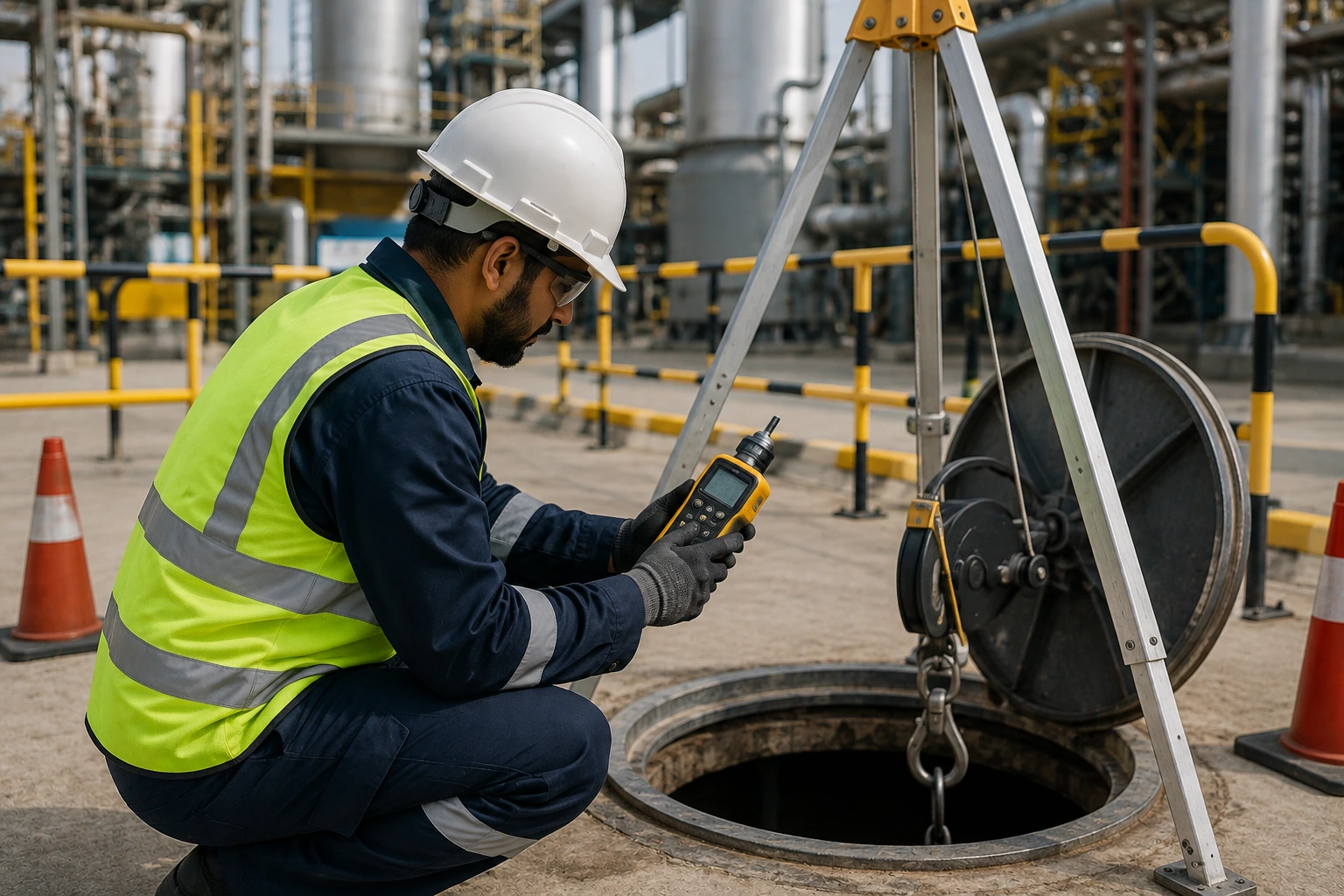
NIMS provides Gas Tester Training in Dubai, Abu Dhabi and across the UAE for employees who are responsible for checking oxygen levels, flammable gases and toxic gases before and during high-risk work.
The course is designed for practical site use. Participants learn how gas testing equipment works, how to take readings correctly, what the readings mean and when a job should not be allowed to continue.
For contractors working in oil ; gas, EPC, petrochemical, utilities, marine, construction and industrial environments, this is an important part of safe work control.
When Gas Testing Is Required
Gas testing may be required before work starts and at different stages while the job is in progress.
Typical situations include:
- Confined space entry
- Tank entry
- Vessel entry
- Manhole work
- Sewer and drainage work
- Hot work
- Welding and cutting
- Maintenance shutdowns
- Process plant maintenances
- Pipeline work
- Excavations in potentially hazardous areas
- Work near hydrocarbons or chemicals
- Cleaning of tanks and process equipment
- Work in poorly ventilated spaces
In many high-risk workplaces, the gas tester works closely with the permit issuer, confined space attendant, supervisor, HSE team and work crew.
Confined Space Course Modules
What Does an Authorized Gas Tester Do?
An authorized gas tester checks whether the atmosphere is safe enough for work to begin and whether conditions remain acceptable while the work continues.
The role normally involves:
The role normally involves:
Checking oxygen levels
Too little oxygen can cause unconsciousness or death. Too much oxygen can increase fire risk.
Checking flammable gases and vapours
Flammable atmospheres can ignite when exposed to sparks, heat or open flames.
Checking toxic gases
Depending on the workplace, this may include gases such as hydrogen sulphide, carbon monoxide and other hazardous substances.
Recording readings
Gas test results need to be clearly recorded where required as part of the Permit to Work or
confined space entry process.
Stopping unsafe work
If readings are outside acceptable limits, work should not continue until the atmosphere has been made safe and retested.
What Participants Learn During the Course
The NIMS Gas Tester Training programme covers the main areas employees need to understand before carrying out atmospheric testing.
Gas hazards
Participants learn why dangerous atmospheres develop and how gases can collect inside tanks, pits, vessels and other enclosed areas.
Oxygen testing
The course explains oxygen deficiency, oxygen enrichment and why oxygen readings should always be checked carefully.
Flammable atmosphere testing
Participants learn the basic meaning of Lower Explosive Limit (LEL) and why combustible gas
readings are important before hot work or confined space entry.
Toxic gas monitoring
The training introduces common toxic gas hazards that may be encountered in industrial
environments, including H2S and carbon monoxide.
Gas detector use
Participants learn the basic operation of portable gas detectors and multi-gas monitors, including pre-use checks and correct sampling methods.
Bump testing and calibration awareness
The course explains why gas detectors must be checked and maintained properly before use.
Correct testing sequence
Gas testing should follow a logical process. Participants learn how the atmosphere should be tested and why different levels or sections of a space may need to be checked.
Continuous monitoring
Some jobs require atmospheric conditions to be monitored throughout the work rather than only before entry.
Response to alarms and unsafe readings
Participants learn what action should be taken when a detector gives an alarm or when readings move outside the safe operating range.
Gas Tester Training and Confined Space Work
Gas testing is closely linked to confined space safety.
A confined space can appear completely normal while still containing an atmosphere that is
dangerous to breathe or capable of catching fire.
Examples include:
- Storage tanks
- Process vessels
- Sewers
- Manholes
- Silos
- Pits
- Chambers
- Utility vaults
- Pipelines
- Drainage systems
Before entry, the atmosphere may need to be checked for oxygen, combustible gases and toxic substances.
NIMS already provides Confined Space Training and H2S Awareness & Breathing Apparatus Training, making Gas Tester Training a strong addition for organisations managing confined space and hazardous atmosphere risks.
Industries That Commonly Need Gas Tester Training
Oil & Gas
Gas testing is widely used during maintenance, shutdowns, tank entry, pipeline work, drilling
support and other high-risk activities.
EPC and Construction
EPC contractors may require trained gas testers for confined spaces, hot work and project activities
involving hazardous atmospheres.
Petrochemical and Process Plants
Process vessels, tanks and production areas can contain flammable or toxic gases even after
equipment has been isolated.
Marine, Ports and Shipyards
Tank entry, vessel maintenance, cleaning and hot work often require atmospheric testing.
Utilities and Infrastructure
Gas testing may be needed during work in manholes, chambers, sewer systems, pumping stations and underground utility spaces.
Manufacturing and Heavy Industry
Maintenance teams working around tanks, furnaces, chemical processes and enclosed plant areas may also require gas testing competency.
The course is also relevant to refineries, power plants, chemical facilities, wastewater treatment plants, terminals, storage facilities, offshore support operations and industrial maintenance contractors.
Who Should Attend?
Gas Tester Training is suitable for:
- Authorized gas testers
- HSE officers
- Safety officers
- Permit receivers
- Permit issuers
- Confined space attendants
- Standby personnel
- Maintenance technicians
- Mechanical technicians
- Operations personnel
- Supervisors
- Foremen
- EPC contractor employees
- Oil & gas workers
- Shutdown and turnaround teams
- Emergency response personnel
Employees who are expected to operate gas detection equipment should understand both the instrument and the hazards they are checking for.
A Strong Fit for Oil & Gas and EPC Contractors
Gas testing is often part of a wider system of work control.
For example, a contractor carrying out hot work inside a process facility may need:
1. A valid Permit to Work
2. Risk assessment and method statement
3. Isolation or LOTO where required
4. Gas testing
5. Fire prevention measures
6. Continuous atmospheric monitoring where necessary
7. Emergency arrangements
Because of this, Gas Tester Training is often taken alongside courses such as:
- Confined Space Training
- H2S Awareness & Breathing Apparatus Training
- Permit to Work Training
- Hot Work Safety Training
- Chemical Safety & Handling Training
- Lock Out Tag Out Training
- Hazard & Risk Assessment Training
- Emergency Response Team Training
- Fire Safety Training
These areas already form part of NIMS' wider UAE HSE training portfolio.
Train Employees to Read the Atmosphere Before Starting the Job
A gas detector only gives a reading. The person using it has to understand what that reading means.
NIMS Gas Tester Training gives participants the practical knowledge needed to check an
atmosphere, recognise dangerous conditions and communicate the results clearly before high-risk work begins.
For organisations involved in confined spaces, oil & gas operations, EPC projects, industrial
maintenance or shutdown activities, trained gas testers form an important part of safe work
planning.
Book Gas Tester Training in Dubai, Abu Dhabi & Across the UAE
Contact NIMS for Gas Tester Training, Authorized Gas Tester Training, AGT Training, Gas Detection Training, Confined Space Gas Testing Training and Atmospheric Gas Testing Training in the UAE.
NIMS can also support related Confined Space, H2S, Permit to Work, Hot Work, Chemical Safety and other industrial HSE training requirements.