
Home / Marine & Shipyard Safety Training
MArine & Shipyard Safety Training UAE
Marine, Shipyard & Port Safety Training UAE – HSE Training for Shipyards, Dry Docks, Ports, Marine Terminals and Offshore Support Workforces
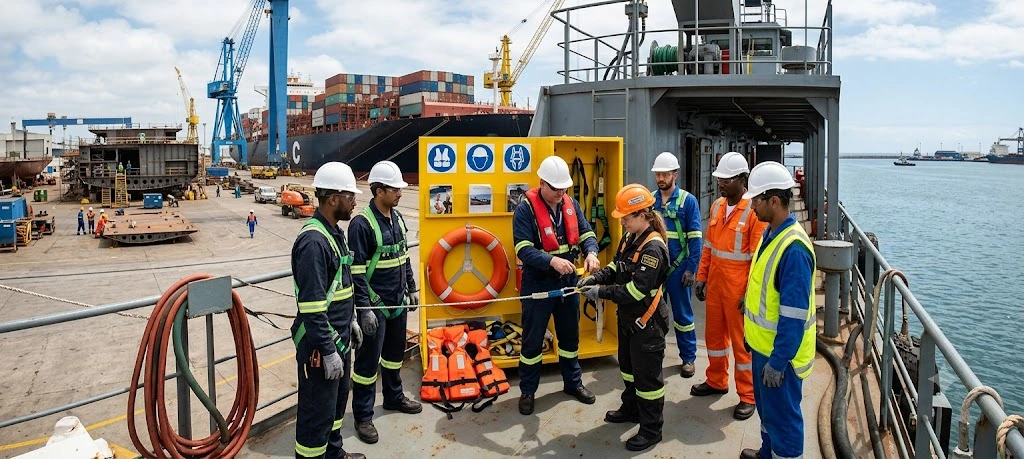
Marine, shipyard and port operations bring together heavy lifting, vessel movement, hot work, confined spaces, working at height, cargo handling and contractor activities in one demanding environment.
A ship repair yard may have welders working inside tanks while lifting teams move equipment overhead. At the same time, technicians may be carrying out maintenance, port vehicles may be moving cargo, and contractors may be working close to the waterfront.
NIMS provides Marine, Shipyard & Port Safety Training UAE services for shipyards, dry docks, ports, marine terminals, vessel-repair companies, offshore-support contractors, fabrication yards and marine workforces.
Training can be structured around:
- Job role
- Vessel or port activity
- Work location
- Equipment used
- Hazard exposure
- Contractor requirements
- Emergency responsibilities
NIMS can support organisations operating across Jebel Ali, Port Rashid, Dubai Maritime City, Khalifa Port, Mussafah, Hamriyah, Fujairah Port, Khor Fakkan, Ras Al Khaimah and other UAE marine hubs.
Corporate Training | On-Site Training | Practical Training | Marine Workforce Programs | UAE-Wide Delivery
HSE Training for Shipyards, Ports and Marine Operations
Marine workplaces change constantly. Vessel arrival, loading, unloading, repair, fabrication and maintenance can all create different hazards within the same shift.
Typical activities may include:
- Ship repair and maintenance
- Welding and cutting
- Tank and confined-space entry
- Crane and lifting operations
- Rigging and slinging
- Working at height
- Scaffolding
- Cargo handling
- Forklift and vehicle movement
- Marine fabrication
- Painting and chemical use
- Dock and quay operations
- Vessel access
- Contractor maintenance
A shipyard in Dubai Maritime City or Hamriyah, for example, may have hot work, heavy lifting and confined-space activities taking place simultaneously.
Port operations around Jebel Ali, Khalifa Port, Fujairah or Khor Fakkan may involve container handling, heavy vehicles, loading equipment, cargo operations and interaction between personnel and mobile plant.
This is why training should match the actual marine activity rather than relying on general safety awareness.
Training supports compliance with Dubai Maritime City Authority (DMCA), Abu Dhabi Ports and Federal Transport Authority (FTA) requirements, alongside Dubai Civil Defence fire-safety regulations, for shipyards, ports and marine terminals.
Key HSE Risks in Marine, Shipyard and Port Operations
Hazard | Typical Exposure |
Confined Spaces | Tanks, holds, voids and enclosed vessel compartments |
Hot Work | Welding, cutting and grinding during repairs |
Lifting Operations | Cranes, rigging, slings and suspended loads |
Working at Height | Vessel structures, scaffolds, platforms and decks |
Fire & Explosion | Fuel, vapours, paints, solvents and ignition sources |
Vehicle Movement | Trucks, forklifts, trailers and terminal equipment |
Falling Objects | Tools, materials and equipment from elevated areas |
Chemical Exposure | Paints, solvents, fuels and maintenance chemicals |
Waterfront Hazards | Quays, docks, gangways and vessel access |
Emergency Events | Fire, rescue, spill, casualty or evacuation |
Not sure which training your yard or terminal needs? Talk to an HSE advisor →
Ships contain many areas that can become dangerous confined spaces, including:
- Cargo tanks
- Ballast tanks
- Void spaces
- Holds
- Engine compartments
- Enclosed machinery areas
Confined Space Training UAE may cover:
- Atmospheric hazards
- Oxygen deficiency
- Toxic or flammable gases
- Gas testing
- Ventilation
- Entry permits
- Isolation
- Standby duties
- Communication
- Rescue arrangements
This is particularly relevant for ship repair and maintenance operations in Dubai Maritime City, Hamriyah and Fujairah.
Hot work is common in shipbuilding, marine fabrication and vessel repair.
Hot Work Safety Training UAE can address:
- Welding hazards
- Cutting and grinding
- Ignition sources
- Combustible materials
- Gas testing
- Fire watch
- Work-area preparation
- Permit requirements
- Fire prevention
Hot work becomes especially critical when carried out close to fuel systems, tanks, coatings or enclosed spaces.
Marine and port operations rely heavily on lifting.
Rigging & Slinging Training UAE may cover:
- Sling selection
- Shackles
- Load weight
- Centre of gravity
- Inspection
- Hand signals
- Load control
- Exclusion zones
- Suspended-load hazards
Lifting Safety Training UAE is relevant for:
- Shipyards
- Port terminals
- Vessel maintenance
- Marine fabrication
- Heavy-equipment handling
- Cargo operations
Lifting teams working around Jebel Ali, Khalifa Port or Mussafah may handle machinery, steel structures, containers and oversized equipment.
Ports and shipyards often have restricted visibility and constant equipment movement.
Banksman Training UAE can help personnel safely guide:
- Trucks
- Forklifts
- Cranes
- Trailers
- Mobile equipment
Training may include:
- Standard hand signals
- Safe positioning
- Blind-spot awareness
- Communication
- Reversing controls
- Exclusion zones
- Emergency stop signals
This is particularly important in congested terminal and yard environments.
Marine personnel may work at height on:
- Vessel decks
- Superstructures
- Scaffolds
- Gangways
- Elevated platforms
- Crane-access areas
Working at Height Training UAE may include:
- Fall hazards
- Safe access
- Harness inspection
- Fall arrest
- Edge protection
- Anchor points
- Ladder safety
- Rescue considerations
This training is especially relevant for vessel repair, painting and maintenance activities.
Fire risk in marine environments can be significant because of:
- Fuel
- Paints
- Solvents
- Electrical systems
- Hot work
- Engine rooms
- Enclosed compartments
Fire Safety Training UAE may cover:
- Fire prevention
- Alarm response
- Extinguisher awareness
- Escape routes
- Emergency communication
- Muster procedures
Emergency Response Training UAE can prepare personnel for:
- Fire
- Man overboard
- Confined-space emergency
- Chemical spill
- Medical emergency
- Evacuation
- Rescue operations
Marine emergency response should take into account the difficulty of access and rescue inside vessels and waterfront areas.
Shipyards and marine facilities commonly use:
- Paints
- Solvents
- Cleaning chemicals
- Lubricants
- Fuels
- Surface-treatment products
Chemical Safety Training UAE may cover:
- Hazard labels
- Safety Data Sheets
- Storage
- Handling
- PPE
- Chemical compatibility
- Exposure prevention
Spill Response Training UAE can also prepare workers for:
- Fuel spills
- Oil leaks
- Chemical releases
- Containment
- Spill kits
- Drain and water protection
- Reporting
This is particularly relevant for ports and terminals in Fujairah, Jebel Ali and Khalifa Port.
Traffic Safety in Ports and Shipyards
Port traffic is very different from normal road traffic.
Workers may share operational areas with:
- Container trucks
- Forklifts
- Reach stackers
- Cranes
- Trailers
- Maintenance vehicles
Traffic Safety Training UAE can include:
- Pedestrian segregation
- Vehicle routes
- Speed limits
- Blind spots
- Reversing
- Crossing points
- Loading areas
- Communication
This is especially important in high-volume port and logistics areas.
Marine & Port Safety Training Across UAE Maritime Hubs
NIMS supports organisations looking for:
- Marine Safety Training UAE
- Shipyard Safety Training Dubai
- Port Safety Training Abu Dhabi
- Confined Space Training Shipyard UAE
- Rigging & Slinging Training Jebel Ali
- Hot Work Training Dubai Maritime City
- Banksman Training Khalifa Port
- Marine HSE Training Fujairah
- Port Traffic Safety Training UAE
- Ship Repair Safety Training Hamriyah
Key marine hubs include:
Jebel Ali & Port Rashid
- Port operations
- Cargo movement
- Vessel services
- Marine logistics
Dubai Maritime City
- Ship repair
- Marine engineering
- Dry-dock activities
- Vessel maintenance
Khalifa Port & Mussafah
- Port operations
- Heavy cargo
- Industrial marine support
- EPC and fabrication activities
Sharjah & Hamriyah
- Shipyards
- Marine fabrication
- Offshore support
- Vessel repair
Fujairah & Khor Fakkan
- Port operations
- Marine terminals
- Vessel services
- Bunkering and logistics
Ras Al Khaimah
- Marine operations
- Ship repair
- Industrial port activities
Operating in Jebel Ali, Khalifa Port or another UAE maritime hub? Check on-site training availability →
Why Marine, Shipyard and Port Companies Choose NIMS
NIMS provides practical training designed around real marine and port operations.
Key capabilities include:
- Marine Safety Training UAE
- Shipyard HSE Training
- Confined Space Entry
- Hot Work Safety
- Rigging & Slinging
- Lifting Safety
- Banksman Training
- Working at Height
- Fire Safety
- Chemical Safety
- Spill Response
- Traffic Safety
- Incident Reporting
- Incident Investigation
- Emergency Response
- Corporate and on-site delivery
- UAE-wide marine support
Whether the requirement is Shipyard Safety Training Dubai, Rigging Training Jebel Ali, Confined Space Training Fujairah, Banksman Training Khalifa Port, Hot Work Training Hamriyah or Marine HSE Training UAE, NIMS can structure programs around the vessel, port activity and workforce responsibilities.
HSE Manpower Support for Marine and Port Projects
NIMS can also support marine organisations requiring HSE manpower UAE, including:
- HSE Officers
- HSE Engineers
- Safety Supervisors
- Safety Inspectors
- Fire & Safety Personnel
- Marine Project HSE Support
Support can be arranged across Jebel Ali, Dubai Maritime City, Khalifa Port, Mussafah, Hamriyah, Fujairah, Khor Fakkan and other UAE marine locations.
Ready to strengthen HSE performance across your shipyard or port operation?
Courses Offered
- First Aid Course - CPR and AED
- Confined Space
- Fire Safety Awareness
- Scaffolding Inspection
- Scaffolding Erection & Dismantling
- Flagman Safety
- Chemical Safety and Handling Training
- Hazard and Risk Assessment
- Rigging and Slinging Training
- Traffic Safety
- Hand and Power Tools Operator
- Electrical Safety
- Lock Out and Tag Out (LOTO)
- Accident Incident Investigation
- Lifeguard Training
- Advanced Risk Assessment & Compliance Service
- Behavior-Based Safety Workplace Safety Consulting
- Construction Site Safety Induction Training
- Emergency Response Team Training
- Excavator Operator Training
- Forklift Operator Training
- H2S Awareness & Breathing Apparatus Training
- Hot Work Safety Training
- Incident Reporting & Root Cause Analysis Service
- MEWP Operator Training
- Mobile Crane Operator Training
- Permit to Work System Training
- Rope Access Training
- Working at Height & Fall Protection Safety Training
- Oil & Gas Safety Training
- Fire Warden Training
- Manual Handling Training
- Banksman Safety Training
- Gas Tester Training
- Defensive Driving Training
- HAZMAT Awareness Training
- Machine Safety and Machine Guarding Training
- Spill Response and Spill Control Training
- Welding Safety Training
Need expert advice? Speak to our team today
FAQ
Is HSE training mandatory for shipyard and port workers in the UAE?
Yes. Shipyard, port and marine terminal operators are required to manage occupational safety in line with UAE labour law, Dubai Maritime City Authority (DMCA), Abu Dhabi Ports and Federal Transport Authority (FTA) requirements. Requirements vary by facility and activity.
What training is needed for confined space entry on vessels and in dry docks?
Confined space entry on vessels and in dry docks typically requires training for entrants, attendants, supervisors and rescue personnel, combined with gas-testing competency given tank and hull-space hazards.
Do you provide rigging and lifting training for shipyard and port operations?
Yes. NIMS delivers rigging, slinging and lifting safety training covering safe sling and shackle use, load control and crane-lift coordination for shipyard fabrication, vessel repair and port cargo-handling operations.
Can training be delivered on-site at our shipyard or port facility?
Yes. NIMS delivers on-site training across Jebel Ali, Port Rashid, Dubai Maritime City, Khalifa Port, Mussafah, Sharjah, Hamriyah, Fujairah, Khor Fakkan and Ras Al Khaimah.
Do you provide training certificates for compliance and port-access requirements?
Yes. Participants receive a certificate of completion for each course, which can support compliance records, port or terminal access requirements and client audits.
What training is recommended for banksmen managing vehicle movement in ports?
Banksman and vehicle-movement training covers safe signalling, exclusion-zone management and coordination with reversing vehicles, forklifts and container-handling equipment common in port and shipyard yards.
Do you offer hot work safety training for shipyard fabrication and repair?
Yes. NIMS delivers hot work safety training covering welding, cutting and grinding hazards, fire-watch responsibilities, gas testing and permit requirements relevant to shipyard and dry-dock fabrication work.
How long does traffic safety training take for port operations?
Duration depends on course level and role, typically ranging from a half-day awareness session to a full day for site-specific traffic-safety certification with practical assessment.
Do you also supply HSE manpower for marine and port projects?
Yes. Through our sister company hsemanpower.ae, NIMS can supply HSE officers, safety supervisors and marine safety personnel for shipyards, ports and marine terminal projects across the UAE.
Which UAE maritime hubs does NIMS cover for marine and port safety training?
NIMS supports marine, shipyard and port safety training across Jebel Ali, Port Rashid, Dubai Maritime City, Khalifa Port, Mussafah, Sharjah, Hamriyah, Fujairah, Khor Fakkan and Ras Al Khaimah.