

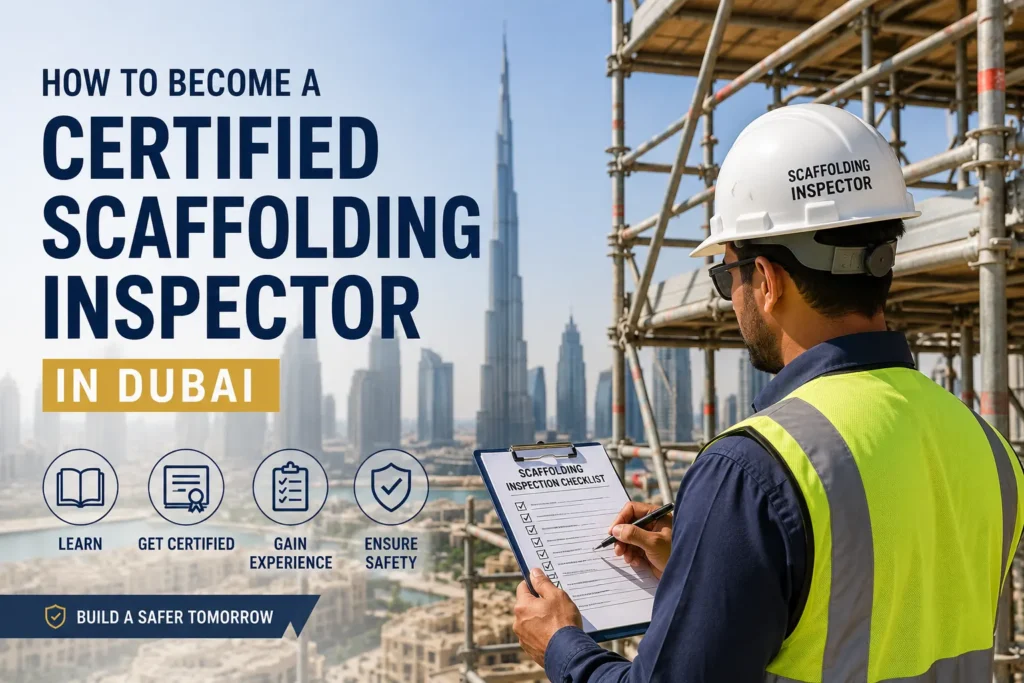
How to Become a Certified Scaffolding Inspector in Dubai
What Is a Certified Scaffolding Inspector in Dubai?
A Certified Scaffolding Inspector in Dubai is a qualified safety professional authorized to inspect, assess, and approve scaffolding structures on construction sites across the UAE. These inspectors ensure that scaffolding is erected, maintained, and dismantled in full compliance with Dubai Municipality regulations and international safety standards.
If you are looking to build a credible, in-demand career in Dubai’s booming construction sector, becoming a certified scaffolding inspector is one of the most direct paths available to you today.
Why Scaffolding Safety Matters in Dubai’s Construction Industry
Dubai is one of the most active construction markets in the world. From high-rise towers in Business Bay to mega infrastructure projects across the emirate, scaffolding is used on virtually every major site.
But scaffolding is also a leading cause of workplace injuries and fatalities in construction. According to the Dubai Statistics Center, the construction sector consistently records the highest rate of occupational incidents in the UAE, with a significant portion of those incidents involving work at height.
This is why Dubai Municipality, Trakhees, and other UAE regulatory bodies have made it mandatory for scaffolding to be inspected by qualified professionals before any worker is permitted to use it.
Key reasons scaffolding safety is critical in Dubai:
- Extreme temperatures in summer affect material integrity and worker fatigue.
- High-rise and multi-story projects require advanced scaffolding systems.
- Tight project timelines increase pressure on site teams.
- UAE labour law holds employers and safety officers legally accountable for site incidents.
- Dubai’s Vision 2030 infrastructure pipeline is creating thousands of new construction jobs and thousands of new scaffolding inspection needs.
The Growing Demand for Qualified Scaffolding Inspectors in the UAE
The UAE construction market is projected to grow at a compound annual rate of over 4% through 2030, driven by projects such as the following:
- Dubai Urban Master Plan 2040 developments.
- Continued expansion of infrastructure across Abu Dhabi and the Northern Emirates.
- Hospitality and tourism construction tied to post-Expo 2020 growth.
- Industrial and logistics zone expansion in Jebel Ali and Dubai South.
This growth is creating a serious shortage of certified scaffolding safety professionals. Many construction companies in Dubai are actively seeking inspectors who hold recognized qualifications — and they are willing to pay competitive salaries to attract them.
What this means for you:
- Certified inspectors are among the most employable safety professionals on UAE construction sites.
- Salaries for scaffolding inspectors in Dubai typically range from AED 4,000 to AED 12,000+ per month depending on experience and certification level.
Certified professionals are often preferred over uncertified workers even for supervisory site roles. - The role offers a clear progression into HSE officer and site safety manager positions.
What Does a Certified Scaffolding Inspector Actually Do?
Before exploring how to get certified, it helps to understand exactly what this role involves on a day-to-day basis.
A certified scaffolding inspector is responsible for:
1. Conducting Site Inspections
- Visiting active construction sites to assess scaffolding systems before use
- Checking that scaffolding has been erected according to approved plans and manufacturer specifications.
- Identifying structural defects, missing components, or incorrect assembly
2. Applying Inspection Procedures
- Performing pre-erection, during-erection, and post-erection checks
- Verifying load capacities, base plates, couplers, ledgers, and transoms
- Confirming that access and egress points meet safety standards
- Documenting findings using standardized inspection checklists
3. Assessing Fall Protection Systems
- Verifying the correct installation of guardrails, toe boards, and mid-rails
- Checking that safety nets and personal fall arrest systems are in place
- Ensuring that edge protection meets the requirements of UAE and international safety codes
4. Documentation and Reporting Standards
- Completing scaffold inspection tags and handover certificates
- Writing formal inspection reports for site safety files
- Communicating deficiencies to project managers and scaffolding supervisors
- Maintaining records that can be audited by Dubai Municipality or other regulatory authorities
5. Acting as a Safety Officer on Site
- Advising site teams on safe scaffolding practices
- Stopping unsafe work when imminent danger is identified
- Supporting toolbox talks and scaffolding safety inductions for workers
Recognized Certification for Scaffolding Inspectors in Dubai
To legally and professionally conduct scaffolding inspections in Dubai and across the UAE, you need a recognized certification from an accredited body.
The most respected scaffolding inspector qualifications accepted in the UAE include:
- CISRS (Construction Industry Scaffolders Record Scheme), the internationally recognized gold standard for scaffolding inspection
- NEBOSH certificates, particularly relevant for safety officers overseeing scaffolding as part of a broader HSE role
- NIMS scaffolding inspector training, a UAE-based program specifically designed for the Dubai and GCC construction environment
For professionals already working in or targeting the UAE market, completing a scaffolding inspector training course in Dubai that aligns with local regulatory requirements is the most efficient route to certification.
Looking for the right course?
The Scaffolding Inspector Training Dubai program offered through NIMS is designed specifically for the UAE construction industry, covering local regulations, inspection procedures, and documentation standards required by Dubai Municipality.
How the NIMS Scaffolding Inspector Course Prepares You
The NIMS scaffolding inspector training program is structured to give you practical, job-ready skills — not just theoretical knowledge.
Here is what the course covers:
Module 1: Scaffolding Fundamentals and UAE Regulations
- Types of scaffolding systems used in Dubai (tube and fitting, system scaffolding, suspended scaffolding)
- UAE Labour Law requirements and Dubai Municipality scaffold inspection obligations
- Introduction to OSHA, BS EN 12811, and international scaffolding standards
Module 2: Inspection Procedures and Techniques
- Pre-use, weekly, and post-incident inspection protocols.
- How to identify defects in couplers, standards, putlogs, and decking.
- Step-by-step site walkthrough methodology.
Module 3: Fall Protection Systems
- Guardrail systems, toe boards, and intermediate rails
- Safety nets and collective fall protection
- Personal fall arrest equipment: harnesses, lanyards, and anchor points
- Inspection of fall protection components
Module 4: Documentation and Reporting Standards
- Completing scaffold inspection tags and handover certificates
- Writing clear, compliant inspection reports
- Digital documentation tools used on UAE construction sites
- Record-keeping for regulatory audits
Module 5: Practical Application
- On-site inspection exercises
- Case studies from UAE construction projects
- Competency assessment
On completion, you will be able to:
- Conduct scaffolding inspections independently and confidently.
- Produce legally compliant inspection documentation.
- Identify fall protection failures and recommend corrective actions.
- Apply for scaffolding inspector and HSE officer positions in Dubai and the wider GCC.
Who Should Take This Course?
The NIMS scaffolding inspector program is suitable for:
- Construction workers looking to move into a safety and inspection role.
- Site supervisors who want to formalize their scaffolding knowledge with a recognized certificate
- HSE officers seeking to add scaffolding inspection to their professional skill set
- Fresh graduates in engineering or safety who want to enter the Dubai construction market
- Experienced scaffolders who want to progress into inspection and supervisory positions
You do not need prior safety qualifications to enrol. The course starts from the fundamentals and builds to a professional standard.
Career Opportunities After Certification
Becoming a certified scaffolding inspector in Dubai opens multiple career pathways:
Role | Average Monthly Salary (AED) |
Scaffolding Inspector | AED 4,000 – AED 7,500 |
Senior Scaffolding Inspector | AED 7,500 – AED 11,000 |
HSE Officer (Scaffolding Specialist) | AED 8,000 – AED 13,000 |
Site Safety Manager | AED 12,000 – AED 20,000+ |
Salary estimates are indicative and vary by employer, project size, and experience.
Industries actively hiring certified scaffolding inspectors in the UAE:
- Oil and gas (Abu Dhabi, Sharjah)
- Commercial and residential construction (Dubai, Abu Dhabi)
- Infrastructure and civil engineering
- Industrial facilities and manufacturing plants
- Marine and port construction
Start your career in scaffolding safety
Become a Certified Scaffolding Inspector in Dubai
Join the NIMS course and gain the skills, certificate, and confidence to step into one of Dubai’s most in-demand construction safety roles.
Frequently Asked Questions
Yes. Dubai Municipality and other UAE regulatory authorities require scaffolding to be inspected and signed off by a competent, qualified person before workers use it. Holding a recognized certification demonstrates that you meet this standard.
The course duration varies by format. NIMS offers both intensive short-course options and extended programs. Contact NIMS directly for the current schedule.
Yes. Certifications from recognized bodies are generally accepted across the GCC, including Saudi Arabia, Qatar, and Kuwait, though some employers may require additional local approvals.
No. English is the primary working language on most Dubai construction sites. Arabic is an advantage but is not required for the role.
A scaffolding supervisor oversees the erection and dismantling of scaffolding by a crew. A scaffolding inspector is responsible for assessing whether a completed scaffold is safe for use. Both roles are important — and many professionals hold both competencies.