


Home / Lock Out And Tag Out Training
Lock Out And Tag Out Training
Lock Out Tag Out (LOTO) Training UAE: Isolating Every Energy Type, Verified
A machine switched off is not the same as a machine with zero stored energy. A hydraulic ram can hold pressure long after the pump is isolated. A spring-loaded mechanism can release without warning. A capacitor can discharge current minutes after the power is cut. Lock Out Tag Out exists precisely because ‘off’ is a visual assumption, and stored energy doesn’t care what the switch position says.
Nathan Safety Training (NIMS) trains authorised and affected employees across UAE manufacturing, oil & gas and facilities operations on isolating hazardous energy — electrical, mechanical, hydraulic, pneumatic, thermal and gravitational — before anyone works on equipment that could otherwise move, release or energise unexpectedly.
Why LOTO Covers More Than Electrical Isolation
Lock Out Tag Out is broader than our Electrical Safety course by design — it’s the isolation discipline that applies to any hazardous energy source, not electrical hazards specifically. UAE permit to work frameworks require verified isolation before maintenance or repair work begins on plant and equipment, and that isolation obligation applies equally whether the stored energy is electrical, hydraulic pressure in a ram, compressed air in a pneumatic line, a raised load under gravity, or heat retained in process equipment.
The permit authorises the work. LOTO is the physical, verifiable act that makes the permit’s safety claim actually true — which is why the two are taught as connected disciplines rather than interchangeable ones.
Isolation failures are among the more commonly disputed categories in UAE industrial incident reviews, largely because the isolation step is invisible after the fact — unlike a missing guard or an expired certificate, there’s often no physical evidence of whether verification actually happened, which puts real weight on training and habit rather than equipment alone.
The Energy That Doesn't Announce Itself
Stored energy — hydraulic pressure, spring tension, residual heat — doesn’t behave like a live wire or a moving blade. It sits invisibly inside equipment that looks completely inert, which is exactly why the verification step in Lock Out Tag Out matters more than the lock itself: the lock stops someone re-energising the system, but only verification confirms nothing dangerous was left inside it.
When that verification habit breaks down, the resulting incidents tend to be severe precisely because nobody was expecting the equipment to do anything at all — the assumption of safety was the failure, not a lapse in obvious caution.
Who Needs LOTO Training
Anyone who works on equipment that could move, release energy, or re-energise during maintenance, repair or cleaning.
- Manufacturing and process plant maintenance technicians
- Oil & gas facility maintenance and turnaround crews
- Facilities engineers isolating building plant — pumps, chillers, lifts, generators
- Machine operators who clear jams or perform minor adjustments themselves
- Contractors performing work on client-owned equipment
The Dominant Energy Type Shifts by Emirate
The dominant energy type our clients isolate most often shifts by emirate’s industrial base. We deliver onsite across all seven:
- Dubai — JAFZA and DIP manufacturing plants run a genuine mix of all six energy types, which makes Dubai our most comprehensive multi-energy LOTO delivery
- Abu Dhabi — ADNOC group facilities around Mussafah and Ruwais deal heavily in hydraulic and thermal energy isolation alongside electrical, given the process equipment involved
- Sharjah — Hamriyah and SAIF Zone’s industrial tenants isolate mechanical and pneumatic energy on production lines as often as electrical
- Ajman — Free Zone manufacturers, particularly furniture production lines, isolate mechanical energy on saws and presses as the dominant hazard type
- Ras Al Khaimah — RAK Ceramics’ kiln and processing equipment brings thermal energy isolation into play alongside the more usual electrical and mechanical sources
- Fujairah — FOIZ terminal maintenance work involves hydraulic and pneumatic isolation on pumps and valves as much as electrical isolation on instrumentation
- Umm Al Quwain — a smaller industrial base, but food processing equipment in the Free Trade Zone still carries mechanical and electrical isolation requirements identical in principle to a larger plant
Energy Types and Isolation Method
Energy Type | Example Source | Isolation Method |
Electrical | Motors, panels, control circuits | Circuit breaker lock, verified with proving unit |
Mechanical | Flywheels, conveyors, rotating shafts | Physical blocking, brake engagement |
Hydraulic | Rams, presses, lifting equipment | Pressure release, bleed-down, line lockout |
Pneumatic | Air-driven tools and actuators | Air supply isolation, line bleed, pressure gauge check |
Thermal | Process equipment, steam lines | Cool-down period, temperature verification before work |
Gravitational | Raised loads, suspended equipment | Mechanical blocking or support, not reliance on hydraulics alone |
Verification Is the Step That Gets Skipped
Almost every serious isolation failure we review has the same root cause: verification was skipped, not the lockout itself.
- Isolation applied but never verified with a try-out — the zero-energy state is assumed, not tested
- Group lockout on equipment with multiple workers using a single lock instead of a proper lock box or hasp
- Tags removed by someone other than the person who applied them, breaking the entire accountability chain
- Stored energy — spring tension, hydraulic pressure, residual heat — not fully dissipated before work begins
- Authorised and affected employees not clearly distinguished, so nobody’s actually sure who has the authority to remove a lock
All Six Energy Types, Not Just Electrical
We built this course around the try-out verification step specifically, because it’s the one part of LOTO that’s genuinely invisible if it gets skipped — unlike a missing lock, which is obvious.
Isolation procedures developed during this course are written in a format that aligns directly with what Nathan ISO Consulting’s ISO 45001 work expects to see, since the two teams sit inside the same group rather than working from different templates.
- All six energy types covered, not just electrical — hydraulic and stored mechanical energy are frequently under-addressed elsewhere
- Try-out verification taught as a mandatory physical step, not a documentation checkbox
- Group lockout procedures for multi-worker jobs, including lock box systems
- Instructors with plant maintenance and turnaround experience across oil & gas and manufacturing
- Isolation procedures written for your specific equipment as part of course delivery, not generic templates
Courses Offered
- First Aid Course - CPR and AED
- Confined Space
- Fire Safety Awareness
- Scaffolding Inspection
- Scaffolding Erection & Dismantling
- Flagman Safety
- Chemical Safety and Handling Training
- Hazard and Risk Assessment
- Rigging and Slinging Training
- Traffic Safety
- Hand and Power Tools Operator
- Electrical Safety
- Lock Out and Tag Out (LOTO)
- Accident Incident Investigation
- Lifeguard Training
- Advanced Risk Assessment & Compliance Service
- Behavior-Based Safety Workplace Safety Consulting
- Construction Site Safety Induction Training
- Emergency Response Team Training
- Excavator Operator Training
- Forklift Operator Training
- H2S Awareness & Breathing Apparatus Training
- Hot Work Safety Training
- Incident Reporting & Root Cause Analysis Service
- MEWP Operator Training
- Mobile Crane Operator Training
- Permit to Work System Training
- Rope Access Training
- Working at Height & Fall Protection Safety Training
- Oil & Gas Safety Training
- Fire Warden Training
- Manual Handling Training
- Banksman Safety Training
- Gas Tester Training
- Defensive Driving Training
- HAZMAT Awareness Training
- Machine Safety and Machine Guarding Training
- Spill Response and Spill Control Training
- Welding Safety Training
Need expert advice? Speak to our team today
FAQ
How is LOTO different from your Electrical Safety course?
Electrical Safety focuses on electrical-specific hazards like shock and arc flash. LOTO covers the physical isolation procedure across all energy types — electrical, hydraulic, pneumatic, mechanical, thermal and gravitational. Most maintenance teams working on complex plant need both.
What counts as an energy type that needs isolating?
Anything that could cause the equipment to move, release, or re-energise — electrical current, hydraulic pressure, compressed air, stored mechanical energy like a compressed spring, residual heat, or a suspended load held up by gravity alone.
What is a try-out step, and why is it mandatory?
It’s the physical test, after isolation, that confirms zero energy actually exists — attempting to start the equipment, testing a circuit with a proving unit, or checking a pressure gauge reads zero. Skipping this step and simply assuming isolation worked is the single most common root cause we find in isolation-related incidents.
How does group lockout work when multiple people are working on the same equipment?
Through a lock box or multi-lock hasp system, where each worker applies their own personal lock and the equipment can’t be re-energised until every individual lock has been removed by the person who applied it — not by a supervisor on their behalf.
What's the difference between an authorised and an affected employee?
An authorised employee is trained and permitted to apply and remove locks and perform the isolation. An affected employee works in the area or on the equipment but doesn’t personally control the isolation — both roles need training, but at different depths.
Can a tag be removed by someone other than the person who applied it?
Only through a defined, documented exception procedure with proper authorisation and verification that it’s safe to do so — as a default rule, only the person who applied the lock removes it. Breaking this chain is one of the clearest LOTO violations we see.
Does this course cover hydraulic and pneumatic isolation, or just electrical?
All energy types are covered in depth, including hydraulic pressure bleed-down and pneumatic line isolation, which are frequently under-addressed in electrical-only isolation training despite carrying comparable risk.
Is LOTO training required by UAE regulation?
Verified isolation before maintenance or repair work is expected under UAE permit to work frameworks and general OHS obligations — LOTO is the recognised, internationally consistent method for meeting that isolation requirement in practice.
How often should LOTO training be refreshed?
We recommend every two to three years for authorised employees, and immediately following any isolation-related incident or near-miss, given how much the consequences of a shortcut here can escalate compared to more routine safety tasks.
Do you help write site-specific isolation procedures, or only deliver training?
Both — we can develop equipment-specific isolation procedures as part of course delivery, since a generic LOTO procedure rarely accounts for the specific stored-energy risks of your actual plant and equipment.
Is LOTO training different for an Abu Dhabi oil & gas plant versus an Ajman furniture factory?
The isolation principles and try-out verification are identical, but the dominant energy type differs — hydraulic and thermal for process plant, mechanical for production line machinery — so we adjust the working examples to match what your team will actually isolate.
How long does LOTO certification take?
Our Authorised Employee course runs two days, covering all six energy types with hands-on isolation and try-out verification on real equipment; a shorter one-day Affected Employee awareness course is available for staff working near isolated equipment without performing isolation themselves.
Can you help us set up a lock box system if we don't already have one?
Yes — we can advise on and help implement group lockout hardware, including lock box selection, as part of course delivery for sites that don’t yet have a formal multi-worker isolation system in place.
Is LOTO the same course as Electrical Safety?
No, though they’re closely related — Electrical Safety covers electrical-specific hazards like arc flash and live working. LOTO covers the physical isolation procedure across all energy types — electrical, hydraulic, pneumatic, mechanical, thermal and gravitational. Most maintenance teams need both, taught as connected but distinct disciplines.
- First Aid Course - CPR and AED
- Confined Space
- Fire Safety Awareness
- Scaffolding Inspection
- Scaffolding Erection & Dismantling
- Flagman Safety
- Chemical Safety and Handling Training
- Hazard and Risk Assessment
- Rigging and Slinging Training
- Traffic Safety
- Hand and Power Tools Operator
- Electrical Safety
- Lock Out and Tag Out (LOTO)
- Accident Incident Investigation
- Lifeguard Training
- Advanced Risk Assessment & Compliance Service
- Behavior-Based Safety Workplace Safety Consulting
- Construction Site Safety Induction Training
- Emergency Response Team Training
- Excavator Operator Training
- Forklift Operator Training
- H2S Awareness & Breathing Apparatus Training
- Hot Work Safety Training
- Incident Reporting & Root Cause Analysis Service
- MEWP Operator Training
- Mobile Crane Operator Training
- Permit to Work System Training
- Rope Access Training
- Working at Height & Fall Protection Safety Training

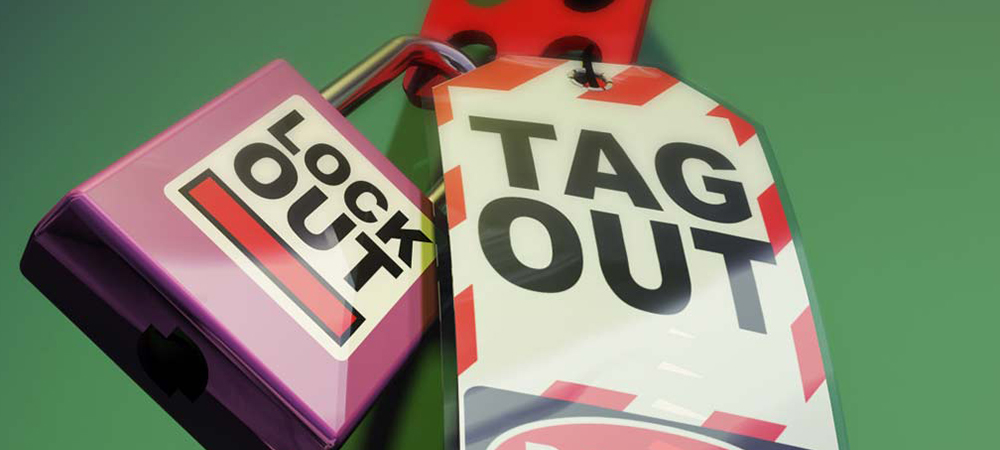
Lock Out Tag Out (LOTO) Training UAE: Isolating Every Energy Type, Verified
A machine switched off is not the same as a machine with zero stored energy. A hydraulic ram can hold pressure long after the pump is isolated. A spring-loaded mechanism can release without warning. A capacitor can discharge current minutes after the power is cut. Lock Out Tag Out exists precisely because ‘off’ is a visual assumption, and stored energy doesn’t care what the switch position says.
Nathan Safety Training (NIMS) trains authorised and affected employees across UAE manufacturing, oil & gas and facilities operations on isolating hazardous energy — electrical, mechanical, hydraulic, pneumatic, thermal and gravitational — before anyone works on equipment that could otherwise move, release or energise unexpectedly.
Why LOTO Covers More Than Electrical Isolation
Lock Out Tag Out is broader than our Electrical Safety course by design — it’s the isolation discipline that applies to any hazardous energy source, not electrical hazards specifically. UAE permit to work frameworks require verified isolation before maintenance or repair work begins on plant and equipment, and that isolation obligation applies equally whether the stored energy is electrical, hydraulic pressure in a ram, compressed air in a pneumatic line, a raised load under gravity, or heat retained in process equipment.
The permit authorises the work. LOTO is the physical, verifiable act that makes the permit’s safety claim actually true — which is why the two are taught as connected disciplines rather than interchangeable ones.
Isolation failures are among the more commonly disputed categories in UAE industrial incident reviews, largely because the isolation step is invisible after the fact — unlike a missing guard or an expired certificate, there’s often no physical evidence of whether verification actually happened, which puts real weight on training and habit rather than equipment alone.
The Energy That Doesn't Announce Itself
Stored energy — hydraulic pressure, spring tension, residual heat — doesn’t behave like a live wire or a moving blade. It sits invisibly inside equipment that looks completely inert, which is exactly why the verification step in Lock Out Tag Out matters more than the lock itself: the lock stops someone re-energising the system, but only verification confirms nothing dangerous was left inside it.
When that verification habit breaks down, the resulting incidents tend to be severe precisely because nobody was expecting the equipment to do anything at all — the assumption of safety was the failure, not a lapse in obvious caution.
Who Needs LOTO Training
Anyone who works on equipment that could move, release energy, or re-energise during maintenance, repair or cleaning.
- Manufacturing and process plant maintenance technicians
- Oil & gas facility maintenance and turnaround crews
- Facilities engineers isolating building plant — pumps, chillers, lifts, generators
- Machine operators who clear jams or perform minor adjustments themselves
- Contractors performing work on client-owned equipment
The Dominant Energy Type Shifts by Emirate
The dominant energy type our clients isolate most often shifts by emirate’s industrial base. We deliver onsite across all seven:
- Dubai — JAFZA and DIP manufacturing plants run a genuine mix of all six energy types, which makes Dubai our most comprehensive multi-energy LOTO delivery
- Abu Dhabi — ADNOC group facilities around Mussafah and Ruwais deal heavily in hydraulic and thermal energy isolation alongside electrical, given the process equipment involved
- Sharjah — Hamriyah and SAIF Zone’s industrial tenants isolate mechanical and pneumatic energy on production lines as often as electrical
- Ajman — Free Zone manufacturers, particularly furniture production lines, isolate mechanical energy on saws and presses as the dominant hazard type
- Ras Al Khaimah — RAK Ceramics’ kiln and processing equipment brings thermal energy isolation into play alongside the more usual electrical and mechanical sources
- Fujairah — FOIZ terminal maintenance work involves hydraulic and pneumatic isolation on pumps and valves as much as electrical isolation on instrumentation
- Umm Al Quwain — a smaller industrial base, but food processing equipment in the Free Trade Zone still carries mechanical and electrical isolation requirements identical in principle to a larger plant
Energy Types and Isolation Method
Energy Type | Example Source | Isolation Method |
Electrical | Motors, panels, control circuits | Circuit breaker lock, verified with proving unit |
Mechanical | Flywheels, conveyors, rotating shafts | Physical blocking, brake engagement |
Hydraulic | Rams, presses, lifting equipment | Pressure release, bleed-down, line lockout |
Pneumatic | Air-driven tools and actuators | Air supply isolation, line bleed, pressure gauge check |
Thermal | Process equipment, steam lines | Cool-down period, temperature verification before work |
Gravitational | Raised loads, suspended equipment | Mechanical blocking or support, not reliance on hydraulics alone |
Verification Is the Step That Gets Skipped
Almost every serious isolation failure we review has the same root cause: verification was skipped, not the lockout itself.
- Isolation applied but never verified with a try-out — the zero-energy state is assumed, not tested
- Group lockout on equipment with multiple workers using a single lock instead of a proper lock box or hasp
- Tags removed by someone other than the person who applied them, breaking the entire accountability chain
- Stored energy — spring tension, hydraulic pressure, residual heat — not fully dissipated before work begins
- Authorised and affected employees not clearly distinguished, so nobody’s actually sure who has the authority to remove a lock
All Six Energy Types, Not Just Electrical
We built this course around the try-out verification step specifically, because it’s the one part of LOTO that’s genuinely invisible if it gets skipped — unlike a missing lock, which is obvious.
Isolation procedures developed during this course are written in a format that aligns directly with what Nathan ISO Consulting’s ISO 45001 work expects to see, since the two teams sit inside the same group rather than working from different templates.
- All six energy types covered, not just electrical — hydraulic and stored mechanical energy are frequently under-addressed elsewhere
- Try-out verification taught as a mandatory physical step, not a documentation checkbox
- Group lockout procedures for multi-worker jobs, including lock box systems
- Instructors with plant maintenance and turnaround experience across oil & gas and manufacturing
- Isolation procedures written for your specific equipment as part of course delivery, not generic templates
FAQ
How is LOTO different from your Electrical Safety course?
Electrical Safety focuses on electrical-specific hazards like shock and arc flash. LOTO covers the physical isolation procedure across all energy types — electrical, hydraulic, pneumatic, mechanical, thermal and gravitational. Most maintenance teams working on complex plant need both.
What counts as an energy type that needs isolating?
Anything that could cause the equipment to move, release, or re-energise — electrical current, hydraulic pressure, compressed air, stored mechanical energy like a compressed spring, residual heat, or a suspended load held up by gravity alone.
What is a try-out step, and why is it mandatory?
It’s the physical test, after isolation, that confirms zero energy actually exists — attempting to start the equipment, testing a circuit with a proving unit, or checking a pressure gauge reads zero. Skipping this step and simply assuming isolation worked is the single most common root cause we find in isolation-related incidents.
How does group lockout work when multiple people are working on the same equipment?
Through a lock box or multi-lock hasp system, where each worker applies their own personal lock and the equipment can’t be re-energised until every individual lock has been removed by the person who applied it — not by a supervisor on their behalf.
What's the difference between an authorised and an affected employee?
An authorised employee is trained and permitted to apply and remove locks and perform the isolation. An affected employee works in the area or on the equipment but doesn’t personally control the isolation — both roles need training, but at different depths.
Can a tag be removed by someone other than the person who applied it?
Only through a defined, documented exception procedure with proper authorisation and verification that it’s safe to do so — as a default rule, only the person who applied the lock removes it. Breaking this chain is one of the clearest LOTO violations we see.
Does this course cover hydraulic and pneumatic isolation, or just electrical?
All energy types are covered in depth, including hydraulic pressure bleed-down and pneumatic line isolation, which are frequently under-addressed in electrical-only isolation training despite carrying comparable risk.
Is LOTO training required by UAE regulation?
Verified isolation before maintenance or repair work is expected under UAE permit to work frameworks and general OHS obligations — LOTO is the recognised, internationally consistent method for meeting that isolation requirement in practice.
How often should LOTO training be refreshed?
We recommend every two to three years for authorised employees, and immediately following any isolation-related incident or near-miss, given how much the consequences of a shortcut here can escalate compared to more routine safety tasks.
Do you help write site-specific isolation procedures, or only deliver training?
Both — we can develop equipment-specific isolation procedures as part of course delivery, since a generic LOTO procedure rarely accounts for the specific stored-energy risks of your actual plant and equipment.
Is LOTO training different for an Abu Dhabi oil & gas plant versus an Ajman furniture factory?
The isolation principles and try-out verification are identical, but the dominant energy type differs — hydraulic and thermal for process plant, mechanical for production line machinery — so we adjust the working examples to match what your team will actually isolate.
How long does LOTO certification take?
Our Authorised Employee course runs two days, covering all six energy types with hands-on isolation and try-out verification on real equipment; a shorter one-day Affected Employee awareness course is available for staff working near isolated equipment without performing isolation themselves.
Can you help us set up a lock box system if we don't already have one?
Yes — we can advise on and help implement group lockout hardware, including lock box selection, as part of course delivery for sites that don’t yet have a formal multi-worker isolation system in place.
Is LOTO the same course as Electrical Safety?
No, though they’re closely related — Electrical Safety covers electrical-specific hazards like arc flash and live working. LOTO covers the physical isolation procedure across all energy types — electrical, hydraulic, pneumatic, mechanical, thermal and gravitational. Most maintenance teams need both, taught as connected but distinct disciplines.
Isolate With Confidence
Whether you need Authorised Employee certification, Affected Employee awareness, or both, tell us your plant and equipment types, and we’ll build isolation procedures and training around the actual energy sources your team works with.
Nathan Safety Training (NIMS) — Lock Out and Tag Out training across Dubai, Abu Dhabi, Sharjah, Ajman, Ras Al Khaimah, Fujairah and Umm Al Quwain.