

Home / Hot Work Safety Training
Hot Work safety Training
Hot Work Safety Training UAE (Welding, Cutting & Grinding Permit Compliance)
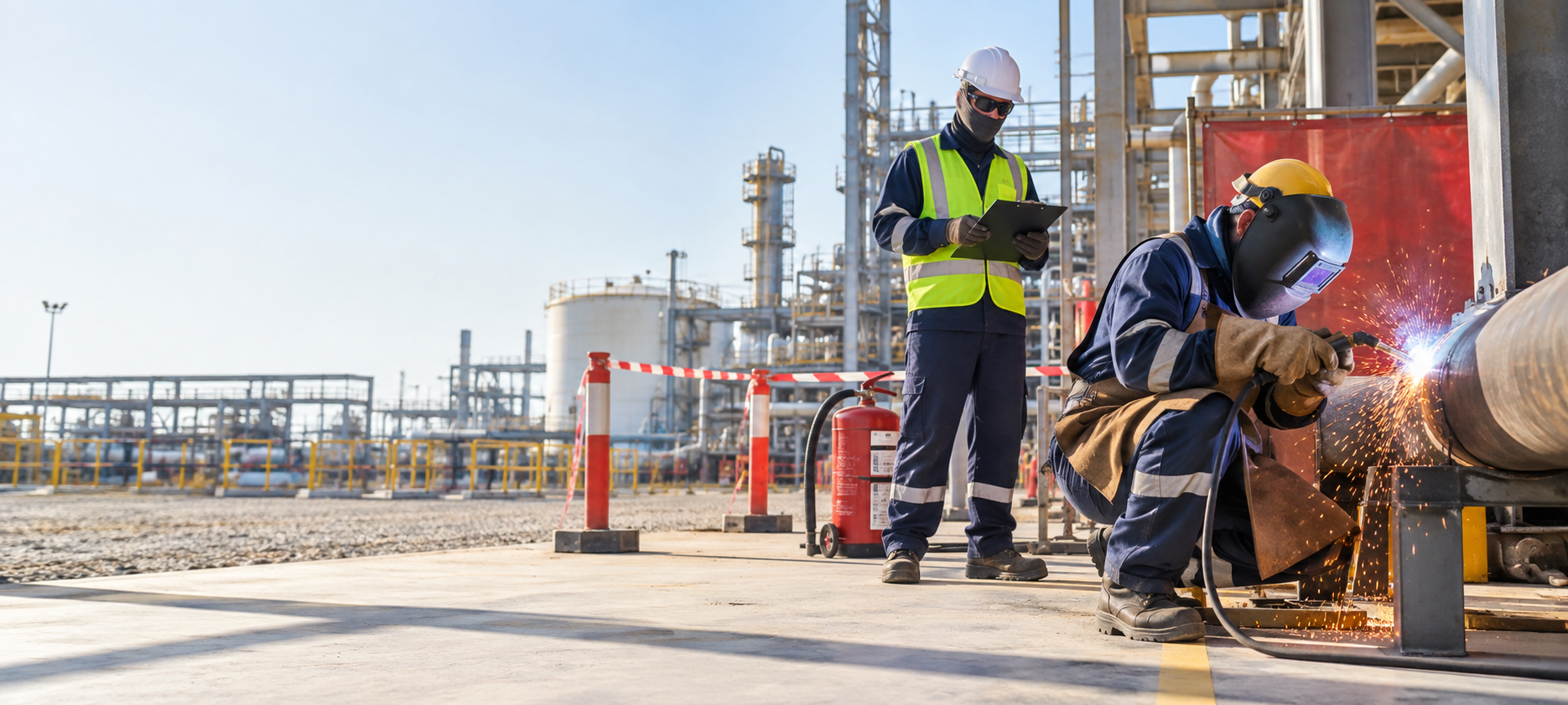
A welding spark travels further than most people assume, and it doesn’t need to land on something obviously flammable — dust accumulation, a residue-coated surface, or material smouldering unnoticed inside a wall cavity can ignite twenty minutes after the welding torch is already switched off and the crew has moved on. That delayed-ignition pattern is exactly why hot work carries its own dedicated permit, its own fire watch requirement, and its own training, distinct from general fire safety awareness.
Nathan Safety Training (NIMS) trains welders, cutters, grinders and fire watch personnel across UAE construction and industrial sites on hot work-specific technique and permit discipline — the specialist depth that sits beneath the broader permit categories covered in our Permit to Work course and the evacuation focus of our Fire Safety course.
Why Hot Work Gets a Dedicated Course, Not Just a Permit Category
Hot work — welding, cutting, grinding, brazing and any spark or flame-producing activity — is named specifically alongside confined space and electrical work as one of the activities UAE construction and industrial HSE guidance expects to be controlled through its own permit, with a fire watch posted for the duration of the work and for a defined period after it finishes. Our Permit to Work course covers hot work permit authorisation as one of several permit categories in the system; this course goes deeper into the specific technique, fire prevention and fire watch discipline the permit is meant to control.
The delayed-ignition risk is what makes hot work genuinely distinct from other fire hazards: a fire watch is required not just during the work but for a defined period afterward, specifically because smouldering material can ignite well after the spark source has stopped — a requirement that surprises operators used to thinking of fire risk as something that ends when the tool switches off.
This course pairs naturally with our Fire Safety training — that course covers evacuation and general fire response; this one covers the prevention and permit discipline that stops a hot work fire from starting in the first place.
What an Uncontrolled Hot Work Fire Actually Costs
Hot work fires disproportionately involve flammable material storage or accumulated combustible dust nearby — not because welders are careless, but because the connection between a spark now and ignition twenty minutes later isn’t intuitive without specific training. Once a hot work fire starts, it typically starts inside an active work area with people, equipment and often adjacent flammable storage all in close proximity.
Beyond the immediate fire risk, an uncontrolled hot work incident triggers an immediate halt to all hot work activity across the site pending investigation — which on a fast-moving construction or shutdown programme can cost far more in schedule delay than the fire damage itself.
Who Needs This Training
Hot work spans a wider range of trades and sites than most safety programmes initially plan for.
- Welders, cutters and grinders across construction, fabrication and maintenance work
- Fire watch personnel specifically assigned to monitor hot work areas during and after the activity
- Oil & gas and petrochemical maintenance crews performing hot work near process equipment
- Shipyard and marine fabrication welders working in enclosed or confined vessel spaces
- Facilities maintenance teams carrying out occasional welding or cutting repairs
Where We Deliver This Training
Hot work volume and risk profile shift by emirate’s dominant industry. We deliver onsite across all seven:
- Dubai — continuous high-rise and infrastructure construction keeps hot work volume high across JAFZA fabrication and city-wide construction sites
- Abu Dhabi — ADNOC group maintenance and shutdown programmes generate some of the highest-consequence hot work in the country, given proximity to process equipment
- Sharjah — Industrial Areas manufacturing and fabrication work, generally smaller-scale hot work operations than Abu Dhabi’s process plants
- Ajman — growing fabrication and metalworking activity alongside the emirate’s manufacturing base
- Ras Al Khaimah — RAK Ceramics and industrial maintenance hot work, alongside quarrying equipment repair and fabrication
- Fujairah — FOIZ terminal maintenance hot work carries the highest-stakes fire watch requirement in the country given surrounding flammable storage concentration
- Umm Al Quwain — smaller-scale fabrication and maintenance hot work, still requiring the same permit and fire watch discipline
Fire Watch Duration Guidance
Work Type | During Work | After Work Completes |
Standard welding/cutting | Continuous fire watch required | Minimum 30–60 minutes post-completion monitoring |
Work near flammable storage | Continuous fire watch, enhanced spark containment | Extended monitoring period, site-specific |
Confined space hot work | Fire watch plus atmospheric monitoring | Extended monitoring, ventilation maintained |
Where Hot Work Fires Actually Start
The welding or cutting itself is rarely the direct cause. The gap between the spark and the fire is almost always a missed preparation or monitoring step.
If a site can’t show a documented pre-work check of the area within a defined radius of the hot work point, that’s the first thing I’d flag — spark travel distance is consistently underestimated.
- Flammable material not cleared or shielded within an adequate radius of the hot work point before starting
- Fire watch ended the moment the tool switches off, skipping the required post-work monitoring period entirely
- Fire extinguishers present in the general area but not actually staged at the specific hot work location
- Hot work permit issued without confirming what’s on the other side of a wall or floor the work is being conducted through
- Spark containment (welding blankets, screens) treated as optional rather than standard practice
What Our Hot Work Training Actually Covers
We built this course around the delayed-ignition risk specifically, since that’s the mechanism behind the hot work fires that actually happen, not the moment of welding itself.
hsemanpower.ae, part of the same group, can supply additional trained fire watch personnel for sites running high-volume hot work programmes, such as shutdowns and turnarounds.
- Spark travel and delayed-ignition risk taught as the central concept, not a footnote
- Fire watch training as its own dedicated role, including required post-work monitoring duration
- Practical pre-work area clearance and spark containment technique, not just permit paperwork
- Confined space hot work covered as a distinct, higher-risk scenario requiring atmospheric monitoring alongside fire watch
- Training delivered alongside your actual hot work equipment and site conditions where possible
Courses Offered
- First Aid Course - CPR and AED
- Confined Space
- Fire Safety Awareness
- Scaffolding Inspection
- Scaffolding Erection & Dismantling
- Flagman Safety
- Chemical Safety and Handling Training
- Hazard and Risk Assessment
- Rigging and Slinging Training
- Traffic Safety
- Hand and Power Tools Operator
- Electrical Safety
- Lock Out and Tag Out (LOTO)
- Accident Incident Investigation
- Lifeguard Training
- Advanced Risk Assessment & Compliance Service
- Behavior-Based Safety Workplace Safety Consulting
- Construction Site Safety Induction Training
- Emergency Response Team Training
- Excavator Operator Training
- Forklift Operator Training
- H2S Awareness & Breathing Apparatus Training
- Hot Work Safety Training
- Incident Reporting & Root Cause Analysis Service
- MEWP Operator Training
- Mobile Crane Operator Training
- Permit to Work System Training
- Rope Access Training
- Working at Height & Fall Protection Safety Training
- Oil & Gas Safety Training
- Fire Warden Training
- Manual Handling Training
- Banksman Safety Training
- Gas Tester Training
- Defensive Driving Training
- HAZMAT Awareness Training
- Machine Safety and Machine Guarding Training
- Spill Response and Spill Control Training
- Welding Safety Training
Need expert advice? Speak to our team today
FAQ
How is this different from your Permit to Work course?
Permit to Work covers the full permit system across all categories — hot work, confined space, electrical, working at height — including issuer and authorisation training. This course goes deep specifically into hot work: welding and cutting technique, spark control, fire watch discipline. Sites running significant hot work volume typically need both.
How is this different from your Fire Safety course?
Fire Safety covers building-wide evacuation, fire wardens and general extinguisher use. This course covers preventing a hot work fire from starting in the first place — spark control, pre-work area clearance, fire watch duration. They’re complementary rather than overlapping.
Why does fire watch need to continue after the welding stops?
Because ignition from hot work sparks or heat can be delayed — smouldering material inside a wall cavity, under flooring, or in dust accumulation can ignite well after the tool has switched off, which is exactly why a defined post-work monitoring period is required, not optional.
Is a separate fire watch person always required, or can the welder monitor their own work?
A dedicated fire watch person is standard practice for hot work, since the welder’s attention is necessarily focused on the task itself and can’t simultaneously provide the surrounding-area vigilance a fire watch role requires.
Does this course cover hot work inside confined spaces?
Yes, as a distinct higher-risk scenario — confined space hot work requires atmospheric monitoring in addition to fire watch, and ventilation has to be maintained throughout, which changes the risk profile significantly from open-area welding.
How long does hot work and fire watch training take?
Our core course runs one day, covering permit requirements, spark control technique, pre-work clearance and fire watch duration requirements, with practical demonstration where site conditions allow.
Do you train welders directly, or only fire watch personnel?
Both — the course covers what welders and cutters need to know about fire prevention and area preparation, and what fire watch personnel specifically need to monitor for, since both roles need to understand each other’s responsibilities to work safely together.
Is hot work training required before working on oil & gas or process sites?
Yes, typically — ADNOC group and similar operators generally require documented hot work competency before authorising welding, cutting or grinding work near process equipment, given the elevated consequence of fire in that environment.
How often should hot work certification be refreshed?
We recommend annually, or immediately following any hot work-related incident or near-miss, given how much the fire watch discipline depends on consistent habit rather than one-time understanding.
Does this course cover shipyard or marine confined-vessel welding specifically?
Yes, as a distinct application — welding inside an enclosed vessel space combines hot work fire risk with confined space atmospheric hazards, and we address this combination directly for marine and shipyard clients.
Can this be combined with our Confined Space training?
Yes, and we recommend it for any crew regularly performing hot work inside tanks, vessels or other confined spaces, since the two hazard sets compound rather than simply adding together.
Do you deliver this training across all seven emirates?
Yes, with particularly high demand in Abu Dhabi and Fujairah given the volume and consequence of hot work on oil & gas maintenance and shutdown programmes in those emirates.
- First Aid Course - CPR and AED
- Confined Space
- Fire Safety Awareness
- Scaffolding Inspection
- Scaffolding Erection & Dismantling
- Flagman Safety
- Chemical Safety and Handling Training
- Hazard and Risk Assessment
- Rigging and Slinging Training
- Traffic Safety
- Hand and Power Tools Operator
- Electrical Safety
- Lock Out and Tag Out (LOTO)
- Accident Incident Investigation
- Lifeguard Training
- Advanced Risk Assessment & Compliance Service
- Behavior-Based Safety Workplace Safety Consulting
- Construction Site Safety Induction Training
- Emergency Response Team Training
- Excavator Operator Training
- Forklift Operator Training
- H2S Awareness & Breathing Apparatus Training
- Hot Work Safety Training
- Incident Reporting & Root Cause Analysis Service
- MEWP Operator Training
- Mobile Crane Operator Training
- Permit to Work System Training
- Rope Access Training
- Working at Height & Fall Protection Safety Training
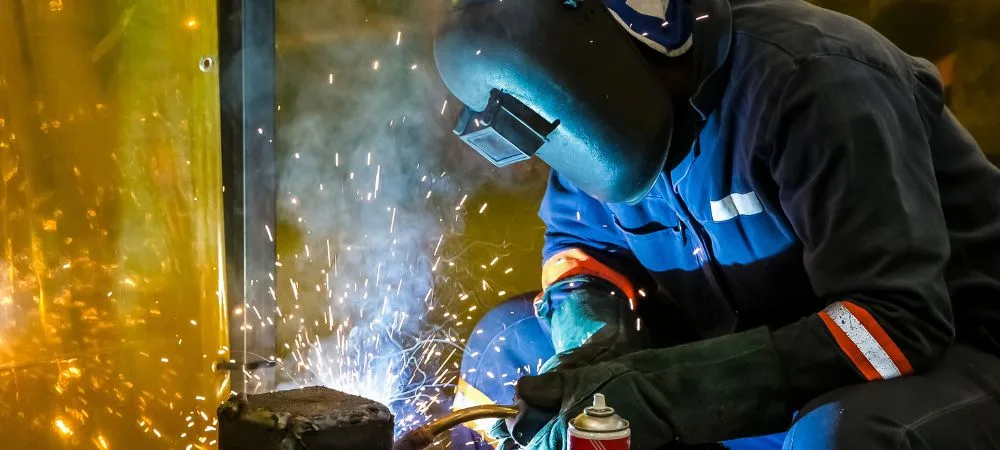
Hot Work Safety Training UAE (Welding, Cutting & Grinding Permit Compliance)
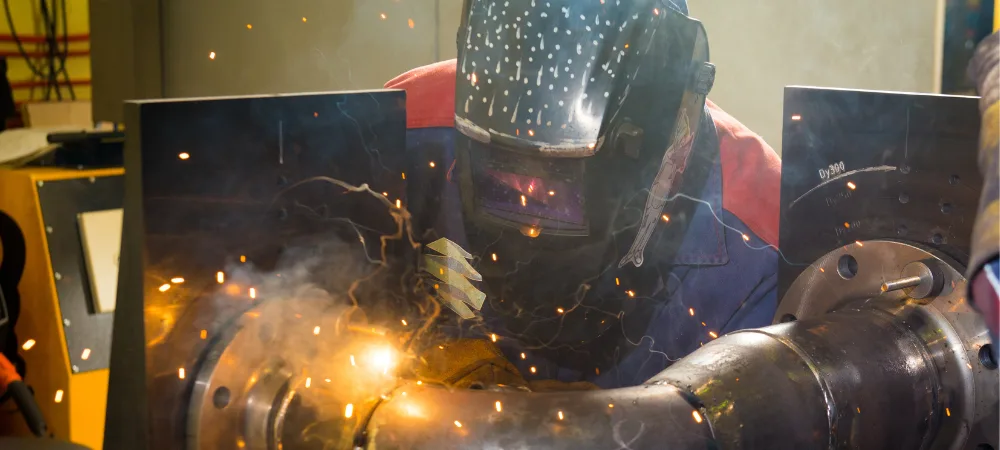
A welding spark travels further than most people assume, and it doesn’t need to land on something obviously flammable — dust accumulation, a residue-coated surface, or material smouldering unnoticed inside a wall cavity can ignite twenty minutes after the welding torch is already switched off and the crew has moved on. That delayed-ignition pattern is exactly why hot work carries its own dedicated permit, its own fire watch requirement, and its own training, distinct from general fire safety awareness.
Nathan Safety Training (NIMS) trains welders, cutters, grinders and fire watch personnel across UAE construction and industrial sites on hot work-specific technique and permit discipline — the specialist depth that sits beneath the broader permit categories covered in our Permit to Work course and the evacuation focus of our Fire Safety course.
Why Hot Work Gets a Dedicated Course, Not Just a Permit Category
Hot work — welding, cutting, grinding, brazing and any spark or flame-producing activity — is named specifically alongside confined space and electrical work as one of the activities UAE construction and industrial HSE guidance expects to be controlled through its own permit, with a fire watch posted for the duration of the work and for a defined period after it finishes. Our Permit to Work course covers hot work permit authorisation as one of several permit categories in the system; this course goes deeper into the specific technique, fire prevention and fire watch discipline the permit is meant to control.
The delayed-ignition risk is what makes hot work genuinely distinct from other fire hazards: a fire watch is required not just during the work but for a defined period afterward, specifically because smouldering material can ignite well after the spark source has stopped — a requirement that surprises operators used to thinking of fire risk as something that ends when the tool switches off.
This course pairs naturally with our Fire Safety training — that course covers evacuation and general fire response; this one covers the prevention and permit discipline that stops a hot work fire from starting in the first place.
What an Uncontrolled Hot Work Fire Actually Costs
Hot work fires disproportionately involve flammable material storage or accumulated combustible dust nearby — not because welders are careless, but because the connection between a spark now and ignition twenty minutes later isn’t intuitive without specific training. Once a hot work fire starts, it typically starts inside an active work area with people, equipment and often adjacent flammable storage all in close proximity.
Beyond the immediate fire risk, an uncontrolled hot work incident triggers an immediate halt to all hot work activity across the site pending investigation — which on a fast-moving construction or shutdown programme can cost far more in schedule delay than the fire damage itself.
Who Needs This Training
Hot work spans a wider range of trades and sites than most safety programmes initially plan for.
- Welders, cutters and grinders across construction, fabrication and maintenance work
- Fire watch personnel specifically assigned to monitor hot work areas during and after the activity
- Oil & gas and petrochemical maintenance crews performing hot work near process equipment
- Shipyard and marine fabrication welders working in enclosed or confined vessel spaces
- Facilities maintenance teams carrying out occasional welding or cutting repairs
Where We Deliver This Training
Hot work volume and risk profile shift by emirate’s dominant industry. We deliver onsite across all seven:
- Dubai — continuous high-rise and infrastructure construction keeps hot work volume high across JAFZA fabrication and city-wide construction sites
- Abu Dhabi — ADNOC group maintenance and shutdown programmes generate some of the highest-consequence hot work in the country, given proximity to process equipment
- Sharjah — Industrial Areas manufacturing and fabrication work, generally smaller-scale hot work operations than Abu Dhabi’s process plants
- Ajman — growing fabrication and metalworking activity alongside the emirate’s manufacturing base
- Ras Al Khaimah — RAK Ceramics and industrial maintenance hot work, alongside quarrying equipment repair and fabrication
- Fujairah — FOIZ terminal maintenance hot work carries the highest-stakes fire watch requirement in the country given surrounding flammable storage concentration
- Umm Al Quwain — smaller-scale fabrication and maintenance hot work, still requiring the same permit and fire watch discipline
Fire Watch Duration Guidance
Work Type | During Work | After Work Completes |
Standard welding/cutting | Continuous fire watch required | Minimum 30–60 minutes post-completion monitoring |
Work near flammable storage | Continuous fire watch, enhanced spark containment | Extended monitoring period, site-specific |
Confined space hot work | Fire watch plus atmospheric monitoring | Extended monitoring, ventilation maintained |
Where Hot Work Fires Actually Start
The welding or cutting itself is rarely the direct cause. The gap between the spark and the fire is almost always a missed preparation or monitoring step.
If a site can’t show a documented pre-work check of the area within a defined radius of the hot work point, that’s the first thing I’d flag — spark travel distance is consistently underestimated.
- Flammable material not cleared or shielded within an adequate radius of the hot work point before starting
- Fire watch ended the moment the tool switches off, skipping the required post-work monitoring period entirely
- Fire extinguishers present in the general area but not actually staged at the specific hot work location
- Hot work permit issued without confirming what’s on the other side of a wall or floor the work is being conducted through
- Spark containment (welding blankets, screens) treated as optional rather than standard practice
What Our Hot Work Training Actually Covers
We built this course around the delayed-ignition risk specifically, since that’s the mechanism behind the hot work fires that actually happen, not the moment of welding itself.
hsemanpower.ae, part of the same group, can supply additional trained fire watch personnel for sites running high-volume hot work programmes, such as shutdowns and turnarounds.
- Spark travel and delayed-ignition risk taught as the central concept, not a footnote
- Fire watch training as its own dedicated role, including required post-work monitoring duration
- Practical pre-work area clearance and spark containment technique, not just permit paperwork
- Confined space hot work covered as a distinct, higher-risk scenario requiring atmospheric monitoring alongside fire watch
- Training delivered alongside your actual hot work equipment and site conditions where possible
FAQ
How is this different from your Permit to Work course?
Permit to Work covers the full permit system across all categories — hot work, confined space, electrical, working at height — including issuer and authorisation training. This course goes deep specifically into hot work: welding and cutting technique, spark control, fire watch discipline. Sites running significant hot work volume typically need both.
How is this different from your Fire Safety course?
Fire Safety covers building-wide evacuation, fire wardens and general extinguisher use. This course covers preventing a hot work fire from starting in the first place — spark control, pre-work area clearance, fire watch duration. They’re complementary rather than overlapping.
Why does fire watch need to continue after the welding stops?
Because ignition from hot work sparks or heat can be delayed — smouldering material inside a wall cavity, under flooring, or in dust accumulation can ignite well after the tool has switched off, which is exactly why a defined post-work monitoring period is required, not optional.
Is a separate fire watch person always required, or can the welder monitor their own work?
A dedicated fire watch person is standard practice for hot work, since the welder’s attention is necessarily focused on the task itself and can’t simultaneously provide the surrounding-area vigilance a fire watch role requires.
Does this course cover hot work inside confined spaces?
Yes, as a distinct higher-risk scenario — confined space hot work requires atmospheric monitoring in addition to fire watch, and ventilation has to be maintained throughout, which changes the risk profile significantly from open-area welding.
How long does hot work and fire watch training take?
Our core course runs one day, covering permit requirements, spark control technique, pre-work clearance and fire watch duration requirements, with practical demonstration where site conditions allow.
Do you train welders directly, or only fire watch personnel?
Both — the course covers what welders and cutters need to know about fire prevention and area preparation, and what fire watch personnel specifically need to monitor for, since both roles need to understand each other’s responsibilities to work safely together.
Is hot work training required before working on oil & gas or process sites?
Yes, typically — ADNOC group and similar operators generally require documented hot work competency before authorising welding, cutting or grinding work near process equipment, given the elevated consequence of fire in that environment.
How often should hot work certification be refreshed?
We recommend annually, or immediately following any hot work-related incident or near-miss, given how much the fire watch discipline depends on consistent habit rather than one-time understanding.
Does this course cover shipyard or marine confined-vessel welding specifically?
Yes, as a distinct application — welding inside an enclosed vessel space combines hot work fire risk with confined space atmospheric hazards, and we address this combination directly for marine and shipyard clients.
Can this be combined with our Confined Space training?
Yes, and we recommend it for any crew regularly performing hot work inside tanks, vessels or other confined spaces, since the two hazard sets compound rather than simply adding together.
Do you deliver this training across all seven emirates?
Yes, with particularly high demand in Abu Dhabi and Fujairah given the volume and consequence of hot work on oil & gas maintenance and shutdown programmes in those emirates.
Book Hot Work Safety Training
Whether you need welders trained on fire prevention technique or a dedicated fire watch team certified, tell us your hot work volume and site type, and we’ll scope accordingly.
Nathan Safety Training (NIMS) — Hot work safety and fire watch training across Dubai, Abu Dhabi, Sharjah, Ajman, Ras Al Khaimah, Fujairah and Umm Al Quwain.