



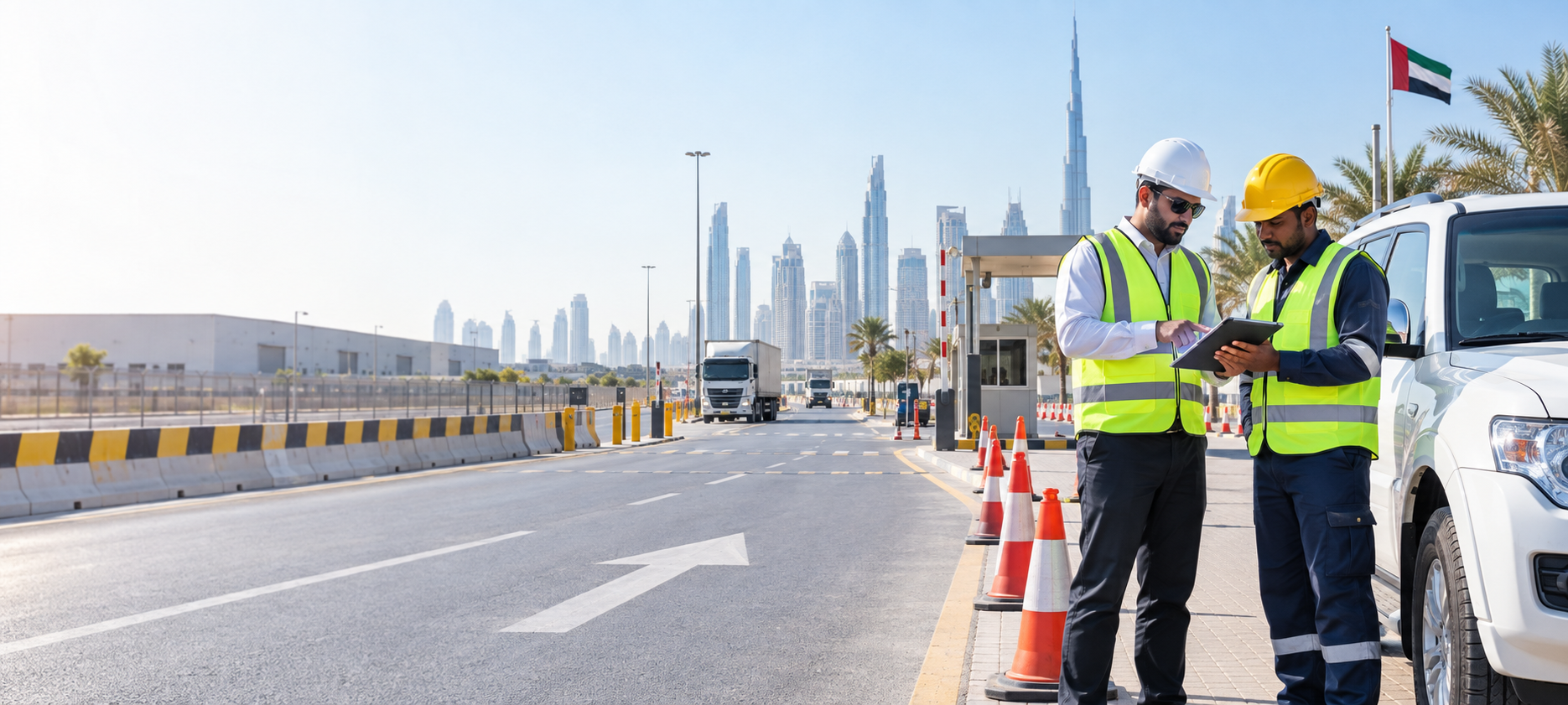
Home / Traffic Safety
Traffic Safety
Traffic Safety, Defensive Driving and Journey Management Training for UAE Fleets
The most dangerous part of many UAE industrial jobs isn’t on the site — it’s the drive to get there. Long desert routes between camps and remote facilities, fatigue after a night shift, and vehicles sharing pedestrian routes inside a busy yard account for a disproportionate share of serious workplace incidents that never show up in a site’s own incident log because they technically happened on the road.
Nathan Safety Training (NIMS) trains drivers and fleet operators across the UAE on defensive driving, journey management planning and site vehicle safety — distinct from our Flagman Safety course, which trains the person directing traffic rather than the person behind the wheel.
A Different Course From Flagman Safety — Deliberately
This course is aimed at the person behind the wheel, not the person directing traffic — the distinction matters for how the training is structured. Fleet and driving safety across the UAE sits under Roads and Transport Authority (RTA) road safety expectations and UAE traffic law, with many oil & gas and logistics operators layering their own journey management requirements for long-distance and remote-site travel on top of the baseline legal standard.
Journey management planning in particular has become standard practice for operators running routes into remote desert or industrial locations — a documented plan covering route, rest stops, communication checkpoints and fatigue limits, reviewed before the vehicle leaves, not improvised once it’s already on the road.
Insurers covering UAE commercial fleets increasingly ask for evidence of structured driver training and a documented journey management policy as part of underwriting, particularly for operators running regular desert or remote-site routes. A documented training history has a measurable effect on renewal terms for fleets with an otherwise clean claims record.
The Commute Is Often the Most Dangerous Part of the Job
A worker can follow every site safety procedure perfectly and still be at greater risk during the drive to or from that site than during the shift itself — particularly on long desert routes, after night shifts, or during peak-hour urban driving. Fleet risk gets less attention than site risk mostly because it happens off the employer’s physical premises, not because it’s actually smaller.
The commercial case is direct: fleet incidents drive up insurance costs, vehicle downtime and, increasingly, scrutiny from clients who now ask about driver training history during contractor prequalification, not just site safety records.
Who This Course Is For
Anyone whose role involves regular driving for work, particularly where routes are long, remote, or shared with site pedestrian traffic.
- Logistics and transport fleet drivers
- Oil & gas personnel travelling to remote desert or offshore-support facilities
- Construction site vehicle operators sharing space with pedestrian workers
- Delivery and courier services operating at volume across UAE cities
- Fleet managers responsible for driver policy and journey management planning
- Facilities and security teams managing vehicle access points at large commercial or industrial sites
- Fleet operators needing documented driver training as a condition of their insurance policy
Route Risk Looks Different in Every Emirate
Route risk varies more than most fleet operators plan for, from dense city driving to multi-hour desert stretches. We deliver onsite across all seven:
- Dubai — high-volume urban delivery driving and dense city traffic make defensive driving and time-pressure management the priority here
- Abu Dhabi — Western Region and Al Dhafra routes into remote desert operations are exactly where journey management planning earns its keep, given multi-hour drives between facilities
- Sharjah — SME logistics fleets running the Sharjah–Dubai corridor daily face some of the heaviest repeat-route congestion in the country
- Ajman — a growing logistics and warehousing sector is putting more fleet vehicles on the road with drivers who haven’t had formal defensive driving training
- Ras Al Khaimah — mountain routes toward Jebel Jais add gradient and hairpin-turn driving that flat-road defensive driving training doesn’t cover
- Fujairah — the mountain pass connecting the west coast to Fujairah’s Gulf of Oman side is a genuinely different driving environment from anywhere else in the UAE
- Umm Al Quwain — quieter roads overall, but fatigue and load-securing risk apply just as much to a short local route as a long desert one
Course Levels at a Glance
Course | Duration | Focus |
Defensive Driving | 1 day | Hazard perception, following distance, speed management |
Journey Management Planning | 1 day | Remote route planning, fatigue limits, checkpoint protocol |
Site Vehicle Safety | Half day | Pedestrian segregation, reversing, yard traffic discipline |
The Routes We Get Called In to Review
The incidents we’re asked to review rarely involve unfamiliar roads. They involve familiar routes driven under conditions nobody accounted for.
Fatigue is the factor I’d want documented evidence on before anything else — it’s the easiest risk to underestimate, because nobody feels tired until they very suddenly are.
- Fatigue on long desert routes after a night shift, with no rest-stop requirement built into the schedule
- No journey management plan for remote-site travel, despite the route being genuinely high-risk
- Pedestrian and vehicle routes sharing the same site space with no physical segregation
- Mobile phone use treated as an informal tolerance rather than an enforced policy
- Load securing checked at dispatch but never re-verified after a stop
What Our Fleet Programmes Include
We built the Journey Management Planning module around genuinely remote UAE routes, because fatigue and route risk look nothing like a standard urban defensive-driving scenario.
Fleet operators needing additional certified drivers for a specific contract or route can draw on hsemanpower.ae rather than running a separate recruitment and training cycle from scratch.
- Defensive driving technique taught against real UAE road and desert conditions, not generic international content
- Journey management planning templates built for remote site and long-haul routes specifically
- Fatigue management guidance calibrated to shift patterns common in UAE oil & gas and logistics operations
- Site vehicle safety training that addresses pedestrian segregation as a design problem, not just a behaviour one
- Fleet-wide programmes with policy support, not just individual driver certification
Courses Offered
- First Aid Course - CPR and AED
- Confined Space
- Fire Safety Awareness
- Scaffolding Inspection
- Scaffolding Erection & Dismantling
- Flagman Safety
- Chemical Safety and Handling Training
- Hazard and Risk Assessment
- Rigging and Slinging Training
- Traffic Safety
- Hand and Power Tools Operator
- Electrical Safety
- Lock Out and Tag Out (LOTO)
- Accident Incident Investigation
- Lifeguard Training
- Advanced Risk Assessment & Compliance Service
- Behavior-Based Safety Workplace Safety Consulting
- Construction Site Safety Induction Training
- Emergency Response Team Training
- Excavator Operator Training
- Forklift Operator Training
- H2S Awareness & Breathing Apparatus Training
- Hot Work Safety Training
- Incident Reporting & Root Cause Analysis Service
- MEWP Operator Training
- Mobile Crane Operator Training
- Permit to Work System Training
- Rope Access Training
- Working at Height & Fall Protection Safety Training
- Oil & Gas Safety Training
- Fire Warden Training
- Manual Handling Training
- Banksman Safety Training
- Gas Tester Training
- Defensive Driving Training
- HAZMAT Awareness Training
- Machine Safety and Machine Guarding Training
- Spill Response and Spill Control Training
- Welding Safety Training
Need expert advice? Speak to our team today
FAQ
How is this different from your Flagman Safety course?
Flagman Safety trains the person directing traffic from a fixed position. This course trains the person behind the wheel — defensive driving, journey management and vehicle handling. Logistics and construction operators often need both, for different staff.
What is a journey management plan?
A documented plan covering route, planned rest stops, communication checkpoints and fatigue limits for a specific trip, reviewed and approved before departure — standard practice for UAE operators running routes into remote desert or offshore-support locations.
Is defensive driving training required by UAE law?
There’s no single blanket statute mandating a specific course, but employers carry a general duty of care for work-related driving under UAE labour and traffic law, and operators running fleets or remote routes increasingly treat structured driver training as a practical necessity rather than optional.
Does this course cover fatigue management?
Yes, specifically calibrated to UAE shift patterns — long desert routes after night shifts are a recurring risk factor we address directly, including how to build realistic rest stops into a journey plan rather than treating fatigue as a driver willpower issue.
What does Site Vehicle Safety training cover that general driving doesn't?
Pedestrian-vehicle segregation, reversing procedures, blind spot awareness around plant and machinery, and yard traffic discipline — hazards specific to a construction or industrial site rather than the open road.
Is this course relevant to delivery and courier drivers?
Yes — high-volume urban delivery driving carries its own risk profile around time pressure and repeated stop-start driving, and defensive driving principles apply directly even though the routes are short rather than long-distance.
Do you train on load securing?
Yes, as part of the broader course content — improperly secured loads are a recurring cause of serious incidents, and the check needs to happen at dispatch and be re-verified after any stop, not assumed to hold for the whole journey.
How long does certification remain valid?
We recommend refresher training every two to three years, or sooner following any at-fault incident, since driving habits drift gradually in ways a driver often doesn’t notice without a structured check-in.
Can this be delivered as a fleet-wide programme rather than individual bookings?
Yes, and for fleet operators this is what we recommend — consistent training across the whole driver pool, paired with policy support on fatigue limits and journey management, rather than training individuals in isolation.
Do you cover offshore-support and remote desert routes specifically?
Yes, this is a distinct focus of our Journey Management Planning course, given how different the risk profile is for a multi-hour desert route to a remote facility compared with urban city driving.
Is mountain driving in RAK or Fujairah covered separately from desert route training?
Yes — gradient, hairpin turns and reduced sightlines around Jebel Jais and the Fujairah mountain pass call for different technique than flat desert highway driving, and we treat it as its own module for drivers regularly on those routes.
How long does defensive driving certification take?
Our core Defensive Driving course runs one day; Journey Management Planning is typically delivered as a half-day workshop built around your actual remote-site routes rather than generic theory.
Can you train drivers who are already experienced, or is this only for new drivers?
Most of our bookings are experienced drivers — the course is designed to reset habits that drift over years of driving the same routes, not to teach basic vehicle control to people who’ve never held a licence.
Is 'defensive driving' the same as 'journey management'?
No — defensive driving is about in-the-moment hazard perception and vehicle control skills. Journey management is a planning discipline: route, rest stops and checkpoints agreed before a trip starts, particularly for remote desert routes. Most fleet operators need both, but they’re genuinely different skill sets.
- First Aid Course - CPR and AED
- Confined Space
- Fire Safety Awareness
- Scaffolding Inspection
- Scaffolding Erection & Dismantling
- Flagman Safety
- Chemical Safety and Handling Training
- Hazard and Risk Assessment
- Rigging and Slinging Training
- Traffic Safety
- Hand and Power Tools Operator
- Electrical Safety
- Lock Out and Tag Out (LOTO)
- Accident Incident Investigation
- Lifeguard Training
- Advanced Risk Assessment & Compliance Service
- Behavior-Based Safety Workplace Safety Consulting
- Construction Site Safety Induction Training
- Emergency Response Team Training
- Excavator Operator Training
- Forklift Operator Training
- H2S Awareness & Breathing Apparatus Training
- Hot Work Safety Training
- Incident Reporting & Root Cause Analysis Service
- MEWP Operator Training
- Mobile Crane Operator Training
- Permit to Work System Training
- Rope Access Training
- Working at Height & Fall Protection Safety Training

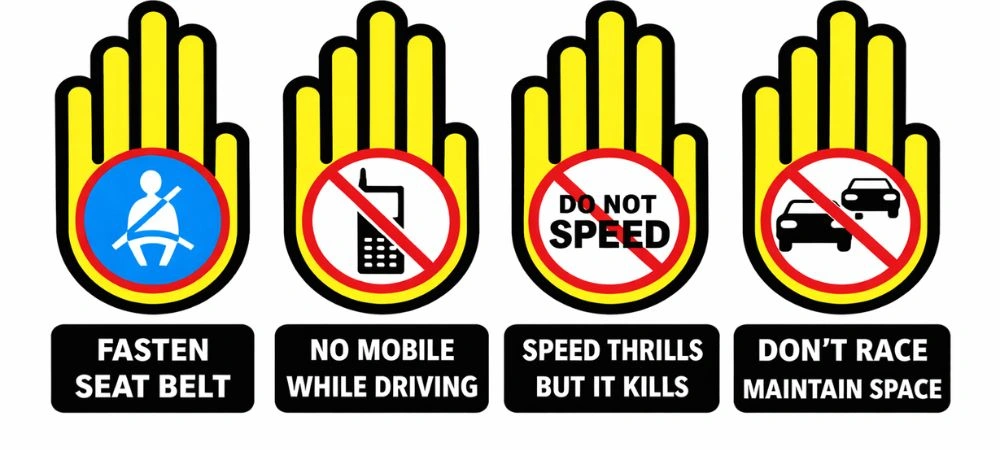
Traffic Safety, Defensive Driving and Journey Management Training for UAE Fleets
The most dangerous part of many UAE industrial jobs isn’t on the site — it’s the drive to get there. Long desert routes between camps and remote facilities, fatigue after a night shift, and vehicles sharing pedestrian routes inside a busy yard account for a disproportionate share of serious workplace incidents that never show up in a site’s own incident log because they technically happened on the road.
Nathan Safety Training (NIMS) trains drivers and fleet operators across the UAE on defensive driving, journey management planning and site vehicle safety — distinct from our Flagman Safety course, which trains the person directing traffic rather than the person behind the wheel.
A Different Course From Flagman Safety — Deliberately
This course is aimed at the person behind the wheel, not the person directing traffic — the distinction matters for how the training is structured. Fleet and driving safety across the UAE sits under Roads and Transport Authority (RTA) road safety expectations and UAE traffic law, with many oil & gas and logistics operators layering their own journey management requirements for long-distance and remote-site travel on top of the baseline legal standard.
Journey management planning in particular has become standard practice for operators running routes into remote desert or industrial locations — a documented plan covering route, rest stops, communication checkpoints and fatigue limits, reviewed before the vehicle leaves, not improvised once it’s already on the road.
Insurers covering UAE commercial fleets increasingly ask for evidence of structured driver training and a documented journey management policy as part of underwriting, particularly for operators running regular desert or remote-site routes. A documented training history has a measurable effect on renewal terms for fleets with an otherwise clean claims record.
The Commute Is Often the Most Dangerous Part of the Job
A worker can follow every site safety procedure perfectly and still be at greater risk during the drive to or from that site than during the shift itself — particularly on long desert routes, after night shifts, or during peak-hour urban driving. Fleet risk gets less attention than site risk mostly because it happens off the employer’s physical premises, not because it’s actually smaller.
The commercial case is direct: fleet incidents drive up insurance costs, vehicle downtime and, increasingly, scrutiny from clients who now ask about driver training history during contractor prequalification, not just site safety records.
Who This Course Is For
Anyone whose role involves regular driving for work, particularly where routes are long, remote, or shared with site pedestrian traffic.
- Logistics and transport fleet drivers
- Oil & gas personnel travelling to remote desert or offshore-support facilities
- Construction site vehicle operators sharing space with pedestrian workers
- Delivery and courier services operating at volume across UAE cities
- Fleet managers responsible for driver policy and journey management planning
- Facilities and security teams managing vehicle access points at large commercial or industrial sites
- Fleet operators needing documented driver training as a condition of their insurance policy
Route Risk Looks Different in Every Emirate
Route risk varies more than most fleet operators plan for, from dense city driving to multi-hour desert stretches. We deliver onsite across all seven:
- Dubai — high-volume urban delivery driving and dense city traffic make defensive driving and time-pressure management the priority here
- Abu Dhabi — Western Region and Al Dhafra routes into remote desert operations are exactly where journey management planning earns its keep, given multi-hour drives between facilities
- Sharjah — SME logistics fleets running the Sharjah–Dubai corridor daily face some of the heaviest repeat-route congestion in the country
- Ajman — a growing logistics and warehousing sector is putting more fleet vehicles on the road with drivers who haven’t had formal defensive driving training
- Ras Al Khaimah — mountain routes toward Jebel Jais add gradient and hairpin-turn driving that flat-road defensive driving training doesn’t cover
- Fujairah — the mountain pass connecting the west coast to Fujairah’s Gulf of Oman side is a genuinely different driving environment from anywhere else in the UAE
- Umm Al Quwain — quieter roads overall, but fatigue and load-securing risk apply just as much to a short local route as a long desert one
Course Levels at a Glance
Course | Duration | Focus |
Defensive Driving | 1 day | Hazard perception, following distance, speed management |
Journey Management Planning | 1 day | Remote route planning, fatigue limits, checkpoint protocol |
Site Vehicle Safety | Half day | Pedestrian segregation, reversing, yard traffic discipline |
The Routes We Get Called In to Review
The incidents we’re asked to review rarely involve unfamiliar roads. They involve familiar routes driven under conditions nobody accounted for.
Fatigue is the factor I’d want documented evidence on before anything else — it’s the easiest risk to underestimate, because nobody feels tired until they very suddenly are.
- Fatigue on long desert routes after a night shift, with no rest-stop requirement built into the schedule
- No journey management plan for remote-site travel, despite the route being genuinely high-risk
- Pedestrian and vehicle routes sharing the same site space with no physical segregation
- Mobile phone use treated as an informal tolerance rather than an enforced policy
- Load securing checked at dispatch but never re-verified after a stop
What Our Fleet Programmes Include
We built the Journey Management Planning module around genuinely remote UAE routes, because fatigue and route risk look nothing like a standard urban defensive-driving scenario.
Fleet operators needing additional certified drivers for a specific contract or route can draw on hsemanpower.ae rather than running a separate recruitment and training cycle from scratch.
- Defensive driving technique taught against real UAE road and desert conditions, not generic international content
- Journey management planning templates built for remote site and long-haul routes specifically
- Fatigue management guidance calibrated to shift patterns common in UAE oil & gas and logistics operations
- Site vehicle safety training that addresses pedestrian segregation as a design problem, not just a behaviour one
- Fleet-wide programmes with policy support, not just individual driver certification
FAQ
How is this different from your Flagman Safety course?
Flagman Safety trains the person directing traffic from a fixed position. This course trains the person behind the wheel — defensive driving, journey management and vehicle handling. Logistics and construction operators often need both, for different staff.
What is a journey management plan?
A documented plan covering route, planned rest stops, communication checkpoints and fatigue limits for a specific trip, reviewed and approved before departure — standard practice for UAE operators running routes into remote desert or offshore-support locations.
Is defensive driving training required by UAE law?
There’s no single blanket statute mandating a specific course, but employers carry a general duty of care for work-related driving under UAE labour and traffic law, and operators running fleets or remote routes increasingly treat structured driver training as a practical necessity rather than optional.
Does this course cover fatigue management?
Yes, specifically calibrated to UAE shift patterns — long desert routes after night shifts are a recurring risk factor we address directly, including how to build realistic rest stops into a journey plan rather than treating fatigue as a driver willpower issue.
What does Site Vehicle Safety training cover that general driving doesn't?
Pedestrian-vehicle segregation, reversing procedures, blind spot awareness around plant and machinery, and yard traffic discipline — hazards specific to a construction or industrial site rather than the open road.
Is this course relevant to delivery and courier drivers?
Yes — high-volume urban delivery driving carries its own risk profile around time pressure and repeated stop-start driving, and defensive driving principles apply directly even though the routes are short rather than long-distance.
Do you train on load securing?
Yes, as part of the broader course content — improperly secured loads are a recurring cause of serious incidents, and the check needs to happen at dispatch and be re-verified after any stop, not assumed to hold for the whole journey.
How long does certification remain valid?
We recommend refresher training every two to three years, or sooner following any at-fault incident, since driving habits drift gradually in ways a driver often doesn’t notice without a structured check-in.
Can this be delivered as a fleet-wide programme rather than individual bookings?
Yes, and for fleet operators this is what we recommend — consistent training across the whole driver pool, paired with policy support on fatigue limits and journey management, rather than training individuals in isolation.
Do you cover offshore-support and remote desert routes specifically?
Yes, this is a distinct focus of our Journey Management Planning course, given how different the risk profile is for a multi-hour desert route to a remote facility compared with urban city driving.
Is mountain driving in RAK or Fujairah covered separately from desert route training?
Yes — gradient, hairpin turns and reduced sightlines around Jebel Jais and the Fujairah mountain pass call for different technique than flat desert highway driving, and we treat it as its own module for drivers regularly on those routes.
How long does defensive driving certification take?
Our core Defensive Driving course runs one day; Journey Management Planning is typically delivered as a half-day workshop built around your actual remote-site routes rather than generic theory.
Can you train drivers who are already experienced, or is this only for new drivers?
Most of our bookings are experienced drivers — the course is designed to reset habits that drift over years of driving the same routes, not to teach basic vehicle control to people who’ve never held a licence.
Is 'defensive driving' the same as 'journey management'?
No — defensive driving is about in-the-moment hazard perception and vehicle control skills. Journey management is a planning discipline: route, rest stops and checkpoints agreed before a trip starts, particularly for remote desert routes. Most fleet operators need both, but they’re genuinely different skill sets.
Get Your Drivers Certified
Whether you need defensive driving, journey management planning, or both, tell us your typical routes — urban, remote or site-internal — and fleet size, and we’ll scope the right mix of training.
Nathan Safety Training (NIMS) — Road traffic safety and journey management training across Dubai, Abu Dhabi, Sharjah, Ajman, Ras Al Khaimah, Fujairah and Umm Al Quwain.