

Home / Electrical Safety
Electrical Safety
Is 'Off' Really Off? Electrical Safety Training Across the UAE
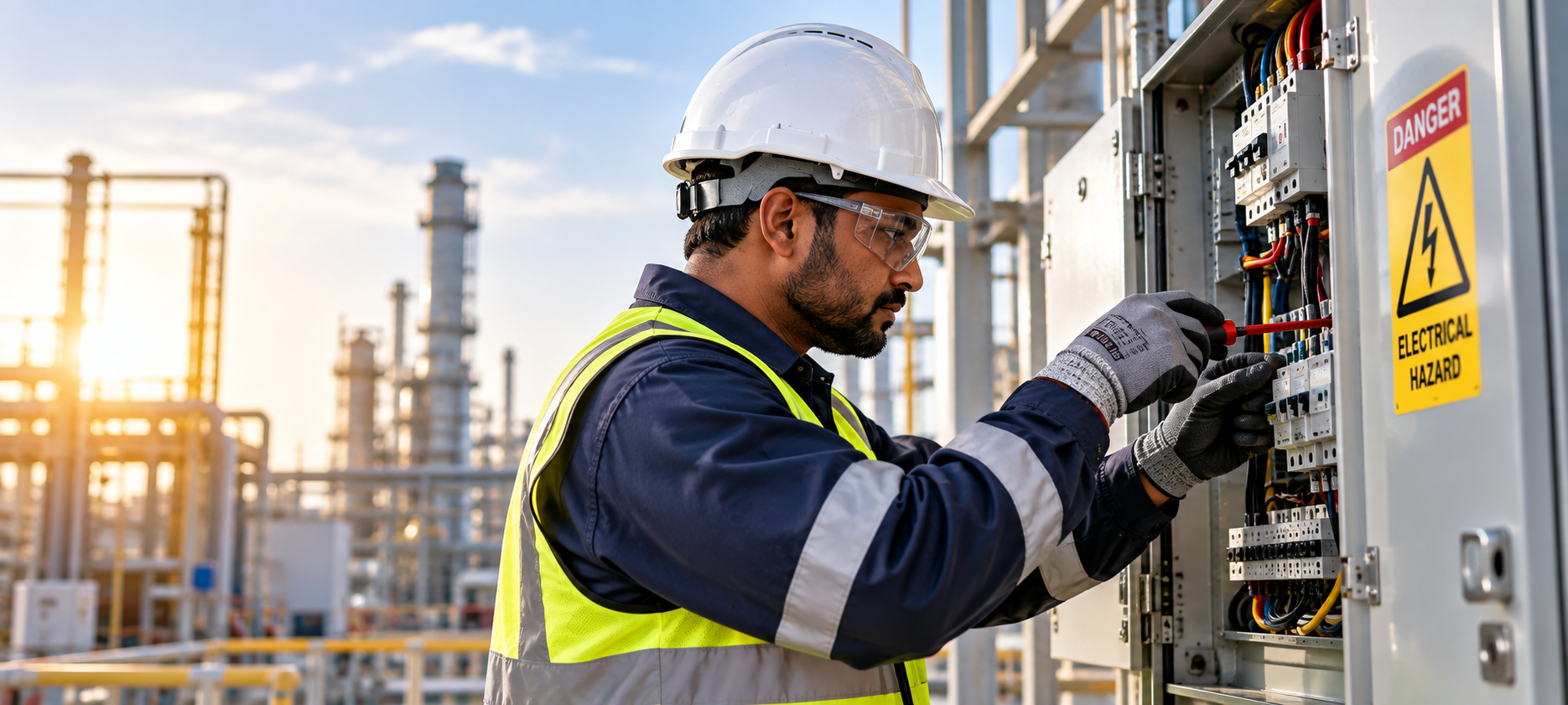
Electricity doesn’t announce when it’s dangerous. A distribution board that looks identical to the one isolated yesterday can be live today, and the difference between a safe repair and an arc flash injury often comes down to a single habit: testing before touching, every time, regardless of what the isolation label says. Temporary site power in particular — daisy-chained extension cables, damaged distribution boards, overloaded circuits — is where we see the gap between paper compliance and actual electrical safety widen fastest.
Nathan Safety Training (NIMS) trains authorised and competent persons across UAE facilities and construction operations on electrical hazard awareness, isolation verification and safe working practice around live and de-energised equipment — distinct from our Lock Out and Tag Out course, which covers isolation across all energy types, not electrical hazards specifically.
Why Electrical Work Gets Its Own Permit and Its Own Training
Electrical work is one of the activities explicitly named as requiring permit to work control under UAE construction and facilities HSE guidance, alongside hot work and confined space entry. DEWA’s technical requirements govern permanent electrical installations, but the higher-risk gap in practice is temporary site distribution — construction power boards, generator connections and extension runs — which don’t always receive the same scrutiny as permanent building electrics despite carrying comparable risk.
Internationally, arc flash risk assessment and PPE selection commonly reference NFPA 70E-style categorisation, which UAE electrical safety training frequently draws on even though it isn’t itself a UAE statute — it’s a widely adopted technical reference for what level of protection a given electrical task actually requires.
Insurance underwriters for UAE commercial and industrial property increasingly ask specifically about authorised person training and isolation procedures following any claim involving an electrical fault, which has made documented electrical safety training a factor in claims settlement discussions, not only a preventive measure.
The Margin Between an Incident and a Fatality Is Often Measured in Milliseconds
Electrical incidents don’t offer a warning window the way a chemical exposure or a fatigue-related error might. The difference between a safely isolated circuit and a live one is invisible to the eye, which means the entire safety case rests on verification habits rather than visible caution — you cannot see electricity being careful.
That invisibility is also what makes the aftermath so serious when isolation habits fail. Electrical incidents are disproportionately represented in the most severe outcomes reviewed across UAE industrial and construction sites, precisely because there’s so little margin between a controlled task and an uncontrolled one.
A Different Course From Lock Out and Tag Out
This course focuses specifically on electrical hazards — shock, arc flash, live work risk — including PPE and safe working distance. Lock Out and Tag Out covers the physical isolation procedure across all energy types — electrical, mechanical, hydraulic, pneumatic and thermal — and is the broader isolation discipline this course’s isolation steps sit inside. Most electrical maintenance teams need both.
Electrical Safety Training Across Every Emirate — and Every Utility Authority
This is one of the few courses on our schedule where the emirate you’re in changes which utility authority’s technical framework actually governs your permanent installation. We deliver onsite across all seven:
- Dubai — DEWA (Dubai Electricity and Water Authority) governs permanent installations; temporary construction site power is where we see the highest real-world non-compliance
- Abu Dhabi — ADDC governs Abu Dhabi city and AADC governs Al Ain, both under the Department of Energy’s regulatory oversight
- Sharjah — SEWA (Sharjah Electricity and Water Authority) governs the main urban area and central Sharjah
- Ajman — EtihadWE (Etihad Water and Electricity, the entity that replaced the former Federal Electricity and Water Authority, FEWA) governs Ajman’s electrical supply
- Ras Al Khaimah — also EtihadWE territory, relevant to both RAK Ceramics-scale industrial connections and smaller commercial premises
- Fujairah — EtihadWE territory as well, which matters directly for FOIZ terminal electrical infrastructure and instrumentation
- Umm Al Quwain — EtihadWE territory, alongside a handful of northern and eastern Sharjah enclaves that sit outside SEWA’s coverage area — worth confirming which authority actually serves your specific site if you’re near that boundary
Course Levels at a Glance
Course | Duration | Audience |
Electrical Safety Awareness | 1 day | General staff working near electrical equipment |
Authorised Person | 2 days | Personnel permitted to isolate and work on electrical systems |
Arc Flash & PPE Selection | 1 day | Electricians and technicians on live or potentially live equipment |
Permanent Installations Are Rarely the Problem
Permanent installations are rarely the problem. Temporary and improvised electrical setups are.
- Temporary distribution boards on construction sites damaged, unearthed or missing weatherproof covers
- Extension cables daisy-chained together, overloading circuits well beyond their rated capacity
- Isolation assumed complete because a switch was flipped, with no independent test to confirm zero energy
- Untrained staff attempting minor electrical repairs themselves rather than calling an authorised person
- Residual current devices (RCDs) missing or bypassed on temporary site power supplies
Isolation Verification as a Habit, Not a Step
We built this course around the test-before-touch habit specifically, because it’s the single step most consistently skipped once isolation starts to feel routine.
For facilities also working with Nathan ISO Consulting on a wider safety management system, electrical isolation records from this course slot directly into that documentation rather than sitting as a separate, disconnected file.
- Isolation verification taught as a physical test-before-touch habit, not a paperwork step
- Arc flash PPE selection matched to actual task categories, not blanket high-level protection that gets ignored
- Temporary site power specifically addressed, where we see the highest real-world non-compliance
- Instructors with facilities and industrial electrical maintenance backgrounds
- Course content that integrates cleanly with our Lock Out and Tag Out training for teams needing both
Courses Offered
- First Aid Course - CPR and AED
- Confined Space
- Fire Safety Awareness
- Scaffolding Inspection
- Scaffolding Erection & Dismantling
- Flagman Safety
- Chemical Safety and Handling Training
- Hazard and Risk Assessment
- Rigging and Slinging Training
- Traffic Safety
- Hand and Power Tools Operator
- Electrical Safety
- Lock Out and Tag Out (LOTO)
- Accident Incident Investigation
- Lifeguard Training
- Advanced Risk Assessment & Compliance Service
- Behavior-Based Safety Workplace Safety Consulting
- Construction Site Safety Induction Training
- Emergency Response Team Training
- Excavator Operator Training
- Forklift Operator Training
- H2S Awareness & Breathing Apparatus Training
- Hot Work Safety Training
- Incident Reporting & Root Cause Analysis Service
- MEWP Operator Training
- Mobile Crane Operator Training
- Permit to Work System Training
- Rope Access Training
- Working at Height & Fall Protection Safety Training
- Oil & Gas Safety Training
- Fire Warden Training
- Manual Handling Training
- Banksman Safety Training
- Gas Tester Training
- Defensive Driving Training
- HAZMAT Awareness Training
- Machine Safety and Machine Guarding Training
- Spill Response and Spill Control Training
- Welding Safety Training
Need expert advice? Speak to our team today
FAQ
How is this different from your Lock Out and Tag Out course?How is this different from your Lock Out and Tag Out course?
This course covers electrical-specific hazards — shock, arc flash, live work risk and PPE selection. Lock Out and Tag Out covers the physical isolation procedure across all energy types, electrical included. Electrical maintenance staff typically need both, since one covers the hazard and the other covers the isolation method.
Is electrical work required to be controlled by a permit in the UAE?
Yes, electrical work is explicitly named alongside hot work and confined space entry as an activity requiring permit to work control under UAE construction and facilities HSE guidance.
What is arc flash, and why does the course cover it separately?
Arc flash is an explosive release of energy from an electrical fault, capable of causing severe burns even without direct contact with live parts. It requires its own risk category and PPE rating distinct from general shock protection, which is why it’s taught as a dedicated module rather than folded into general electrical awareness.
Do you train on temporary site electrical power specifically?
Yes, deliberately — temporary distribution boards, generator connections and extension cable runs on construction sites are where we see the highest real-world gap between what’s compliant and what’s actually installed, more so than permanent building electrics.
What's the difference between Electrical Safety Awareness and Authorised Person training?
Awareness training is for general staff who work near electrical equipment but don’t isolate or repair it themselves. Authorised Person training is for personnel formally permitted to isolate electrical systems and sign off that isolation for others to work safely.
Does this course cover DEWA requirements?
We align our permanent installation content with DEWA’s technical expectations where relevant, though the course’s primary focus is the practical safe-working behaviour — isolation verification, PPE, live-work avoidance — that sits alongside formal installation compliance.
How is isolation actually verified, not just assumed?
By testing the circuit with a proving unit before and after using a voltage tester, confirming zero energy independently rather than trusting a switch position or a label. This test-before-touch step is one of the most frequently skipped safety steps we find in site audits.
Can untrained staff perform minor electrical repairs themselves?
They shouldn’t, and this is a common and dangerous shortcut on sites without an accessible authorised person. Even a ‘minor’ fix on live or potentially live equipment carries shock and arc flash risk that untrained staff aren’t equipped to assess.
How often should electrical safety training be refreshed?
We recommend every two to three years for awareness-level staff, and annually for authorised persons and anyone regularly working on or near live equipment, given how much judgement-based risk assessment the role involves.
Do you deliver this training onsite across all emirates?
Yes, across Dubai, Abu Dhabi, Sharjah, Ajman, Ras Al Khaimah, Fujairah and Umm Al Quwain, ideally conducted against your actual electrical infrastructure and distribution setup rather than generic classroom equipment.
Does it matter whether our site is served by DEWA, SEWA or EtihadWE?
For safe working practice, no — the isolation and testing discipline is the same regardless of supplier. For permanent installation compliance and connection approvals, yes — each authority has its own technical requirements, and EtihadWE (the renamed Federal Electricity and Water Authority, FEWA) covers Ajman, RAK, Fujairah and Umm Al Quwain plus some Sharjah enclaves, which surprises teams used to dealing only with DEWA.
How long does authorised person training take?
Our Authorised Person course runs two days, combining isolation theory with hands-on proving-unit testing practice; the shorter Electrical Safety Awareness course for general staff runs one day.
Do you provide proving units and testing equipment as part of the course, or do we need our own?
We bring proving units and testers for training purposes, though we recommend teams also practise on their own equipment where possible, since familiarity with your actual testing kit matters as much as the underlying technique.
Is 'electrical safety awareness' enough, or do we need 'authorised person' training?
Awareness training is for staff who work near electrical equipment but never isolate or repair it themselves — it doesn’t qualify anyone to isolate a circuit. If your team needs to isolate, test or work on electrical systems, they need Authorised Person training specifically, not awareness alone.
- First Aid Course - CPR and AED
- Confined Space
- Fire Safety Awareness
- Scaffolding Inspection
- Scaffolding Erection & Dismantling
- Flagman Safety
- Chemical Safety and Handling Training
- Hazard and Risk Assessment
- Rigging and Slinging Training
- Traffic Safety
- Hand and Power Tools Operator
- Electrical Safety
- Lock Out and Tag Out (LOTO)
- Accident Incident Investigation
- Lifeguard Training
- Advanced Risk Assessment & Compliance Service
- Behavior-Based Safety Workplace Safety Consulting
- Construction Site Safety Induction Training
- Emergency Response Team Training
- Excavator Operator Training
- Forklift Operator Training
- H2S Awareness & Breathing Apparatus Training
- Hot Work Safety Training
- Incident Reporting & Root Cause Analysis Service
- MEWP Operator Training
- Mobile Crane Operator Training
- Permit to Work System Training
- Rope Access Training
- Working at Height & Fall Protection Safety Training

Is 'Off' Really Off? Electrical Safety Training Across the UAE
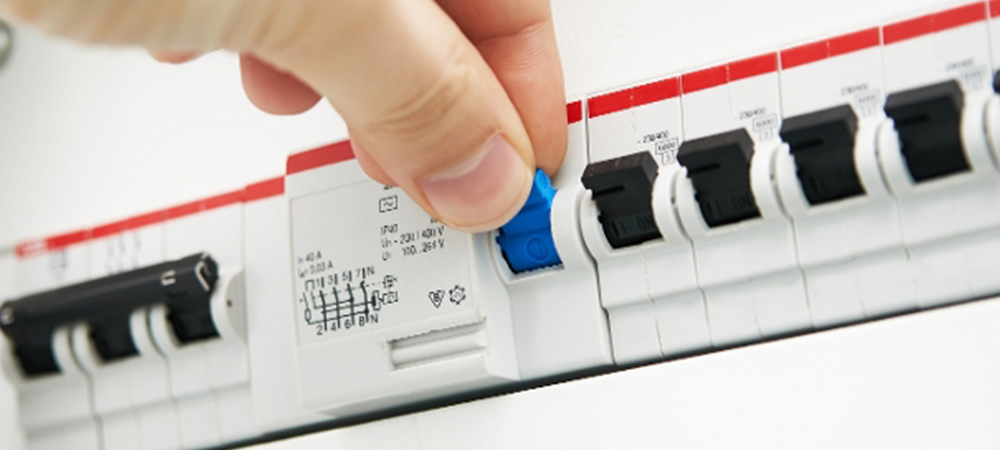
Electricity doesn’t announce when it’s dangerous. A distribution board that looks identical to the one isolated yesterday can be live today, and the difference between a safe repair and an arc flash injury often comes down to a single habit: testing before touching, every time, regardless of what the isolation label says. Temporary site power in particular — daisy-chained extension cables, damaged distribution boards, overloaded circuits — is where we see the gap between paper compliance and actual electrical safety widen fastest.
Nathan Safety Training (NIMS) trains authorised and competent persons across UAE facilities and construction operations on electrical hazard awareness, isolation verification and safe working practice around live and de-energised equipment — distinct from our Lock Out and Tag Out course, which covers isolation across all energy types, not electrical hazards specifically.
Why Electrical Work Gets Its Own Permit and Its Own Training
Electrical work is one of the activities explicitly named as requiring permit to work control under UAE construction and facilities HSE guidance, alongside hot work and confined space entry. DEWA’s technical requirements govern permanent electrical installations, but the higher-risk gap in practice is temporary site distribution — construction power boards, generator connections and extension runs — which don’t always receive the same scrutiny as permanent building electrics despite carrying comparable risk.
Internationally, arc flash risk assessment and PPE selection commonly reference NFPA 70E-style categorisation, which UAE electrical safety training frequently draws on even though it isn’t itself a UAE statute — it’s a widely adopted technical reference for what level of protection a given electrical task actually requires.
Insurance underwriters for UAE commercial and industrial property increasingly ask specifically about authorised person training and isolation procedures following any claim involving an electrical fault, which has made documented electrical safety training a factor in claims settlement discussions, not only a preventive measure.
The Margin Between an Incident and a Fatality Is Often Measured in Milliseconds
Electrical incidents don’t offer a warning window the way a chemical exposure or a fatigue-related error might. The difference between a safely isolated circuit and a live one is invisible to the eye, which means the entire safety case rests on verification habits rather than visible caution — you cannot see electricity being careful.
That invisibility is also what makes the aftermath so serious when isolation habits fail. Electrical incidents are disproportionately represented in the most severe outcomes reviewed across UAE industrial and construction sites, precisely because there’s so little margin between a controlled task and an uncontrolled one.
A Different Course From Lock Out and Tag Out
This course focuses specifically on electrical hazards — shock, arc flash, live work risk — including PPE and safe working distance. Lock Out and Tag Out covers the physical isolation procedure across all energy types — electrical, mechanical, hydraulic, pneumatic and thermal — and is the broader isolation discipline this course’s isolation steps sit inside. Most electrical maintenance teams need both.
Electrical Safety Training Across Every Emirate — and Every Utility Authority
This is one of the few courses on our schedule where the emirate you’re in changes which utility authority’s technical framework actually governs your permanent installation. We deliver onsite across all seven:
- Dubai — DEWA (Dubai Electricity and Water Authority) governs permanent installations; temporary construction site power is where we see the highest real-world non-compliance
- Abu Dhabi — ADDC governs Abu Dhabi city and AADC governs Al Ain, both under the Department of Energy’s regulatory oversight
- Sharjah — SEWA (Sharjah Electricity and Water Authority) governs the main urban area and central Sharjah
- Ajman — EtihadWE (Etihad Water and Electricity, the entity that replaced the former Federal Electricity and Water Authority, FEWA) governs Ajman’s electrical supply
- Ras Al Khaimah — also EtihadWE territory, relevant to both RAK Ceramics-scale industrial connections and smaller commercial premises
- Fujairah — EtihadWE territory as well, which matters directly for FOIZ terminal electrical infrastructure and instrumentation
- Umm Al Quwain — EtihadWE territory, alongside a handful of northern and eastern Sharjah enclaves that sit outside SEWA’s coverage area — worth confirming which authority actually serves your specific site if you’re near that boundary
Course Levels at a Glance
Course | Duration | Audience |
Electrical Safety Awareness | 1 day | General staff working near electrical equipment |
Authorised Person | 2 days | Personnel permitted to isolate and work on electrical systems |
Arc Flash & PPE Selection | 1 day | Electricians and technicians on live or potentially live equipment |
Permanent Installations Are Rarely the Problem
Permanent installations are rarely the problem. Temporary and improvised electrical setups are.
- Temporary distribution boards on construction sites damaged, unearthed or missing weatherproof covers
- Extension cables daisy-chained together, overloading circuits well beyond their rated capacity
- Isolation assumed complete because a switch was flipped, with no independent test to confirm zero energy
- Untrained staff attempting minor electrical repairs themselves rather than calling an authorised person
- Residual current devices (RCDs) missing or bypassed on temporary site power supplies
Isolation Verification as a Habit, Not a Step
We built this course around the test-before-touch habit specifically, because it’s the single step most consistently skipped once isolation starts to feel routine.
For facilities also working with Nathan ISO Consulting on a wider safety management system, electrical isolation records from this course slot directly into that documentation rather than sitting as a separate, disconnected file.
- Isolation verification taught as a physical test-before-touch habit, not a paperwork step
- Arc flash PPE selection matched to actual task categories, not blanket high-level protection that gets ignored
- Temporary site power specifically addressed, where we see the highest real-world non-compliance
- Instructors with facilities and industrial electrical maintenance backgrounds
- Course content that integrates cleanly with our Lock Out and Tag Out training for teams needing both
FAQ
How is this different from your Lock Out and Tag Out course?
This course covers electrical-specific hazards — shock, arc flash, live work risk and PPE selection. Lock Out and Tag Out covers the physical isolation procedure across all energy types, electrical included. Electrical maintenance staff typically need both, since one covers the hazard and the other covers the isolation method.
Is electrical work required to be controlled by a permit in the UAE?
Yes, electrical work is explicitly named alongside hot work and confined space entry as an activity requiring permit to work control under UAE construction and facilities HSE guidance.
What is arc flash, and why does the course cover it separately?
Arc flash is an explosive release of energy from an electrical fault, capable of causing severe burns even without direct contact with live parts. It requires its own risk category and PPE rating distinct from general shock protection, which is why it’s taught as a dedicated module rather than folded into general electrical awareness.
Do you train on temporary site electrical power specifically?
Yes, deliberately — temporary distribution boards, generator connections and extension cable runs on construction sites are where we see the highest real-world gap between what’s compliant and what’s actually installed, more so than permanent building electrics.
What's the difference between Electrical Safety Awareness and Authorised Person training?
Awareness training is for general staff who work near electrical equipment but don’t isolate or repair it themselves. Authorised Person training is for personnel formally permitted to isolate electrical systems and sign off that isolation for others to work safely.
Does this course cover DEWA requirements?
We align our permanent installation content with DEWA’s technical expectations where relevant, though the course’s primary focus is the practical safe-working behaviour — isolation verification, PPE, live-work avoidance — that sits alongside formal installation compliance.
How is isolation actually verified, not just assumed?
By testing the circuit with a proving unit before and after using a voltage tester, confirming zero energy independently rather than trusting a switch position or a label. This test-before-touch step is one of the most frequently skipped safety steps we find in site audits.
Can untrained staff perform minor electrical repairs themselves?
They shouldn’t, and this is a common and dangerous shortcut on sites without an accessible authorised person. Even a ‘minor’ fix on live or potentially live equipment carries shock and arc flash risk that untrained staff aren’t equipped to assess.
How often should electrical safety training be refreshed?
We recommend every two to three years for awareness-level staff, and annually for authorised persons and anyone regularly working on or near live equipment, given how much judgement-based risk assessment the role involves.
Do you deliver this training onsite across all emirates?
Yes, across Dubai, Abu Dhabi, Sharjah, Ajman, Ras Al Khaimah, Fujairah and Umm Al Quwain, ideally conducted against your actual electrical infrastructure and distribution setup rather than generic classroom equipment.
Does it matter whether our site is served by DEWA, SEWA or EtihadWE?
For safe working practice, no — the isolation and testing discipline is the same regardless of supplier. For permanent installation compliance and connection approvals, yes — each authority has its own technical requirements, and EtihadWE (the renamed Federal Electricity and Water Authority, FEWA) covers Ajman, RAK, Fujairah and Umm Al Quwain plus some Sharjah enclaves, which surprises teams used to dealing only with DEWA.
How long does authorised person training take?
Our Authorised Person course runs two days, combining isolation theory with hands-on proving-unit testing practice; the shorter Electrical Safety Awareness course for general staff runs one day.
Do you provide proving units and testing equipment as part of the course, or do we need our own?
We bring proving units and testers for training purposes, though we recommend teams also practise on their own equipment where possible, since familiarity with your actual testing kit matters as much as the underlying technique.
Is 'electrical safety awareness' enough, or do we need 'authorised person' training?
Awareness training is for staff who work near electrical equipment but never isolate or repair it themselves — it doesn’t qualify anyone to isolate a circuit. If your team needs to isolate, test or work on electrical systems, they need Authorised Person training specifically, not awareness alone.
Certify Your Authorised Persons
Whether your team needs Electrical Safety Awareness or full Authorised Person isolation competency, tell us your site type, and we’ll scope accordingly.
Nathan Safety Training (NIMS) — Electrical safety training across Dubai, Abu Dhabi, Sharjah, Ajman, Ras Al Khaimah, Fujairah and Umm Al Quwain.