

7 Powerful Hand & Power Tools Skills to Empower Your Team
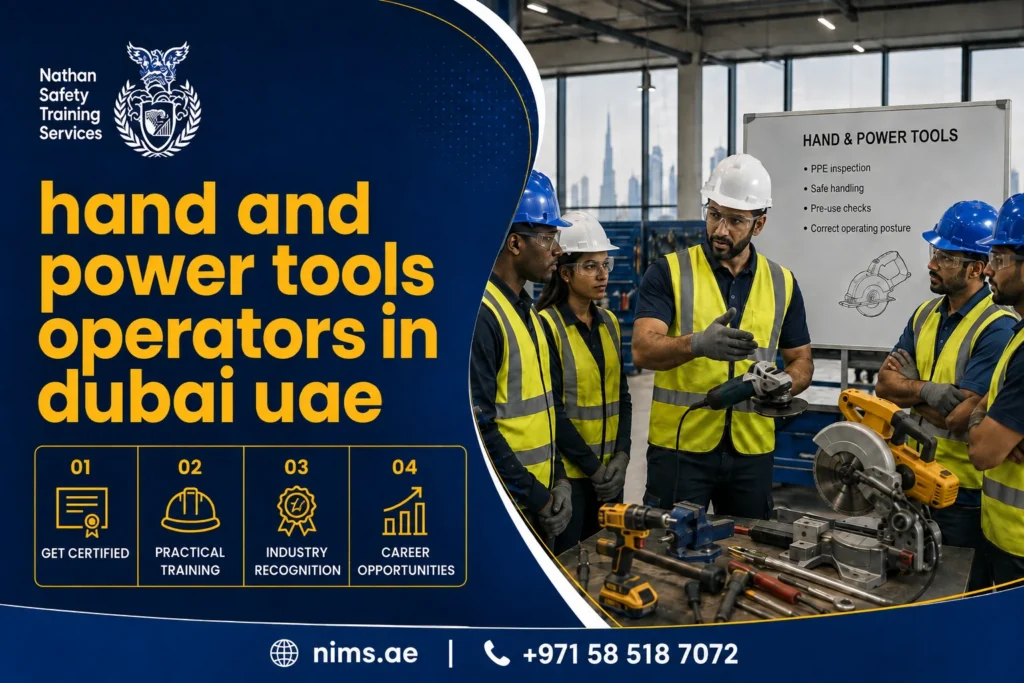
If your business employs hand and power tools operators in Dubai, UAE, the safety skills of your team directly shape your incident rate, your project timelines, and your compliance standing. This guide breaks down the seven core competencies every operator should master, and shows how training your workforce protects both your people and your bottom line.
Hand and power tools are essential on almost every worksite, from construction and MEP to manufacturing and facilities management. But they are also a leading cause of workplace injuries. For companies across the UAE, the difference between a safe, productive team and a costly incident often comes down to one thing: proper training.
Below are the seven powerful skills that turn ordinary workers into confident, certified operators, and why investing in them is one of the smartest decisions a Dubai employer can make.
Why These Skills Matter for UAE Companies
Untrained tool use is expensive. A single incident can trigger lost workdays, equipment damage, insurance claims, regulatory penalties, and reputational harm. For hand and power tools operators in Dubai UAE, competency is not optional; it is a business requirement.
Trained operators help your company:
- Reduce workplace injuries and near-miss incidents
- Avoid costly downtime caused by damaged tools and stalled work
- Meet UAE HSE and OSHA-aligned compliance standards during audits
- Lower insurance and liability exposure
- Boost productivity through correct, efficient tool handling
The seven skills below form the foundation of every effective hand and power tools safety training program.
The 7 Powerful Skills Every Operator Should Master
1. Correct Tool Selection & Inspection
Choosing the right tool for the job, and confirming it is fit for use, is the first line of defense. Skilled operators know how to match the tool to the task and spot defects before they cause harm.
- Selecting the correct tool type (electric, pneumatic, hydraulic, or powder-actuated)
- Checking for cracks, frays, loose parts, and worn components
- Removing damaged tools from service immediately
2. Pre-Use & Pre-Shift Checks
A quick, disciplined inspection at the start of every shift prevents most tool-related failures. This habit is a hallmark of well-trained operators.
- Verifying guards, safety switches, and cords are intact
- Testing that the tool starts and stops correctly
- Logging inspections for audit-ready records
3. Safe Operating Techniques
Knowing how to use a tool safely is different from knowing how to hold it. Proper technique reduces strain, error, and injury.
- Maintaining firm grip, correct posture, and balance
- Applying ergonomic practices to reduce fatigue and strain
- Keeping hands, cords, and bystanders clear of moving parts
4. PPE & Hazard Awareness
The right personal protective equipment, worn correctly, dramatically reduces injury severity. Trained operators also recognize hazards before they escalate.
- Using safety goggles, gloves, and hearing protection as required
- Identifying site and tool hazards proactively
- Keeping work floors clean and dry to prevent slips
5. Electrical & Power-Source Safety
Power tools carry real electrical and mechanical risks. Understanding the power source is critical to safe operation.
- Handling electric, pneumatic, and hydraulic tools safely
- Preventing shock, short circuits, and cord damage
- Following lockout/tagout basics where relevant
6. Maintenance & Safe Storage
Tools that are cared for last longer and stay safer. This skill protects both people and equipment value.
- Cleaning, lubricating, and servicing tools correctly
- Storing tools properly to prevent damage and misuse
- Reporting maintenance issues promptly
7. Emergency Response & Incident Reporting
Even in the safest workplace, operators must know how to react and report. This skill closes the safety loop.
- Responding calmly and correctly to tool-related incidents
- Applying basic first aid until help arrives
- Reporting incidents and near-misses to drive prevention
The Business Benefits of Training Your Team
For decision-makers, hand and power tools safety training is not a cost; it is an investment with a clear return. When your operators are certified, your company gains:
- Fewer incidents and a stronger safety record
- Lower insurance premiums and liability exposure
- Audit-ready compliance with UAE workplace safety standards
- Higher productivity from efficient, confident operators
- A skilled, retained workforce that reflects your commitment to safety
Empowering your team with the right skills sends a clear message to your employees, your clients, and your regulators that safety is built into how you operate.
UAE Regulations & Why Compliance Matters
Workplace safety in the UAE is closely regulated, and employers carry a legal duty of care toward their workers. Hand and power tools operators in Dubai UAE are expected to be trained, competent, and able to demonstrate that competence.
Proper training helps your company:
- Comply with UAE occupational health and safety requirements
- Demonstrate due diligence during inspections and audits
- Reduce legal and financial risk from preventable incidents
Certification provides documented proof that your workforce meets these standards, a valuable asset when tendering for contracts or passing client safety audits.
How NIMS Trains Your Workforce
At NIMS, we make it simple for companies to build a safer, compliant team. Here is how it works:
- You send us your employees, individuals, or full teams
- We train and assess them through practical, hands-on hand and power tools safety training in Dubai
- We certify them with an industry-recognized certificate of completion
- You get back a trained, certified workforce ready to work safely and compliantly
Our courses are led by experienced trainers and can be delivered as group corporate batches tailored to your company’s schedule and worksite needs. The training covers all seven skills above, along with UAE-aligned safety regulations, so your operators return job-ready.
Frequently Asked Questions
Who should attend hand and power tools safety training?
Any employee who regularly uses hand or power tools, including construction workers, maintenance technicians, electricians, mechanics, fabricators, warehouse staff, and their supervisors.
Can we book group or corporate training for our team?
Yes. NIMS offers group corporate batches for companies in Dubai and across the UAE, scheduled around your operations.
Will our employees receive a certificate?
Yes. Every participant who completes the course receives an industry-recognized NIMS certificate confirming their competence.
How does this training help with compliance?
It provides documented proof that your operators are trained and competent, supporting UAE HSE compliance and helping you pass safety audits.
Where is the training delivered?
Training is available in Dubai and can be arranged for teams across the UAE.
Empower Your Team Today
Don’t wait for an incident to make safety a priority. Give your operators the skills, confidence, and certification they need to work safely and keep your projects compliant.