
Permit to Work System: How It Prevents Workplace Accidents in High-Risk Industries
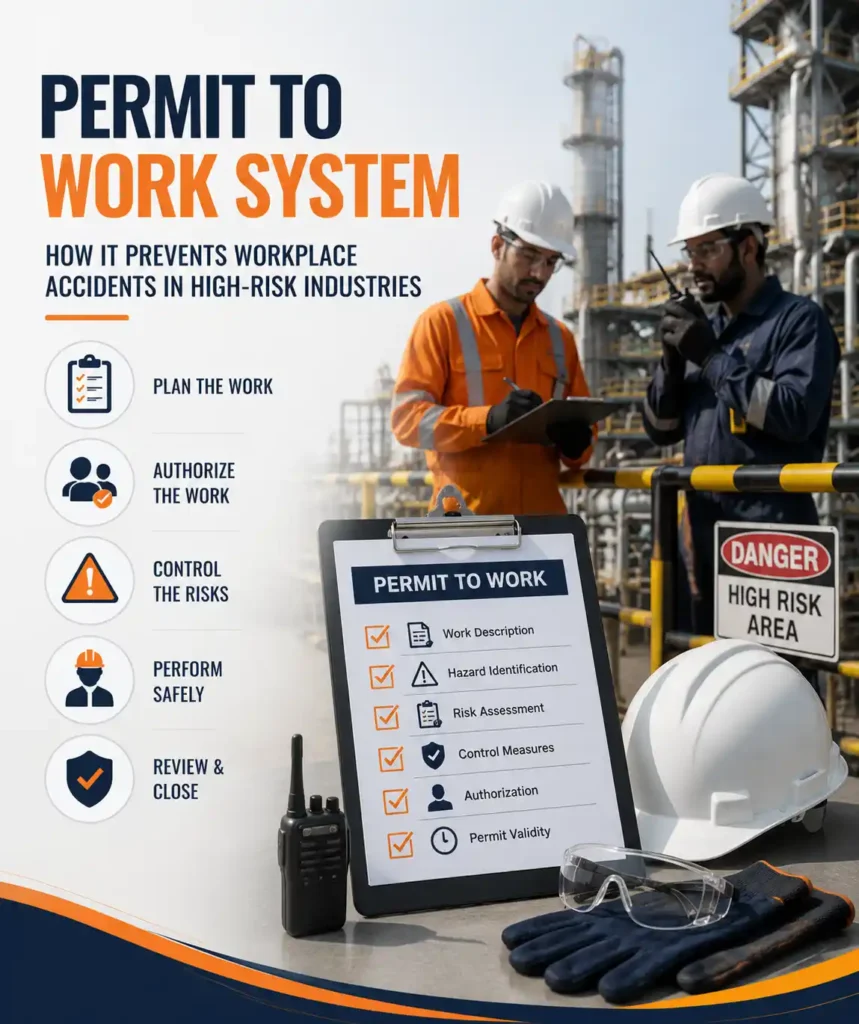
A Permit to Work system is one of the most important safety controls used in high-risk workplaces. It helps organisations manage hazardous, non-routine and maintenance activities by ensuring that risks are reviewed before work begins.
Across the UAE, Permit to Work systems are widely used in oil and gas, construction, marine operations, manufacturing, utilities, facilities management, infrastructure and data centres.
Effective Permit to Work training in the UAE helps employees understand that a permit is more than a signed document. It is a formal safety process that defines the work scope, identifies hazards, confirms precautions and assigns clear responsibilities.
When the PTW process is weak, workers may begin hazardous activities without proper isolation, gas testing, supervision or coordination. This can lead to fires, explosions, electric shock, falls, equipment damage and serious injuries.
What Is a Permit to Work System?
A Permit to Work, commonly called PTW, is a formal written or electronic authorisation used to control specific high-risk activities.
The permit confirms:
- What work will be carried out
- Where the activity will take place
- Who is responsible for the task
- What hazards are present
- Which control measures are required
- How long the permit remains valid
- When the work must be suspended
- How the worksite will be handed back
A good Permit to Work system in the UAE should be linked with risk assessments, Job Safety Analysis, energy isolation, gas testing, emergency arrangements and contractor management.
The permit itself does not make the job safe. Safety depends on whether the stated controls are physically implemented and continuously monitored.
Main Types of Permit to Work
Different activities require different permits. The permit category should match the hazard and nature of the work.
1. Hot Work Permit
A Hot Work Permit is required for activities that produce heat, sparks or flames.
Examples include:
- Welding
- Cutting
- Grinding
- Brazing
- Soldering
- Flame heating
- Certain electrical activities
A Hot Work Permit in the UAE should confirm that combustible materials have been removed or protected, fire extinguishers are available and a trained fire watcher has been appointed.
Gas testing may be required where flammable vapours could be present.
The permit should also consider what is happening behind walls, below floors or inside nearby tanks and pipelines.
Post-work fire monitoring may be necessary after the task is complete.
2. Confined Space Entry Permit
A Confined Space Entry Permit is used for tanks, vessels, pits, manholes, ducts, silos and other enclosed spaces with restricted access.
The main hazards may include oxygen deficiency, toxic gases, flammable atmospheres, heat, engulfment and difficult rescue conditions.
The permit should confirm:
- Atmospheric testing
- Ventilation
- Energy isolation
- Safe access
- Communication
- Standby attendance
- Rescue arrangements
- Entry and exit control
Confined Space Permit training in the UAE should be provided to entrants, attendants, supervisors, permit issuers, gas testers and rescue personnel according to their responsibilities.
3. Work at Height Permit
A Work at Height Permit may be required for roof work, scaffold activities, elevated maintenance, mobile access platforms or tasks near open edges.
The permit should address:
- Safe access
- Guardrails
- Scaffold inspection
- Anchor points
- Harnesses and lanyards
- Dropped-object prevention
- Exclusion zones
- Rescue planning
A Work at Height Permit system should also consider people working below the activity.
Even when the person at height is protected, falling tools or materials can injure others.
4. Excavation Permit
Excavation work can damage underground electrical cables, pipelines, drainage systems and communication services.
It may also create risks from collapse, water ingress, traffic movement and unsafe access.
An Excavation Permit in the UAE should refer to approved drawings, underground utility scans, trial pits, shoring or sloping requirements and safe entry arrangements.
The excavation should be inspected after rain, vibration or any event that may affect soil stability.
5. Electrical Isolation Permit
Electrical work can expose employees to electric shock, arc flash, burns, fire and unexpected energisation.
An Electrical Isolation Permit should identify:
- The exact equipment
- The power source
- Isolation points
- Lockout and tagging requirements
- Testing arrangements
- Authorised personnel
- Conditions for re-energisation
Electrical Permit to Work training in Dubai is especially important for industrial facilities, utilities, hospitals, data centres and buildings with multiple power supplies.
Backup generators, uninterruptible power supplies and automatic transfer systems must also be considered.
6. Cold Work Permit
A Cold Work Permit is generally used for non-routine work that does not produce flames or sparks but still presents significant hazards.
Examples may include:
- Mechanical maintenance
- Equipment dismantling
- Painting
- Cleaning
- General repair work
- Hand-tool activities
The permit should identify the hazards, required isolations, personal protective equipment and worksite precautions.
Cold work should not be treated as risk-free simply because it does not involve ignition.
7. Line-Breaking Permit
Line breaking involves opening pipes, hoses, vessels or process equipment that may contain pressure, chemicals, gas, steam or hazardous material.
A Line-Breaking Permit should confirm that the system has been isolated, drained, depressurised, flushed and tested where necessary.
Workers should know the product contained in the line and the emergency actions required in the event of unexpected release.
Permit to Work Roles and Responsibilities
A PTW system depends on clearly defined responsibilities.
Permit Issuer
The Permit Issuer reviews the task, checks the risk assessment, inspects the worksite and verifies that all required precautions are in place.
The issuer should have the authority to reject or suspend the permit when conditions are unsafe.
Permit Receiver
The Permit Receiver accepts the permit and explains its conditions to the work team.
The receiver must ensure that workers remain within the approved scope and follow all stated controls.
Area Owner
The Area Owner coordinates the work with normal operations and other activities in the area.
This role is especially important when several contractors or departments are working at the same location.
Isolating Authority
The Isolating Authority controls electrical, mechanical, hydraulic, pneumatic or process isolations.
Isolation points should be properly identified, locked, tagged and verified before the permit is approved.
Workers
Workers must understand the permit conditions before starting the job.
They should stop work if the scope changes, the permit expires or any control measure becomes ineffective.
HSE Team
The HSE team may provide advice, training, monitoring and audits.
However, the responsibility for safe work should remain with line management, supervisors and the personnel performing the task.
The Permit to Work Process
A strong PTW procedure normally follows a clear sequence.
Step 1: Define the Work
The work request should clearly identify the job, location, equipment and expected duration.
Step 2: Conduct Risk Assessment
The team should complete a Job Safety Analysis or Task Risk Assessment and identify the required permit category.
Step 3: Inspect the Worksite
The Permit Issuer and Permit Receiver should verify the actual work location and identify hazards that may not be visible from the documents.
Step 4: Apply Control Measures
Required isolations, barriers, ventilation, fire protection, gas testing and emergency arrangements should be completed.
Step 5: Issue the Permit
The permit should be signed only after all controls are confirmed.
Step 6: Brief the Work Team
The Permit Receiver should explain the job scope, hazards, precautions and stop-work conditions.
Step 7: Monitor the Activity
Supervisors should ensure that permit conditions remain effective throughout the task.
Step 8: Suspend When Necessary
Work should stop if conditions change, an alarm is raised, the permit expires or a new hazard appears.
Step 9: Close and Hand Back
After work is completed, the site should be inspected, tools removed, guards restored and the area returned safely to operations.
Managing Simultaneous Operations
Simultaneous operations, often called SIMOPS, can create serious conflicts.
Examples include:
- Hot work near painting
- Lifting above workers
- Electrical testing near maintenance
- Excavation close to live services
- Fire-system isolation during occupied-building work
A permit coordinator, area owner or operations representative should review all active permits and identify conflicts.
A PTW register, coordination board or electronic Permit to Work system can help teams monitor active, suspended and closed permits.
Benefits of Permit to Work Training
Effective PTW training in the UAE improves communication, strengthens hazard control and reduces unauthorised work.
It also helps employees understand when a permit should be suspended instead of continuing under unsafe conditions.
Training should be role-specific and include realistic worksite scenarios.
Permit Issuers require advanced instruction in hazard assessment, isolation and authorisation. Permit Receivers need practical competence in briefing and worksite control. Workers require general awareness of permit conditions and stop-work responsibilities.
Refresher training should be provided following incidents, audit findings, procedure changes or repeated permit errors.
How NIMS Can Help
NIMS provides practical Permit to Work courses in Dubai, Abu Dhabi and across the UAE for oil and gas, marine, construction, industrial, manufacturing, facilities management and data centre organisations.
Training can be arranged for:
- Permit Issuers
- Permit Receivers
- Area Owners
- Supervisors
- Contractors
- HSE personnel
- Electrical and mechanical isolating authorities
NIMS can also support companies with PTW procedure development, permit forms, role definitions, competency assessments, PTW registers and system audits.
Contact NIMS for customised Permit to Work training in the UAE designed to improve safety compliance, strengthen work control and prevent serious workplace accidents.
Ready to Start Your Crane Operator Career?
The construction and industrial sectors in Dubai need trained, certified operators — and the right training is what stands between you and that next opportunity. Enroll in Mobile Crane Operator Training in Dubai with NIMS and get hands-on, trainer-led preparation for real lifting conditions.