
Home / Water Treatment & Wastewater Safety Training UAE
There is a pattern in confined space fatalities that is well documented across the water industry worldwide, and it should shape how every treatment plant and network operator in the UAE thinks about training.
A worker enters a chamber, a wet well or a sump. Something goes wrong and they collapse. A colleague sees it, goes in to help, and collapses as well. Sometimes a third person follows. The recurring finding in investigations of these events is that a significant share of the people who die are not the original entrant — they are the would-be rescuers, and they typically enter without breathing apparatus, without a harness, and within seconds of the first collapse.
That pattern is not a failure of courage. It is a failure of training. Anyone standing next to a collapsed colleague will act on instinct unless they have been trained hard enough that the instinct has been replaced by a procedure.
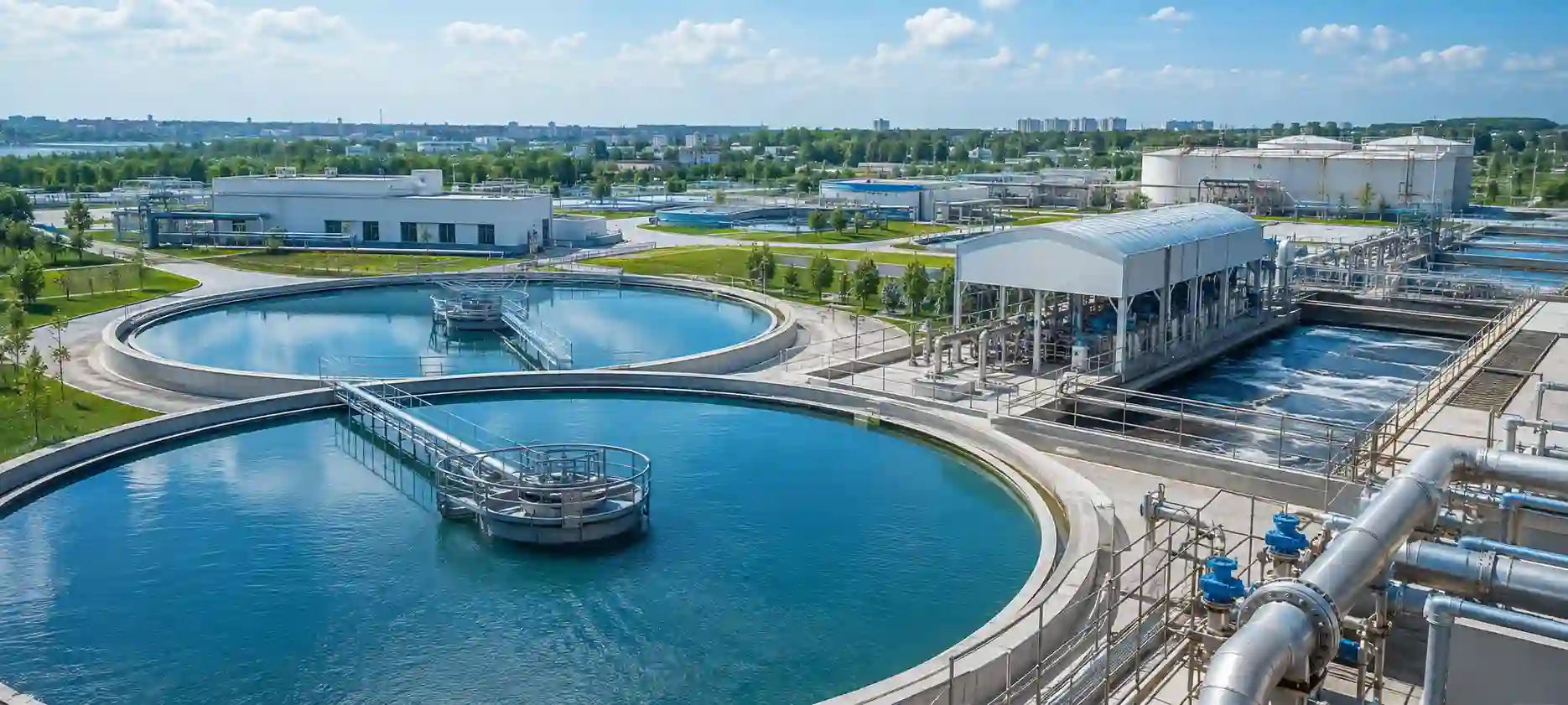
Nathan Safety Training Services (NIMS) delivers water treatment safety training UAE programmes for sewage treatment plant operators, water network and pumping station teams, desalination and RO plant personnel, drainage and sewerage contractors, tanker and vacuum truck operators, and the O&M providers who maintain this infrastructure across the Emirates.
We support workforces at facilities and networks across Jebel Ali and Warsan in Dubai, Al Aweer, the Dubai Strategic Sewerage Tunnel corridor, Al Wathba, Al Mafraq and Al Saad in Abu Dhabi, Sharjah and Hamriyah, Fujairah and Qidfa, Ras Al Khaimah, Ajman and Umm Al Quwain.
Book Confined Space & Gas Testing Training → · Request a Rescue Readiness Review → · Request HSE Manpower →
Confined Space Rescue Training — Why It Comes Before Entry Training
Most confined space training in this sector is sold and delivered as entry training. Atmospheric testing, ventilation, permits, attendant duties. All of it necessary. But entry training on its own leaves the most dangerous moment in the whole operation unaddressed.
A rescue plan that exists only on paper is not a rescue plan. If the arrangement is “call Civil Defence,” then the honest question is how long the casualty has, and whether the answer is longer than the response and set-up time. In a wet well containing hydrogen sulphide, it usually is not.
What a Workable Confined Space Rescue Arrangement Requires
- A non-entry retrieval system rigged before entry, not after. Tripod, winch and full-body harness in place and attached, so that recovery does not depend on anyone going in.
- An attendant who has been trained to not enter. This is a specific, deliberately rehearsed competency. It runs against instinct and it has to be taught explicitly.
- Breathing apparatus available at the entry point where the atmosphere warrants it, with people trained and fit-tested to use it.
- A trained rescue team on site, or entry deferred until one is available, wherever non-entry retrieval is not feasible — which includes most chambers with bends, ladders or restricted openings.
- Communication that works underground. Radio and mobile coverage in deep chambers and tunnels is frequently poor, and the arrangement has to be tested rather than assumed.
- A rescue plan that has never been physically walked through will not perform under pressure.
Nathan Safety Training builds this into confined space delivery for water sector clients rather than treating it as an optional add-on, and we would encourage any operator to ask a prospective training provider directly how much of the programme addresses rescue.
H2S Awareness Training — The Hazard the Wastewater Sector Owns
H₂S is present wherever sewage is held, moved or treated, and it has three properties that make it unusually dangerous in this environment.
It is heavier than air, so it collects in the low points — exactly where people descend. It destroys the sense of smell at higher concentrations, meaning the rotten-egg warning odour disappears precisely when the gas becomes most dangerous, and workers routinely misread the absence of smell as the absence of gas. And at high concentration it causes immediate collapse rather than gradual symptoms, so there is no window in which a worker recognises trouble and climbs out.
It accumulates in wet wells, sumps, manholes, rising main chambers, sludge holding tanks, digesters, screening chambers and inlet works. It is released in slugs when sludge is disturbed, when a pump starts, when a blockage clears, or when tanker discharge agitates a chamber — which means a reading taken ten minutes ago is not a reading that describes now.
H2S awareness training and gas testing training are the two most important programmes we deliver to this sector, and continuous monitoring during entry — not just pre-entry testing — is the practice that most reduces risk.
Water & Wastewater Hazards by Treatment Process Area
Process Area | Principal Hazards | Relevant Training |
Inlet works and screening | H₂S, confined chambers, rag and grit handling, biological exposure | |
Pumping stations and wet wells | H₂S, oxygen deficiency, drowning, restricted access, electrical | |
Primary and secondary treatment | Falls into tanks, biological exposure, rotating scrapers | |
Aeration and blowers | Noise, rotating plant, hot surfaces, electrical | |
Sludge handling and digesters | H₂S, methane, explosive atmosphere, confined entry | |
Chemical dosing and storage | Chlorine, hypochlorite, acids, caustic, polymer | |
Disinfection and outfall | Chlorine gas release, chemical burns, drowning | |
RO and desalination trains | High pressure, membrane chemicals, energy recovery plant | |
Network, manholes and sewers | H₂S, traffic exposure, confined entry, excavation | |
Tanker and vacuum operations | H₂S slug release, vehicle movement, hose failure | |
Laboratory | Chemical handling, biological samples, glassware | |
Electrical and control rooms | Arc flash, stored energy, remote plant start |
Chemical Safety Training for Chlorine, Acids & Dosing Systems
Water and wastewater sites carry chemical inventories that would attract serious attention in any other industry, and they are frequently managed with less rigour because the site is not classified as a chemical plant.
- Chlorine gas — where drum or cylinder chlorination is still in use, this is the highest-consequence chemical on any water site. A release requires an emergency response capability, not just a procedure.
- Sodium hypochlorite — lower acute risk than gas chlorine but generates chlorine gas if mixed with acid, which is a real scenario during dosing line maintenance and cleaning.
- Sulphuric and hydrochloric acid — pH correction and membrane cleaning. Burn risk on decanting and hose connection.
- Sodium hydroxide — caustic burns, particularly to the eyes, with delayed injury progression that workers underestimate.
- Polymer and coagulants — low toxicity but extremely slippery when spilled, and a consistent cause of fall injuries.
- Antiscalants, biocides and membrane cleaners — varied hazards requiring individual data sheet review rather than a blanket procedure.
- Methane from digesters — an explosive atmosphere requiring hot work control and ignition source management around the sludge stream.
Chemical safety and handling training for this sector covers safety data sheets, GHS labelling, incompatible storage and the specific mixing scenarios that generate gas, decanting and hose connection technique, spill response, emergency showers and eyewash, and the respiratory protection each chemical requires
Talk to an HSE Advisor → · Check On-Site Availability →
Water & Wastewater HSE Training Courses We Deliver
Confined Space Entry Training
Confined space training UAE for wet wells, sumps, manholes, chambers, digesters, tanks, screening pits and sewers. Delivered separately for entrants, attendants, entry supervisors and rescue personnel. Covers hazard identification, atmospheric testing and continuous monitoring, ventilation, entry permits, communication, attendant discipline and the non-entry retrieval arrangement.
H2S Awareness & Breathing Apparatus Training
Properties and health effects of hydrogen sulphide, exposure limits, detection and alarm interpretation, olfactory fatigue, escape procedures, and the use and inspection of escape sets and breathing apparatus. Essential for network, wet well, digester and tanker personnel.
Gas Testing Training
Gas testing training UAE covering instrument selection, bump testing and calibration, sampling technique in stratified atmospheres, oxygen, flammable and toxic measurement, interpretation of readings, and the distinction between a pre-entry test and continuous monitoring. The stratification point matters here more than in most sectors, since H₂S sits low and methane sits high in the same chamber.
Chemical Safety & Handling Training
Built around the actual chemical inventory of the site rather than a generic syllabus. Covers data sheets, labelling, storage segregation, decanting, dosing line maintenance, spill response and PPE selection.
Emergency Response Team (ERT) Training
Scenario-based training for nominated site teams covering confined space casualty retrieval, chlorine release response, chemical spill control, casualty handling in restricted access areas, and coordination with Civil Defence and ambulance services who will not know the site layout.
Lock Out Tag Out (LOTO) Training
Pumps, blowers, scrapers, screens, mixers, centrifuges and dosing systems — much of which starts automatically on level, timer or SCADA command. Automatic start is the defining LOTO risk in this sector and is treated as a specific topic rather than a footnote.
Permit to Work System Training
Work authorisation, isolation certificates, entry permits, hot work permits around digesters and sludge lines, and the coordination of simultaneous activities on an operating plant.
Working at Height & Fall Protection
Tank walkways, clarifier bridges, filter galleries, digester roofs and access ladders. Fall into water is a distinct hazard requiring its own response planning — a harness that prevents drowning is a different specification from one that prevents impact.
Traffic Safety and Flagman Training
Network and manhole work happens in the carriageway. Temporary traffic management, flagman duties, plant and pedestrian segregation, and reversing controls for tanker and vacuum operations.
First Aid, CPR & AED
Response to chemical exposure, chemical burns, H₂S exposure, drowning and cardiac events. On remote pumping stations and network sites, on-site first aid capability matters considerably more than headcount alone would suggest.
Fire Safety Training
Digester gas, chemical stores, electrical rooms and standby generators. Extinguisher selection, alarm and evacuation, and fire warden duties.
Accident & Incident Investigation and Root Cause Analysis
For supervisors and HSE personnel. In this sector particular attention is paid to near-miss investigation around confined space entry, because the gap between a near miss and a multiple fatality is very small.
DEWA, ADSSC, Dubai Municipality & OSHAD Requirements for Water Contractors
- Dubai Municipality — Drainage and Irrigation Department requirements for sewerage networks and treatment works, alongside general workplace safety obligations within the emirate.
- DEWA — water production, network and contractor HSE requirements, including the interface at pumping stations and electrical supply points.
- Abu Dhabi Sewerage Services Company (ADSSC) and Abu Dhabi Distribution Company — contractor HSE standards, permit requirements and competency evidence for network and plant work in the emirate.
- OSHAD-SF — the Abu Dhabi framework, with directly applicable Codes of Practice on confined spaces, hazardous substances, energy isolation and emergency management.
- SEWA and Etihad Water & Electricity — Sharjah and Northern Emirates network and plant requirements.
- MOCCAE — environmental permitting, discharge consent conditions and hazardous chemical handling requirements.
- Trakhees – EHS — where facilities sit within Ports, Customs and Free Zone Corporation jurisdiction, including parts of the Jebel Ali corridor.
- MOHRE — federal occupational safety obligations, including the midday break rule affecting network, manhole and open-tank work through the summer.
Training can be structured to support alignment with these frameworks. Certificates evidence completion and assessment of a defined programme; they do not replace the site’s own authorisation and permit regime.
Water Treatment & Wastewater Safety Training by Job Role
- Plant operators and shift technicians — confined space entry, H₂S awareness, gas testing, chemical safety, LOTO, first aid, fire safety.
- Network and sewer crews — confined space entry, H₂S awareness and BA, gas testing, traffic safety, excavation safety, first aid.
- Maintenance and mechanical teams — LOTO, confined space, working at height, hot work, hand and power tools, rigging and slinging.
- Electrical and instrumentation staff — electrical safety, LOTO, permit to work, and awareness of automatic and remote plant start.
- Tanker and vacuum truck operators — H₂S awareness, traffic safety, chemical safety, defensive driving, first aid.
- Chemical handling and dosing personnel — chemical safety and handling, emergency response, first aid with a chemical exposure component.
- Laboratory staff — chemical safety, biological hazard awareness, first aid, fire safety.
- Supervisors and HSE officers — risk assessment, incident investigation and root cause analysis, permit auditing, ERT leadership, behaviour-based safety.
- Contractors and visiting specialists — site induction, confined space awareness, H₂S awareness, permit to work awareness, delivered before mobilisation.
Request a Role-Based Training Matrix → · Download Course Catalog →
Water Treatment Safety Training Across Dubai, Abu Dhabi & the UAE
- Dubai — Jebel Ali and Warsan treatment works, Al Aweer, the Dubai Strategic Sewerage Tunnel programme, and pumping station and network contracts across the emirate. Safety training Jebel Ali is a routine delivery route for our trainers.
- Abu Dhabi — Al Wathba, Al Mafraq and Al Saad treatment facilities, the ADSSC network, Al Ain plants, and contractor and fabrication bases in Mussafah and ICAD. HSE training Abu Dhabi for water sector teams is delivered on site.
- Sharjah — SEWA plants and network, Hamriyah Free Zone and industrial area facilities.
- Fujairah — Qidfa desalination and the F1 and F2 water and power complexes, plus east coast network operations. Industrial safety training Fujairah is delivered on site.
- Ras Al Khaimah, Ajman and Umm Al Quwain — Etihad Water & Electricity plants and networks, and local treatment and pumping infrastructure.
On-site delivery is strongly preferred here, because the practical elements — tripod rigging, gas detector use, harness fitting, chemical decanting — need to happen on the equipment the team will actually use. Sessions are commonly scheduled around shift patterns and planned maintenance windows.
HSE Manpower Supply for Treatment Plants & Network Contracts
Confined space work in this sector is heavily attendant-dependent, and the attendant and rescue roles are frequently the ones a plant cannot staff from its own headcount during a maintenance campaign.
Nathan Safety Training Services supplies HSE Officers, HSE Engineers, Safety Supervisors, Confined Space Attendants, Gas Testers, Fire Watchers and Environmental Officers on short-term, campaign and long-term assignment. Personnel with prior water, wastewater and desalination experience can be requested.
Courses Offered
- First Aid Course - CPR and AED
- Confined Space
- Fire Safety Awareness
- Scaffolding Inspection
- Scaffolding Erection & Dismantling
- Flagman Safety
- Chemical Safety and Handling Training
- Hazard and Risk Assessment
- Rigging and Slinging Training
- Traffic Safety
- Hand and Power Tools Operator
- Electrical Safety
- Lock Out and Tag Out (LOTO)
- Accident Incident Investigation
- Lifeguard Training
- Advanced Risk Assessment & Compliance Service
- Behavior-Based Safety Workplace Safety Consulting
- Construction Site Safety Induction Training
- Emergency Response Team Training
- Excavator Operator Training
- Forklift Operator Training
- H2S Awareness & Breathing Apparatus Training
- Hot Work Safety Training
- Incident Reporting & Root Cause Analysis Service
- MEWP Operator Training
- Mobile Crane Operator Training
- Permit to Work System Training
- Rope Access Training
- Working at Height & Fall Protection Safety Training
- Fire Warden Training
- Manual Handling Training
- Banksman Safety Training
- Gas Tester Training
- Defensive Driving Training
- HAZMAT Awareness Training
- Machine Safety and Machine Guarding Training
- Spill Response and Spill Control Training
- Welding Safety Training
Need expert advice? Speak to our team today
FAQ
1. Why is confined space training so critical in the water sector?
Because the sector combines four things that rarely occur together: chambers that are physically difficult to enter and exit, atmospheres that can become lethal within seconds, hazards that give no reliable warning, and a workforce that frequently works in small crews far from emergency services. The documented fatality pattern in this industry shows a high proportion of deaths among would-be rescuers rather than original entrants, which is why rescue arrangements deserve as much training time as entry procedure.
2. What makes hydrogen sulphide different from other toxic gases?
Three properties. It is heavier than air, so it settles in the low points where people descend rather than dispersing upward. It paralyses the sense of smell at higher concentrations, so the warning odour disappears exactly when the gas becomes most dangerous. And at high concentration it causes immediate collapse rather than progressive symptoms, removing any window in which a worker could recognise trouble and self-rescue.
3. Is pre-entry gas testing enough, or do we need continuous monitoring?
Pre-entry testing establishes that conditions are acceptable at that moment. It says nothing about the next thirty minutes. In wastewater environments conditions change rapidly — disturbing sludge, starting a pump, clearing a blockage or receiving a tanker discharge can release a slug of gas into a chamber that tested clear. Continuous monitoring during the entry is the practice that actually protects the entrant, and we treat it as standard rather than optional in our training.
4. What should our rescue arrangement look like?
At minimum, a non-entry retrieval system rigged and attached before entry begins — tripod, winch and full-body harness — so recovery does not require anyone to go in. An attendant specifically trained not to enter. Breathing apparatus at the entry point where the atmosphere warrants it, with fit-tested trained users. And a rescue team on site where non-entry retrieval is not feasible, which includes most chambers with bends, ladders or restricted openings. A plan that has never been physically rehearsed should not be relied on.
5. Do you train attendants separately from entrants?
Yes, and we recommend it. The attendant role is not a lesser version of the entrant role — it is a different job with a different competency. The attendant must maintain communication, monitor conditions, control access, initiate the emergency procedure and, critically, not enter. That last point runs directly against human instinct and has to be trained deliberately rather than mentioned in passing.
6. What chemical safety training do treatment plants need?
It should be built around the site’s actual inventory. Most plants hold some combination of chlorine or hypochlorite, acids, caustic soda, polymers, antiscalants and biocides. Training covers safety data sheets, GHS labelling, storage segregation and the specific mixing scenarios that generate gas, decanting and dosing line maintenance technique, spill response, emergency shower and eyewash use, and the respiratory and eye protection each chemical demands.
7. We still use gas chlorine. What does that change?
It raises the required emergency response capability considerably. Gas chlorine release is a scenario that needs a trained response team, appropriate breathing apparatus, a rehearsed evacuation and shelter plan, and coordination arrangements with Civil Defence agreed in advance. Awareness training alone is not a proportionate control for a facility holding chlorine in gas form.
8. Why is automatic plant start a specific LOTO issue here?
Because most water and wastewater plant is not started by a person. Pumps run on level switches, blowers on timers, scrapers on sequence, and much of it can be commanded remotely from SCADA. A technician who isolates a local control panel may not have isolated the actual energy source, and the plant can start while they are working on it. Our LOTO training treats automatic and remote start as a primary topic rather than an edge case.
9. Do you deliver training for sewer and network crews as well as plant staff?
Yes, and the requirements differ. Network crews face the same confined space and H2S hazards but with the addition of live traffic, excavation, remote working and much longer distances to emergency assistance. Their programme typically combines confined space entry, H2S awareness and breathing apparatus, gas testing, traffic safety and flagman duties, excavation safety and first aid.
10. What certificates do participants receive?
A certificate of completion for each course showing participant name, course title, delivery date and validity guidance where applicable. These support contractor pre-qualification, competency files, permit authorisations and client or authority audit requirements. Specific formats can usually be accommodated with advance notice.
11. How long do the courses take?
H2S awareness and gas testing commonly run half a day to a day. Confined space entry typically runs one to two days including practical assessment, with rescue-level training extending beyond that. Chemical safety and handling usually runs one day, adjusted to the inventory. Emergency response team training runs two days with scenario exercises. Incident investigation for supervisors runs two days.
12. How often should this training be refreshed?
Confined space entry, gas testing and H2S awareness are commonly refreshed every one to two years, and many operators in this sector choose annually for entry and rescue personnel given the consequence of error. Chemical safety should be refreshed whenever the inventory changes. The governing requirement is usually the client HSE specification or the site competency procedure, and we align our recommendation to it.
13. Can training be delivered in other languages?
English is standard, with bilingual delivery and interpreted sessions available where the workforce requires it. This is a frequent requirement for operative and network crew groups in this sector. Practical assessment components translate well because they are demonstrated rather than described.
14. Do you provide technical safety studies for water and wastewater facilities?
Yes. HAZOP and HAZID facilitation, fire and explosion risk assessment relevant to digester gas and chemical storage, bow tie analysis, emergency evacuation, escape and rescue assessments, SIL determination and verification for protective systems, and reliability, availability and maintainability studies. Chlorine facilities and digester installations are the areas where water sector clients most often request these.
15. Do you supply HSE manpower for treatment plants and network contracts?
Yes. Through hsemanpower.ae we supply HSE Officers, HSE Engineers, Safety Supervisors, Confined Space Attendants, Gas Testers, Fire Watchers and Environmental Officers for maintenance campaigns, capital projects and long-term O&M contracts. Attendant and gas tester roles are the ones most frequently requested in this sector, because they are difficult to cover from a plant’s own headcount during a shutdown.
Build a Stronger Investigation Process
Whether you need full root cause investigation training or a condensed evidence-preservation session for supervisors, tell us your current investigation process, and we’ll show you where root cause analysis and corrective action tracking are likely to close the biggest gaps.
Nathan Safety Training (NIMS) — Accident and incident investigation training across Dubai, Abu Dhabi, Sharjah, Ajman, Ras Al Khaimah, Fujairah and Umm Al Quwain.