Home / Solar & Renewable Energy Safety Training UAE
Solar & Renewable Energy Safety Training UAE
Solar & Renewable Energy Safety Training UAE
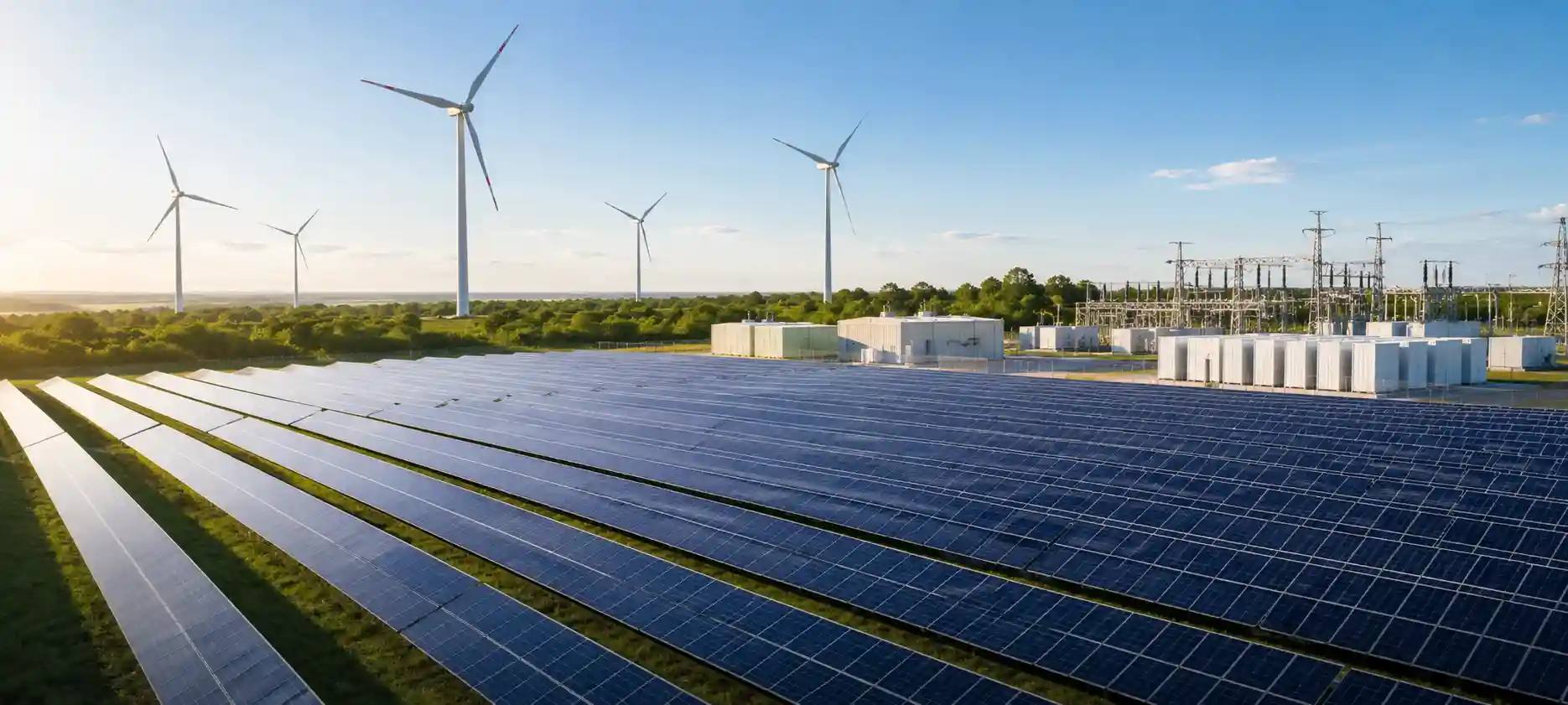
You cannot switch off a solar array. When the sun is up the modules are generating, and a string that has been disconnected from the inverter still sits at several hundred volts DC at the connector in a technician’s hand. The only reliable isolation on a PV system is nightfall, and nobody schedules maintenance around that.
This is the single fact that most safety programmes written for solar projects fail to accommodate, because they were adapted from construction or from conventional electrical work — both of which assume that a system can be de-energised and proved dead before anyone touches it.
Nathan Safety Training Services (NIMS) delivers solar safety training UAE programmes for utility-scale PV developers and EPC contractors, rooftop and distributed generation installers, O&M and cleaning providers, battery energy storage integrators, and the electrical and civil subcontractors who build and maintain renewable assets.
We deliver on site across Mohammed bin Rashid Al Maktoum Solar Park, Al Dhafra and Sweihan, Madinat Zayed and the Al Dhafra region, Masdar City and Khalifa Economic Zone, Sharjah and Sajaa, Ras Al Khaimah, Fujairah and rooftop programmes across Dubai and the Northern Emirates.
Book Solar HSE Training → · Request a Rooftop Rescue Plan Review → · Request HSE Manpower →
Solar PV Electrical Safety – Four Assumptions That Get Technicians Hurt
Almost every serious solar incident we have reviewed traces back to a belief that is true in conventional electrical or construction work and false on a PV array.
The Assumption | What Is Actually True on a PV System |
Opening the breaker isolates the system | Modules generate whenever there is light. DC conductors upstream of the inverter stay live regardless of breaker position, and disconnecting a string does not de-energise it. |
Low voltage means low risk | String voltages commonly reach several hundred volts DC. DC arcs do not self-extinguish at the current zero the way AC arcs do, so an arc once struck tends to sustain until the circuit is physically broken. |
Rooftop work is lower risk than a construction site | Roof edges are frequently unprotected, surfaces may be fragile, skylights and rooflights are hidden fall hazards, and the rescue arrangement is usually less developed than on a managed construction site. |
Heat is a summer problem managed by the midday break | Module surfaces reach temperatures that cause contact burns, reflected radiation raises effective exposure well above ambient, and utility-scale sites offer almost no shade. Thermal load is significant outside the regulated summer window. |
Utility-scale sites have emergency cover | Large arrays extend for kilometres across desert terrain with unmade access tracks. Time from incident to definitive medical care is frequently measured in tens of minutes, which changes what on-site first aid capability has to achieve. |
Solar Safety Training Across the Asset Lifecycle
A solar asset changes character completely between groundbreaking and year twenty. Rather than issuing a single training package at mobilisation, Nathan Safety Training builds the programme against the phase the asset is actually in, with the relevant courses attached to each.
Phase 1 — Civil Works and Mechanical Installation
Before a single module is energised the site is a construction project on difficult ground. Piling and pile driving, tracker and table erection, module handling, trenching for cabling, and constant mobile plant movement across an open site with no fixed roads.
Module handling deserves specific mention. A large-format PV module is awkward rather than heavy, it acts as a sail in wind, and installers handle hundreds per shift. Manual handling injuries and dropped modules dominate the incident log during this phase.
Training attached to this phase
Construction Site Safety Induction, Working at Height & Fall Protection, Excavation Safety, Rigging & Slinging, Traffic Safety and Flagman Safety, Hand & Power Tools Safety, Manual Handling, First Aid, Hazard Identification & Risk Assessment.
Phase 2 – Electrical Installation and Energisation
The moment modules are laid and connected, the hazard profile changes fundamentally, and it changes before anyone formally energises anything. This is the phase where crews most often carry forward habits from Phase 1 into an environment that no longer tolerates them.
DC string work, connector mating and inspection, combiner and inverter installation, MV transformer and switchgear work, cable pulling and termination, and the grid connection interface with DEWA, EWEC, ADDC or Etihad Water & Electricity.
Training attached to this phase
Electrical Safety Training with specific DC content, Arc Flash Awareness, Lock Out Tag Out, Permit to Work, High Voltage Safety Awareness for the MV and grid interface, Working at Height, Emergency Response.
Phase 3 – Commissioning, Testing and Handover
Systems come alive in sequence while installation continues elsewhere on site. Simultaneous operations are at their peak, contractor numbers are at their highest, and programme pressure toward the commercial operation date is at its most intense.
Training attached to this phase
Permit to Work, Lock Out Tag Out for partially energised systems, Electrical Safety, Emergency Response Team Training, Accident & Incident Investigation, Behaviour-Based Safety observation.
Phase 4 – Operations, Maintenance and Cleaning
The phase that lasts twenty-five years and receives the least training attention. Module cleaning crews, string fault-finding, inverter maintenance, tracker repair, vegetation and sand management, and thermographic survey.
Cleaning crews are the group most consistently under-trained across the sector. They work alone or in small teams, walk between rows of live modules, handle water near electrical equipment, operate in extreme heat, and frequently work for subcontractors several tiers removed from the asset owner’s HSE system.
Training attached to this phase
Electrical Safety Awareness for non-electrical staff, Working at Height for rooftop and elevated arrays, Heat Stress Awareness, First Aid with CPR and AED, Lone Working Awareness, Site Induction, Manual Handling.
Talk to an HSE Advisor → · Request a Lifecycle Training Plan →
Heat Stress Training for Steel Plants – A Year-Round Hazard
Most heat stress guidance written for the UAE assumes outdoor work and a summer season. Neither assumption holds in a steel plant.
Radiant heat from a furnace, ladle or hot product does not follow the weather. A casting bay in January can impose a higher thermal load than a construction site in July, and the aluminised PPE that protects against molten metal splash also traps metabolic heat. The result is a workforce that faces significant heat strain year-round while the site’s heat management procedure is written around a June to September window.
Practical training content covers recognition of heat exhaustion and heat stroke in colleagues rather than in oneself – because impaired judgement is an early symptom – hydration and electrolyte practice across a full shift, work-rest cycling in hot zones, acclimatisation for new starters and returners after leave, and the interaction between PPE requirements and thermal load. First aid training should include heat illness response as a specific module in this sector.
Talk to an HSE Advisor → · Check On-Site Availability →
Rooftop Solar Safety Training vs Utility-Scale PV — Two Different Problems
Treating these as one sector is the most common planning error made by contractors who work across both.
Consideration | Rooftop & Distributed PV | Utility-Scale PV |
Dominant hazard | Falls from height and fragile surfaces | Heat, remoteness and DC electrical work |
Access | Ladders, roof hatches, restricted routes, occupied building below | Vehicle access across unmade tracks, long walking distances |
Rescue | Suspension rescue from roof edge, casualty lowering | Extended casualty transport, limited ambulance access |
Third parties | Building occupants, tenants, adjacent public areas | Minimal public exposure, high contractor density |
Electrical | Lower string counts, building supply interface | MV collection network, substation, grid connection |
Heat exposure | Reflected heat from roof membrane, no shade | Full desert exposure, radiant load from modules |
Priority training | Working at Height, Rescue Planning, Electrical Safety | Heat Stress, First Aid, Electrical Safety, Traffic Safety |
Heat Stress & Remote Site First Aid Training for Solar Projects
Utility-scale solar in the UAE combines two conditions that rarely occur together elsewhere: extreme thermal load and genuine remoteness.
A worker who collapses in the middle of a large array may be twenty minutes from the site entrance before an ambulance journey even begins. Heat stroke is a time-critical emergency where cooling within the first half hour materially affects the outcome, which means the response has to be delivered by colleagues on site rather than waited for.
What Solar Heat Stress Training Must Build
- Recognition of heat illness in others. Confusion and poor judgement are early signs, so self-recognition cannot be relied on. Crews must be trained to watch each other.
- Immediate cooling capability at the work front, not at the site office — shade, water, cooling method and a plan that begins before transport is arranged.
- Hydration and electrolyte practice across a full shift rather than during breaks alone, with awareness of the effect of cumulative dehydration across consecutive days.
- Acclimatisation for new starters and for those returning after leave, who are consistently over-represented in heat illness cases.
- Casualty location and extraction planning — row and block numbering that emergency responders can use, vehicle access routes, and a rendezvous procedure agreed with the ambulance service in advance.
- MOHRE midday break compliance as a legal minimum rather than as the whole heat management strategy.
BESS Battery Energy Storage Safety Training — A Different Hazard Class
As storage is added to solar assets across the UAE, contractors are encountering a hazard set that has almost nothing in common with PV.
Lithium-ion battery installations carry thermal runaway risk, which produces flammable and toxic off-gassing, can propagate between cells and modules, and can reignite hours after apparent extinguishment. Standard fire training does not cover it, and standard firefighting response can make it worse. DC bus voltages are high, stored energy remains after every visible isolation, and enclosure entry is frequently a confined space activity.
Where clients operate or install BESS, we address it as a separate module covering thermal runaway recognition, off-gas hazards, emergency isolation, evacuation distances, coordination with Civil Defence, and the specific electrical safety requirements of high-energy DC systems.
DEWA, EWEC, OSHAD & MOHRE Requirements for Solar Contractors
- DEWA — Shams Dubai and distributed generation programme requirements, contractor enrolment and qualification conditions, and connection standards for rooftop and utility-scale assets in Dubai.
- EWEC and ADDC — procurement and contractor HSE conditions for Abu Dhabi generation projects, including the large utility-scale programmes in the Al Dhafra region.
- Etihad Water & Electricity — requirements for projects and connections across the Northern Emirates.
- OSHAD-SF — the Abu Dhabi framework, with Codes of Practice applicable to working at height, electrical safety, heat stress, occupational health and emergency management. Directly relevant to the Sweihan and Al Dhafra developments.
- MOHRE — federal occupational safety obligations. The midday break rule affects solar construction and O&M more than almost any other sector, given that essentially all work is outdoors and unshaded.
- Dubai Municipality, Dubai Civil Defence and Trakhees — building, fire and workplace requirements for rooftop installations, with Civil Defence involvement increasing where battery storage is present.
- MOCCAE — environmental permitting, land use and end-of-life module handling requirements.
Training can be structured to support alignment with these frameworks. Certificates evidence completion and assessment of a defined programme rather than authority accreditation or contractor enrolment.
Request a Role-Based Training Matrix → · Download Course Catalog →
Solar Safety Training Across Dubai, Abu Dhabi & the UAE
- Dubai — Mohammed bin Rashid Al Maktoum Solar Park at Seih Al Dahal, the Shams Dubai rooftop programme across the emirate, Dubai Industrial City, Jebel Ali and Dubai South rooftop installations.
- Abu Dhabi — Al Dhafra Solar PV, Noor Abu Dhabi at Sweihan, Shams at Madinat Zayed, Masdar City, Al Ajban and Khalifa Economic Zone. HSE training Abu Dhabi for solar EPC and O&M contractors is delivered on site.
- Sharjah — Sajaa, Al Dhaid and industrial rooftop programmes, plus waste-to-energy and renewable projects.
- Ras Al Khaimah, Ajman and Umm Al Quwain — utility and commercial rooftop installations and Etihad Water & Electricity connected projects.
- Fujairah — east coast rooftop, industrial and port-linked renewable installations. Industrial safety training Fujairah is delivered on site.
On-site delivery is the norm. Rescue planning for a specific roof, heat response using the site’s own arrangements, and DC electrical practice on the actual array configuration cannot be replicated off site. Sessions are commonly delivered early in the morning before thermal load peaks.
HSE Manpower Supply for Solar EPC & O&M Contracts
Utility-scale solar construction generates a workforce curve that rises steeply and falls just as fast, and HSE coverage has to follow it.
Nathan Safety Training Services supplies HSE Officers, HSE Engineers, Safety Supervisors, Safety Inspectors, Environmental Officers, First Aiders and Fire Watchers on project and long-term assignment. Personnel with prior solar, remote-site and desert project experience can be requested.
Courses Offered
- First Aid Course - CPR and AED
- Confined Space
- Fire Safety Awareness
- Scaffolding Inspection
- Scaffolding Erection & Dismantling
- Flagman Safety
- Chemical Safety and Handling Training
- Hazard and Risk Assessment
- Rigging and Slinging Training
- Traffic Safety
- Hand and Power Tools Operator
- Electrical Safety
- Lock Out and Tag Out (LOTO)
- Accident Incident Investigation
- Lifeguard Training
- Advanced Risk Assessment & Compliance Service
- Behavior-Based Safety Workplace Safety Consulting
- Construction Site Safety Induction Training
- Emergency Response Team Training
- Excavator Operator Training
- Forklift Operator Training
- H2S Awareness & Breathing Apparatus Training
- Hot Work Safety Training
- Incident Reporting & Root Cause Analysis Service
- MEWP Operator Training
- Mobile Crane Operator Training
- Permit to Work System Training
- Rope Access Training
- Working at Height & Fall Protection Safety Training
- Fire Warden Training
- Manual Handling Training
- Banksman Safety Training
- Gas Tester Training
- Defensive Driving Training
- HAZMAT Awareness Training
- Machine Safety and Machine Guarding Training
- Spill Response and Spill Control Training
- Welding Safety Training
Need expert advice? Speak to our team today
FAQ
1. Why can a solar array not simply be switched off before maintenance?
Because the modules themselves are the generator, and they produce voltage whenever light falls on them. Opening the inverter breaker isolates the AC side but leaves every DC conductor upstream of it live. Disconnecting a string does not de-energise the modules — it simply moves the live point to the connector. Work on the DC side of a PV system is therefore almost always work on a live system, which is why DC-specific electrical safety training is essential rather than optional.
2. What makes a DC arc more dangerous than an AC arc?
An AC waveform passes through zero current a hundred times a second, which gives an arc a natural opportunity to extinguish. DC has no current zero. Once a DC arc is struck it tends to sustain itself until the circuit is physically broken or the arc is stretched beyond its ability to maintain, which means faults that would self-clear on an AC system can persist and cause fire on a DC one. It also means switching devices for DC must be specifically rated — an AC-rated device used on DC can fail to break the arc at all.
3. Is rooftop solar work more dangerous than utility-scale?
It carries a different risk profile rather than a uniformly higher one. Rooftop work is dominated by fall risk – unprotected edges, fragile surfaces, hidden skylights, restricted access and rescue arrangements that are usually less developed than on a managed construction site. Utility-scale work is dominated by heat, remoteness and DC electrical exposure. Contractors who work across both need two distinct training approaches, not one blended package.
4. What should a rooftop rescue plan actually contain?
Differently from the way most UAE heat guidance assumes. Radiant process heat is present year-round, so a procedure written around the summer midday break window leaves the rest of the year uncontrolled. Practical measures include work-rest cycling in hot zones, hydration and electrolyte practice across the full shift, acclimatisation for new starters and those returning from leave, and training workers to recognise heat illness in colleagues — since impaired judgement is an early symptom and self-recognition is unreliable.
5. How should heat stress be managed on a utility-scale solar site?
As a medical emergency capability rather than only a compliance exercise. The MOHRE midday break is the legal minimum, not the strategy. Effective management combines shade and cooling capability at the work front rather than only at the site office, hydration and electrolyte practice sustained through the shift, acclimatisation for new starters and returners from leave, training crews to recognise heat illness in each other since impaired judgement is an early sign, and a casualty location and extraction plan with block and row numbering that responders can navigate.
6. Why are module cleaning crews considered high risk?
Because they combine several risk factors that rarely receive proportionate attention. They work alone or in very small teams, walk between rows of live modules, handle water in proximity to electrical equipment, are exposed to full thermal load for extended periods, and are frequently employed by subcontractors several tiers removed from the asset owner’s HSE system. They also perform the task thousands of times over an asset life, so any latent risk is repeated at enormous frequency.
7. Do module surfaces get hot enough to cause injury?
Yes. Module and mounting surface temperatures in UAE conditions substantially exceed ambient air temperature and can cause contact burns on unprotected skin. It also affects tool and equipment handling, PPE selection, and the thermal load experienced by anyone kneeling or leaning on an array. Reflected radiation from module surfaces adds to the effective heat exposure of workers positioned between rows.
8. What training do battery energy storage installations require?
Battery storage introduces a hazard class distinct from PV. Lithium-ion systems carry thermal runaway risk producing flammable and toxic off-gassing, propagation between modules, and reignition potential hours after apparent extinguishment. DC bus voltages are high and stored energy persists after visible isolation. Enclosure entry is frequently a confined space activity. Training should cover thermal runaway recognition, off-gas hazards, emergency isolation, evacuation distances and Civil Defence coordination — general fire safety training does not address any of it adequately.
9. Is solar safety training mandatory in the UAE?
Yes, and we would recommend a specific contractor induction module rather than the general site induction. Contractors entering hot areas need molten metal hazard awareness, crane and lifting exclusion zone rules, and emergency response arrangements before they set foot in a bay — regardless of how experienced they are in other industries. Maintenance and shutdown contractors are the group most exposed to hazards they have not encountered before.
10. Can training be delivered at a remote solar site?
Yes, and it should be. Nathan Safety Training delivers on site at utility-scale developments including the Al Dhafra region and Mohammed bin Rashid Al Maktoum Solar Park. Sessions are commonly scheduled early in the morning before thermal load peaks, and can be split across crews so that construction or O&M activity continues. Delivering on site also allows practical work on the actual array configuration, rescue arrangements and access routes.
11. What certificates do participants receive?
A certificate of completion for each course showing participant name, course title, delivery date and validity guidance where applicable. These support contractor pre-qualification, utility enrolment applications, competency files and client audit requirements. Specific formats or project branding can usually be accommodated with advance notice.
12. How long do the courses take?
Awareness programmes such as heat stress, arc flash awareness or fire safety generally run half a day. Working at height, electrical safety and LOTO typically run one to two days including practical assessment. Rescue at height and rope access run longer depending on the level of competency required. First aid runs one to two days. Emergency response team training runs two days with scenario exercises.
13. How often should solar safety training be refreshed?
Working at height, rescue and electrical safety are commonly refreshed every one to two years, with rescue competency often refreshed annually given how quickly the skill degrades. Heat stress awareness is best delivered annually ahead of the summer season rather than on a rolling cycle. Site induction is repeated for every new starter and subcontractor. The governing requirement is usually the client or utility HSE specification.
14. Can you deliver training in languages other than English?
English is standard, with bilingual delivery and interpreted sessions available. Solar construction workforces in the UAE are typically highly multilingual, and this is one of the sectors where we most frequently arrange interpreted delivery. Practical components including harness fitting, rescue technique and heat illness recognition translate well because they are demonstrated rather than described.
15. Do you supply HSE manpower for solar projects?
Yes. Through hsemanpower.ae, Nathan Safety Training Services supplies HSE Officers, HSE Engineers, Safety Supervisors, Safety Inspectors, Environmental Officers, First Aiders and Fire Watchers for solar construction, commissioning and O&M contracts. Utility-scale solar generates a steep workforce curve during construction, so we can scale coverage up and down with the programme rather than requiring a flat long-term engagement.
Book Solar Safety Training with Nathan Safety Training
Nathan Safety Training Services delivers on site at utility-scale and rooftop solar projects across the Emirates. If you are mobilising onto a new PV package, taking over an O&M contract, or reviewing a training plan that was written for construction rather than for a live array, the array configuration and the rescue arrangement are the right place to begin.
Book Corporate HSE Training → · Request HSE Manpower Support → · Talk to an HSE Advisor →