
Home / Mining & Quarry Safety Training UAE
Mining & Quarry Safety Training UAE
Quarrying is one of the few industries where the two things most likely to kill someone are both larger than a house.
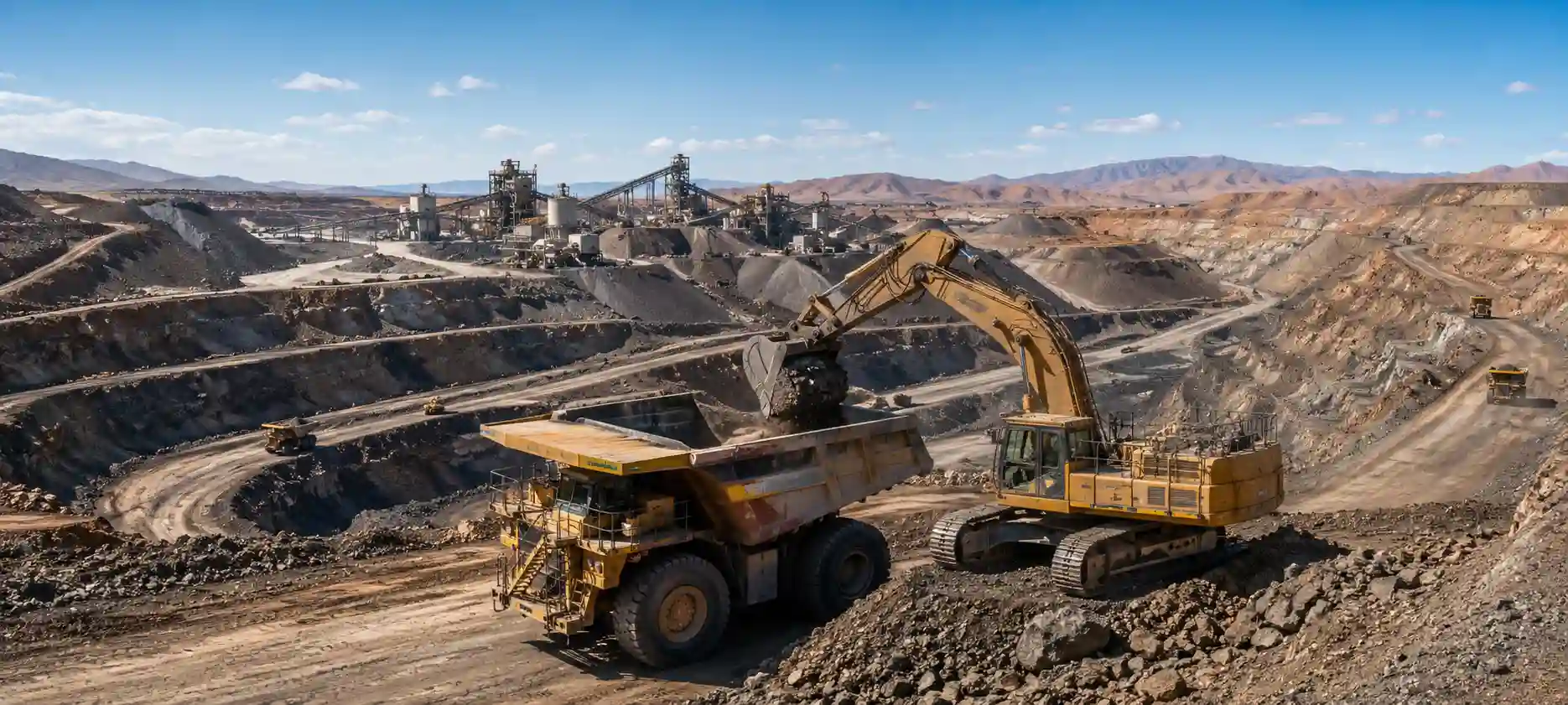
The first is a haul truck. Loaded, it may weigh well over a hundred tonnes, its stopping distance on a descending grade is measured in tens of metres, and the operator sitting four metres above the ground cannot see a light vehicle, a pedestrian or a parked pickup in a blind spot that extends several metres beyond the machine on every side. The second is the face itself — a highwall that has been cut, blasted, weathered and undercut, holding rock that will eventually come down whether or not anyone is standing beneath it.
Everything else in a quarry — crushers, conveyors, screens, workshops, magazines — carries real risk. But traffic and ground are where the fatalities concentrate, and a training plan that treats them as two items on a list of twelve has already misallocated its budget.
Nathan Safety Training Services (NIMS) delivers quarry safety training UAE programmes for aggregate and rock quarry operators, crushing and screening contractors, mining and extraction companies, drilling and blasting contractors, plant hire and haulage providers, and the cement and construction materials producers who own or supply from these operations.
Our delivery is concentrated where the sector is: Fujairah, Dibba and the east coast, Ras Al Khaimah including Khor Khwair and Al Ghail, Kalba and Khor Fakkan, Hatta, Al Ain and the Western Region of Abu Dhabi.
Quarry Traffic Management Training — The Highest-Value Course You Can Buy
If a quarry operator asked Nathan Safety Training to spend their entire training budget on one thing, this would be it.
Vehicle interaction accounts for a disproportionate share of quarry fatalities worldwide, and the mechanisms repeat with depressing consistency: a light vehicle in the blind spot of a reversing haul truck, a pedestrian crossing a haul road, a loader operator who did not see a service vehicle behind the stockpile, a truck that ran away on a grade, and a vehicle that went over an edge where the berm was too low or absent.
What Quarry Traffic Safety Training Must Change
- Understanding of actual blind spots. Most light vehicle drivers substantially underestimate how large the invisible zone around a haul truck is. Walking a driver around a stationary truck while a colleague sits in the cab is one of the most effective ten minutes of training available in this industry.
- Positive communication before approach. Radio contact and acknowledgement before entering the working radius of any large machine, rather than assuming eye contact has been made.
- Right of way discipline. Loaded haul trucks have priority, and light vehicles yield. This has to be understood as a physics constraint rather than a courtesy.
- Berm and edge protection standards. Height relative to wheel diameter, continuity along the tip head and haul road edges, and the discipline not to work close to an edge that has been degraded by traffic.
- Grade, speed and runaway awareness. Braking capability on a descent, engine braking and retarder use, and escape lane or runaway provision.
- Segregation as the primary control. Separating pedestrians and light vehicles from heavy plant by design, with training reinforcing the layout rather than substituting for it.
Traffic safety training and flagman training in a quarry context are materially different from the road-based versions, and we deliver them against the site’s own traffic management plan and haul road layout rather than as generic content.
Highwall & Face Safety Awareness Training for Quarry Operators
Geotechnical failure is the hazard that quarries manage least consistently, partly because a highwall that has stood for two years feels stable, and partly because the people most exposed to it — loader and excavator operators working at the toe — have the least opportunity to see what is happening above them.
The failure mechanisms are well understood. Overhanging and undercut faces left after blasting or digging. Loose material on benches that has not been scaled. Weathering and joint deterioration over time. Water infiltration after rain, which in the UAE arrives rarely but heavily. Face heights that exceed the safe reach of the equipment working them. Tip head instability where fill has been placed over soft or saturated ground.
Training content covers face inspection responsibilities and what an operator should look for before starting work, exclusion and standoff distances relative to face height, recognition of warning signs including fresh loose material, tension cracks at the crest and water seepage, reporting routes that people actually use, and the authority to stop and withdraw. The technical assessment of a face is an engineering task, but the daily observation that triggers it comes from the workforce, which is why awareness training carries real weight here.
Silica Dust Awareness Training — The Injury That Arrives Twenty Years Late
The hazard that quarry training most often omits, because nobody is carried off site on the day it occurs.
Respirable crystalline silica is generated by drilling, blasting, crushing, screening, conveying, loading, road haulage and cutting. It is invisible at the particle size that matters, and the visible dust cloud that operators react to is largely the coarse fraction that the body clears. The fine fraction that reaches the deep lung is the part that causes silicosis, and it produces no symptoms at all until substantial irreversible damage has occurred.
The controls are engineering-led — water suppression at crushers, screens and haul roads, enclosed cabs with filtered positive pressure ventilation, dust extraction at transfer points, and haul road maintenance. Training supports these by explaining why a cab door left open on a hot day defeats the entire filtration system, why water suppression is a health control rather than a nuisance measure, and why respiratory protection requires fit testing and clean-shaven use to work at all.
Health surveillance is the other half of the answer, and it belongs in the conversation alongside training. An operator who has worked twenty years in a quarry deserves to know what their lung function is doing while something can still be done about it.
Quarry & Mining Hazards by Work Area — Face to Despatch
Area | Principal Hazards | Relevant Training |
Drilling and blasting | Flyrock, misfires, explosives handling, noise, dust | Blasting Safety Awareness, Traffic Safety, First Aid |
Working face and benches | Highwall failure, loose material, edge proximity, machine stability | Heavy Equipment Safety, Excavator Operator, Risk Assessment |
Loading and haulage | Vehicle interaction, blind spots, runaway, edge and berm failure | Traffic Safety, Flagman Safety, Defensive Driving |
Haul roads and ramps | Grade, surface condition, dust visibility, light vehicle exposure | Traffic Safety, Heavy Equipment Safety |
Crushing and screening | Entanglement, stored energy, blockage clearing, noise, dust | LOTO, Confined Space Entry, Hand & Power Tools |
Conveyors and transfer points | Nip points, guarding, entanglement, dust, working at height | LOTO, Working at Height, Risk Assessment |
Stockpiles and reclaim | Engulfment, void collapse, mobile plant, tunnel access | Confined Space Entry, Traffic Safety, Risk Assessment |
Explosives magazine | Storage, security, handling, fire, unauthorised access | Fire Safety, Chemical Safety & Handling |
Workshop and maintenance | Hot work, tyre handling, hydraulics, suspended equipment, height | LOTO, Hot Work Safety, Rigging & Slinging |
Fuel and lubricant storage | Fire, spill, environmental release, confined tank entry | Fire Safety, Chemical Safety, Confined Space Entry |
Water management and sumps | Drowning, confined entry, pump isolation, embankment stability | Confined Space Entry, LOTO, First Aid |
Site-wide | Heat stress, noise, whole-body vibration, remote lone working | First Aid, Emergency Response, Behaviour-Based Safety |
Quarry & Mining HSE Training Courses We Deliver
Traffic Safety and Traffic Management Training
Traffic safety training UAE delivered against the site’s own haul road layout and traffic management plan. Blind spot awareness with practical demonstration, right of way rules, positive communication protocols, berm and edge standards, speed and grade management, parking and shutdown discipline, and pedestrian segregation.
Flagman Safety Training
Positioning for visibility, standard signals, radio discipline, control of light vehicle movement around loading operations, and the authority to stop traffic. Quarry flagman work differs from road-based work in that the vehicles are far larger and the ground is far less predictable.
Excavator Operator Training
Excavator operator training UAE covering machine stability on uneven and sloping ground, face working technique and standoff, bucket and attachment selection, load handling, slew zone control, travel discipline, and pre-use inspection. Delivered on the operator’s own machine class wherever possible.
Heavy Equipment and Mobile Plant Safety
Loaders, dozers, haul trucks, dump trucks and graders. Pre-start inspection, stability, tip head and edge procedures, park brake and chock discipline, isolation before maintenance, and safe access and egress — which is a frequent source of injury on machines with high cabs.
Lock Out Tag Out (LOTO) Training
Crushers, screens, conveyors, feeders and pumps. Blockage clearing is the highest-risk routine task in a quarry plant, and it is the activity most often performed without isolation because it happens frequently and takes only a moment. Stored energy in loaded conveyors, suspended screen decks and hydraulic accumulators is treated as a primary topic.
Confined Space Entry Training
Crusher chambers, surge bins, silos, stockpile reclaim tunnels, water sumps and fuel tanks. Engulfment risk in stored material is the distinctive hazard here — a void beneath a stockpile or bridged material in a bin can collapse without warning and buries a person faster than rescue is possible.
Working at Height & Fall Protection
Crusher and screen structures, conveyor gantries, silo tops and plant access. Anchor selection, harness inspection and fit, and rescue planning on structures that are often remote from the main site facilities.
Blasting Safety Awareness
For non-shotfirer personnel who work on a site where blasting occurs. Exclusion zone discipline, warning signals, flyrock awareness, misfire recognition and reporting, post-blast re-entry authorisation, and the prohibition on approaching or handling any suspect material. Shotfirer competency itself is a licensed function handled through the relevant authority.
Silica Dust and Respiratory Protection Awareness
Health effects and their delayed onset, why visible dust is a poor indicator of the hazard, engineering controls and why defeating them matters, respiratory protection selection, fit testing and the effect of facial hair on seal, and the value of health surveillance.
Fire Safety Training
Plant and conveyor fires, fuel and lubricant storage, vehicle fires, workshop hot work, and explosives magazine considerations. Extinguisher selection, alarm and evacuation on a large open site, and fire warden duties.
First Aid, CPR & AED
Quarries are frequently remote, and ambulance response times to a working face in Fujairah or Ras Al Khaimah can be substantial. Crush injury, traumatic bleeding, heat illness and cardiac response all belong in the syllabus, and on-site first aid capability matters far more here than headcount alone suggests.
Emergency Response Team (ERT) Training
Scenario-based training covering casualty extraction from plant structures and confined bins, vehicle incidents on haul roads, engulfment response, fire, and coordination with emergency services approaching a site they do not know across unmade roads.
Risk Assessment, Incident Investigation and Behaviour-Based Safety
Task-based risk assessment for supervisors, incident investigation with root cause analysis, and observation programmes. Behaviour-based safety is particularly useful in quarries because so much of the risk sits in routine decisions — whether to isolate before clearing a blockage, whether to approach a machine without radio contact — made by individuals working alone.
Emirate Licensing, MOCCAE & OSHAD Requirements for Quarry Operators
- Local municipality and emirate authorities — quarry licensing, operating conditions and inspection are administered at emirate level, with Fujairah and Ras Al Khaimah authorities carrying the greatest relevance given the concentration of the sector in those emirates.
- Ministry of Energy and Infrastructure — requirements relating to mineral resources and extraction activity.
- MOCCAE — environmental permitting, dust and emissions control, water management, blasting-related environmental conditions and rehabilitation obligations.
- Explosives licensing authorities and police — storage, transport, handling and shotfirer licensing for blasting operations, administered through the relevant emirate authority and security services.
- OSHAD-SF — the Abu Dhabi framework where extraction and processing takes place within the emirate, with Codes of Practice applicable to occupational health, dust, noise, energy isolation and vehicle safety.
- MOHRE — federal occupational safety obligations, including the midday break rule, which affects quarry operations substantially given that almost all work is outdoors.
- Client and downstream requirements — cement producers, concrete suppliers and major infrastructure clients increasingly impose supply chain HSE conditions on quarry operators, and these frequently drive the training requirement more directly than regulation does.
Training can be structured to support alignment with these frameworks. Certificates evidence completion and assessment of a defined programme and do not substitute for licensed functions such as shotfiring.
Quarry & Mining Safety Training by Job Role
- Haul truck and dump truck drivers — traffic safety, blind spot and interaction awareness, defensive driving, tip head procedure, pre-start inspection, first aid.
- Excavator and loader operators — excavator operator training, face working and standoff, machine stability, highwall awareness, LOTO, silica awareness.
- Plant operators — crushing and screening — LOTO, confined space entry, working at height, hand and power tools, noise and dust awareness.
- Drill and blast crews — blasting safety awareness, exclusion zone control, chemical safety, silica awareness, traffic safety.
- Maintenance and workshop teams — LOTO, hot work, rigging and slinging, working at height, tyre handling awareness, confined space entry.
- Light vehicle drivers and visitors — site induction with mandatory traffic interaction module, radio protocol, right of way rules. This group is disproportionately represented in quarry vehicle incidents.
- Supervisors and HSE officers — risk assessment, incident investigation and root cause analysis, face and haul road inspection, behaviour-based safety observation, emergency response leadership.
- Contractors and hauliers — site induction, traffic management, flagman duties where applicable, delivered before any site access.
Quarry Safety Training Across Fujairah, Ras Al Khaimah & the UAE
Unlike most industrial sectors in the UAE, quarrying is concentrated away from the Dubai and Abu Dhabi urban centres, and our delivery follows the rock.
- Fujairah — the largest concentration of hard rock quarrying in the country, across the Hajar mountain belt, Dibba, Masafi and the east coast, along with the crushing, screening and port export operations that support it. Industrial safety training Fujairah and quarry-specific delivery is a core route for our trainers.
- Ras Al Khaimah — Khor Khwair, Al Ghail, Khatt and the northern mountain belt, including aggregate, limestone and cement-linked extraction.
- Sharjah — Kalba, Khor Fakkan and the eastern enclaves, plus Al Sajaa processing operations.
- Abu Dhabi — Al Ain and the Western Region extraction sites, gypsum and aggregate operations, and the OSHAD-SF regulated environment.
- Dubai and the Northern Emirates — Hatta quarrying, aggregate processing and materials handling facilities.
On-site delivery is essential in this sector rather than merely preferable. Blind spot demonstrations, machine familiarisation, face inspection practice and haul road assessment cannot be replicated in a classroom, and quarry crews cannot easily leave site. Sessions are commonly delivered in short modules across shifts, or during planned plant maintenance days.
HSE Manpower Supply for Quarry & Mining Operations
Remote quarry sites frequently run with minimal HSE presence, which becomes a problem during plant shutdowns, crusher relocations, major maintenance campaigns or when a client audit is scheduled.
Nathan Safety Training Services supplies HSE Officers, HSE Engineers, Safety Supervisors, Safety Inspectors, Confined Space Attendants, Fire Watchers and Environmental Officers on short-term, campaign and long-term assignment. Personnel with prior quarry, mining and heavy plant experience can be requested, including for remote sites in Fujairah and Ras Al Khaimah.
Courses Offered
- First Aid Course - CPR and AED
- Confined Space
- Fire Safety Awareness
- Scaffolding Inspection
- Scaffolding Erection & Dismantling
- Flagman Safety
- Chemical Safety and Handling Training
- Hazard and Risk Assessment
- Rigging and Slinging Training
- Traffic Safety
- Hand and Power Tools Operator
- Electrical Safety
- Lock Out and Tag Out (LOTO)
- Accident Incident Investigation
- Lifeguard Training
- Advanced Risk Assessment & Compliance Service
- Behavior-Based Safety Workplace Safety Consulting
- Construction Site Safety Induction Training
- Emergency Response Team Training
- Excavator Operator Training
- Forklift Operator Training
- H2S Awareness & Breathing Apparatus Training
- Hot Work Safety Training
- Incident Reporting & Root Cause Analysis Service
- MEWP Operator Training
- Mobile Crane Operator Training
- Permit to Work System Training
- Rope Access Training
- Working at Height & Fall Protection Safety Training
- Fire Warden Training
- Manual Handling Training
- Banksman Safety Training
- Gas Tester Training
- Defensive Driving Training
- HAZMAT Awareness Training
- Machine Safety and Machine Guarding Training
- Spill Response and Spill Control Training
- Welding Safety Training
Need expert advice? Speak to our team today
FAQ
1. Why is traffic management the top priority in quarry safety training?
Because vehicle interaction accounts for a disproportionate share of quarry fatalities, and the mechanisms repeat consistently: light vehicles in the blind spot of reversing haul trucks, pedestrians on haul roads, runaway on grades, and vehicles going over inadequately bermed edges. The machines involved carry so much mass that almost any contact is severe. Training that changes how people position themselves around heavy plant delivers more risk reduction per dirham than anything else available in this sector.
2. How large are the blind spots on a haul truck?
Larger than most people assume, extending several metres beyond the machine on every side, with the area directly behind and immediately in front of the bumper being effectively invisible from the cab. The most effective way to convey this is practical: seat one person in the cab while another walks the perimeter, and have the driver call out when they lose sight of them. Ten minutes of that demonstration changes light vehicle driver behaviour more than an hour of classroom material.
3. What should operators look for when inspecting a working face?
Fresh loose material at the crest or on benches, overhangs and undercuts left by previous digging or blasting, tension cracks behind the crest, water seepage or damp patches indicating infiltration, changes in rock structure or jointing, and any material that has moved since the previous shift. The formal geotechnical assessment is an engineering task, but the daily observation that triggers it comes from the people working at the toe, which is why awareness training carries real weight.
4. Is silica dust really a significant risk in UAE quarries?
Yes, and it is the most under-managed hazard in the sector because the harm is invisible and delayed. Respirable crystalline silica is generated by drilling, blasting, crushing, screening and haulage. The particle size that causes silicosis is too small to see, so the visible dust cloud is a poor indicator of exposure. There are no symptoms until substantial irreversible lung damage has occurred. Water suppression, enclosed filtered cabs, dust extraction and haul road maintenance are the controls, supported by fit-tested respiratory protection and health surveillance.
5. Why does a cab door left open matter?
Because enclosed cab filtration works by maintaining positive pressure inside the cab so that dust cannot enter. Open the door on a hot day, or run with a failed seal or a clogged filter, and the system stops working entirely – the operator is then breathing quarry air for a full shift while believing they are protected. This is one of the most common and most consequential control failures in the industry, and it is entirely a training and maintenance issue.
6. Do you provide shotfirer training?
Shotfiring is a licensed function administered through the relevant emirate authority and security services, and it is not something a training certificate can substitute for. What we deliver is blasting safety awareness for the much larger population of non-shotfirer personnel who work on a site where blasting occurs – exclusion zone discipline, warning signals, flyrock awareness, misfire recognition and reporting, post-blast re-entry authorisation, and the absolute prohibition on approaching suspect material.
7. What makes stockpile and bin work so dangerous?
Engulfment. Stored material can bridge over a void, or form a stable-looking crust above an empty space created by reclaim from below. A person walking on the surface or entering a bin to clear bridged material can break through and be buried faster than any rescue can reach them. It is treated as a confined space entry with specific engulfment controls — never entering above stored material, working from outside where possible, and isolating all reclaim before any entry.
8. Why is blockage clearing on a crusher such a high-risk task?
Because it happens frequently, it takes only a moment, and production is stopped while it is being done. That combination creates enormous pressure to skip isolation. Stored energy compounds the problem — a jammed crusher, a loaded conveyor or a bridged feeder can release violently when the obstruction is disturbed, even with the drive stopped. Our LOTO training treats blockage clearing as a named scenario rather than a general principle.
9. Is quarry safety training mandatory in the UAE?
The obligation to ensure worker competence is mandatory under MOHRE occupational safety duties and the applicable emirate framework, with quarry licensing and operating conditions administered at emirate level — most relevantly by the Fujairah and Ras Al Khaimah authorities. MOCCAE requirements cover dust, emissions and environmental conditions. In practice, an increasingly strong driver is the supply chain: cement producers and major infrastructure clients now impose HSE conditions on quarry suppliers that frequently exceed the regulatory baseline.
10. How do you handle first aid on a remote quarry site?
By treating on-site capability as the primary response rather than a stopgap. Ambulance response times to a working face in the Hajar mountains or the RAK northern belt can be substantial, so the training emphasises crush injury management, catastrophic bleeding control, heat illness recognition and treatment, and cardiac response with AED use. First aider numbers and equipment positioning also need to reflect the size of the site, not just the headcount — a single first aid room at the weighbridge is of limited use to someone at the far end of a haul road.
11. Can training be delivered on site with our own machines?
Yes, and in this sector it is essential rather than optional. Blind spot demonstration, machine familiarisation, pre-start inspection practice, face inspection and haul road assessment all require the actual site. We deliver in short modules across shifts or during planned plant maintenance days so that production disruption is minimised.
12. What certificates do participants receive?
A certificate of completion for each course showing participant name, course title, delivery date and validity guidance where applicable. These support licensing and inspection requirements, client and supply chain pre-qualification, contractor competency files and audit purposes. Specific formats can usually be accommodated with advance notice.
13. How long do the courses take?
Awareness programmes such as blasting safety awareness, silica awareness or fire safety generally run half a day. Traffic safety and flagman training typically run half a day to a day with practical elements. Excavator and heavy equipment operator training runs one to three days depending on prior experience. Confined space entry and LOTO run one to two days including assessment. First aid runs one to two days depending on the level.
14. How often should quarry training be refreshed?
Traffic and vehicle interaction awareness is commonly refreshed annually given its consequence and the turnover of light vehicle drivers and contractors. Operator competencies, LOTO, confined space and working at height are commonly refreshed every one to two years. Site induction is repeated for every new starter and contractor without exception. Silica and health awareness is often delivered annually alongside health surveillance.
15. Do you supply HSE manpower for remote quarry sites?
Yes. Through hsemanpower.ae we supply HSE Officers, HSE Engineers, Safety Supervisors, Safety Inspectors, Confined Space Attendants, Fire Watchers and Environmental Officers for quarry and mining operations, including remote sites in Fujairah and Ras Al Khaimah. Demand in this sector is often campaign-shaped – a plant shutdown, a crusher relocation, a client audit – so we can mobilise for defined periods rather than requiring long minimum engagements.
Book Quarry Safety Training with Nathan Safety Training
Nathan Safety Training Services delivers on site at quarry and extraction operations across Fujairah, Ras Al Khaimah and the Northern Emirates. If you are reviewing a quarry safety programme, preparing for a client supply chain audit, or building a competency matrix for a site that has grown faster than its systems, the traffic management plan and the face inspection routine are where the largest gains sit.
Book Corporate HSE Training → · Request HSE Manpower Support → · Talk to an HSE Advisor →