



Home / Hazard Identification And Risk Assessment Training
Hazard Identification And Risk Assessment Training
Where Every Permit Starts: HIRA and Risk Assessment Training for UAE HSE Teams
Every permit to work, every confined space entry, every scaffold sign-off on a UAE site traces back to one document: the risk assessment that decided what controls were actually needed. Get that document wrong — copied from a template, never walked against the real site, ratings that haven’t changed in three years — and every control built on top of it inherits the same blind spot.
Nathan Safety Training (NIMS) trains the people who actually write and maintain risk assessments across UAE operations, using hazard identification and risk assessment (HIRA) methodology that produces a document worth basing a permit on, not a compliance formality.
Why Risk Assessment Sits at the Centre of UAE Compliance
Cabinet Resolution No. 33 of 2022 on Occupational Health and Safety explicitly requires documented risk assessments as part of the federal OHS framework, and both Dubai Municipality’s HSEMS and Abu Dhabi’s ADOSH-SF build their permit, method statement and special activity permit requirements on top of a risk assessment that has to actually reflect the work being done. Building permits above certain project thresholds in Dubai require an approved HSEMS or project HSE Plan grounded in documented risk assessment — it isn’t a background document, it’s a prerequisite for the permit itself.
Alignment with ISO 45001’s structure for hazard identification and risk evaluation is common practice across UAE operators who hold or are pursuing that certification, and this course’s methodology is compatible with that structure without requiring your organisation to be certified to use it.
The most common gap we find during prequalification preparation isn’t a missing risk assessment — it’s a risk assessment that exists but that nobody reviewing the tender can actually trace to the corresponding method statement or permit. Traceability between the two documents matters as much to a reviewer as the assessment’s content.
The Document Everything Else Depends On
Every permit, every method statement, every piece of PPE issued on a UAE site is downstream of a risk assessment decision made earlier. When that foundational document is weak — copied, unwalked, unreviewed — every control built on top of it inherits the same blind spot, no matter how well the visible parts of the safety programme are executed.
That’s why this training earns its place ahead of almost everything else on an HSE calendar. A team that can genuinely identify and rate hazards prevents incidents further upstream than any single piece of PPE or procedure ever could.
Who Should Take This Course
This is a foundational skill course — relevant to almost any role responsible for deciding what controls a piece of work actually needs.
- HSE officers and managers building or reviewing site risk assessments
- Site supervisors authorising permits based on an existing assessment
- Project managers responsible for HSE plan sign-off
- Newly appointed safety committee members across any industry
- Contractors preparing method statements for client or main contractor approval
Whose Risk Assessment Framework Applies, by Emirate
The HIRA methodology itself doesn’t change by location — who reviews the resulting document does. We deliver onsite across all seven:
- Dubai — Dubai Municipality’s HSEMS framework is the primary reference, with Trakhees, DMCC and other free zones layering their own additional review requirements on top
- Abu Dhabi — ADOSH-SF’s Codes of Practice set the structure, administered through the Abu Dhabi Public Health Centre, with ADNOC group companies frequently adding their own supplementary risk review for vendors
- Sharjah — Sharjah Municipality reviews risk assessments for standard sites, while Hamriyah Free Zone and SAIF Zone apply their own additional conditions for tenants
- Ajman — Ajman Municipality and Ajman Free Zone each expect a documented risk assessment behind any permit application, scaled to the size of the operation
- Ras Al Khaimah — RAK Municipality and RAK FTZ both increasingly expect ISO 45001-aligned hazard identification structure, particularly for industrial and quarrying operations
- Fujairah — Fujairah Municipality and the Fujairah Oil Industry Zone authority both require risk assessments that specifically address the emirate’s concentration of bunkering and terminal hazards
- Umm Al Quwain — UAQ Municipality and UAQ Free Trade Zone apply lighter-touch review for smaller operations, but still expect the same documented HIRA structure behind any permit
Risk Matrix: Likelihood × Severity
Likelihood \ Severity | Minor | Moderate | Major | Catastrophic |
Rare | Low | Low | Medium | High |
Possible | Low | Medium | High | Extreme |
Likely | Medium | High | Extreme | Extreme |
Almost Certain | Medium | High | Extreme | Extreme |
When a Risk Assessment Becomes a Formality
We review a lot of existing risk assessments before we ever teach a course, and the failure pattern is consistent.
- A template downloaded once and reused across unrelated sites with the site name changed
- Risk ratings that haven’t moved in three years despite equipment, staffing or process changes
- Controls listed that don’t match what’s actually specified on the corresponding permit or method statement
- Assessments written by someone who never walked the actual work area
- A hierarchy of controls that jumps straight to PPE without genuinely considering elimination or substitution first
What Makes This HIRA Training Different
We built this course to produce a document your team can actually defend in an audit, not a template exercise that gets filed and forgotten.
Because the HIRA methodology taught here is the same structure Nathan ISO Consulting builds ISO 45001 systems on, clients pursuing certification later don’t have to relearn a different framework — the training and the certification work are already aligned.
- Practical HIRA workshops using your own site or project as the working example, not a generic case study
- A documentation format that maps directly to what ADOSH-SF and Dubai Municipality HSEMS auditors expect to see
- Genuine hierarchy-of-controls discipline — elimination and substitution considered before PPE, not skipped to it
- Instructors who write risk assessments for a living across construction, industrial and hospitality sites
- Ongoing template and review support so assessments stay current instead of becoming a one-time exercise
Courses Offered
- First Aid Course - CPR and AED
- Confined Space
- Fire Safety Awareness
- Scaffolding Inspection
- Scaffolding Erection & Dismantling
- Flagman Safety
- Chemical Safety and Handling Training
- Hazard and Risk Assessment
- Rigging and Slinging Training
- Traffic Safety
- Hand and Power Tools Operator
- Electrical Safety
- Lock Out and Tag Out (LOTO)
- Accident Incident Investigation
- Lifeguard Training
- Advanced Risk Assessment & Compliance Service
- Behavior-Based Safety Workplace Safety Consulting
- Construction Site Safety Induction Training
- Emergency Response Team Training
- Excavator Operator Training
- Forklift Operator Training
- H2S Awareness & Breathing Apparatus Training
- Hot Work Safety Training
- Incident Reporting & Root Cause Analysis Service
- MEWP Operator Training
- Mobile Crane Operator Training
- Permit to Work System Training
- Rope Access Training
- Working at Height & Fall Protection Safety Training
- Oil & Gas Safety Training
- Fire Warden Training
- Manual Handling Training
- Banksman Safety Training
- Gas Tester Training
- Defensive Driving Training
- HAZMAT Awareness Training
- Machine Safety and Machine Guarding Training
- Spill Response and Spill Control Training
- Welding Safety Training
Need expert advice? Speak to our team today
FAQ
Is a documented risk assessment legally required in the UAE?
Yes. Cabinet Resolution No. 33 of 2022 on Occupational Health and Safety requires documented risk assessment as part of the federal OHS framework, and both Dubai Municipality’s HSEMS and Abu Dhabi’s ADOSH-SF build permit and method statement requirements directly on top of it.
What is HIRA and how is it different from a general safety plan?
HIRA — Hazard Identification and Risk Assessment — is a structured methodology for identifying specific hazards, rating their likelihood and severity, and defining proportionate controls, rather than a general narrative safety plan. It’s the analytical process that a permit or method statement should be built from.
Does this course require any prior HSE qualification?
No, though it’s most useful for people already responsible for site safety decisions — HSE officers, supervisors and project managers. We adjust the depth of the workshop content based on the group’s existing experience.
What's the hierarchy of controls, and why does the course emphasise it?
It’s the ranked order of how seriously a control actually reduces risk: elimination, substitution, engineering controls, administrative controls, and PPE last. Most weak risk assessments jump straight to PPE because it’s the easiest control to write down, even when a better option was available.
Can this be used to prepare a risk assessment for a specific permit, like confined space or hot work?
Yes, that’s exactly the intended application — the methodology taught here is what a confined space or hot work permit’s supporting risk assessment should be built from, and we can work through your actual upcoming permits during the course.
Is this course aligned with ISO 45001?
The hazard identification and risk evaluation structure taught is compatible with ISO 45001’s approach, which is useful for organisations pursuing or maintaining that certification, though this course itself doesn’t require or confer ISO certification.
How often should a risk assessment be reviewed?
At minimum annually, and immediately after any change to the process, equipment, staffing or site conditions it covers, or following any incident or near-miss related to the activity it addresses. A static risk assessment is usually a sign nobody has actually looked at it in a while.
Do you provide a risk assessment template as part of the course?
Yes, along with the risk matrix and documentation structure used in the course, so participants leave with a working format rather than having to build one from scratch.
Is this course relevant outside construction and industrial sectors?
Very much — hospitality, events, retail and office environments all carry hazards worth formally assessing, even if the risk profile is lower. The methodology scales down as cleanly as it scales up.
Do you deliver this as classroom training or onsite workshops?
We strongly recommend onsite delivery for this course specifically, since the most valuable part is walking your actual site or reviewing your actual project scope as the working example, rather than a hypothetical case study.
Does a risk assessment written for a Dubai site need to be redone if we expand to Abu Dhabi or Sharjah?
The underlying HIRA methodology transfers, but the assessment itself needs to be re-walked against the new site — different regulator, different building, often different hazards. We treat each emirate’s assessment as its own document, not a copy-paste from another site.
How long does a HIRA workshop take?
A focused single-site workshop typically runs one day; building a full site risk register from scratch rather than reviewing an existing one usually takes two.
Can you review our existing risk assessments rather than starting from scratch?
Yes, and for most clients this is the better starting point — reviewing and strengthening what already exists usually surfaces more useful lessons than building a fresh assessment in isolation.
Is HIRA the same as a Job Safety Analysis (JSA)?
Yes, and for most clients this is the better starting point — reviewing and strengthening what already exists usually surfaces more useful lessons than building a fresh assessment in isolation.
- First Aid Course - CPR and AED
- Confined Space
- Fire Safety Awareness
- Scaffolding Inspection
- Scaffolding Erection & Dismantling
- Flagman Safety
- Chemical Safety and Handling Training
- Hazard and Risk Assessment
- Rigging and Slinging Training
- Traffic Safety
- Hand and Power Tools Operator
- Electrical Safety
- Lock Out and Tag Out (LOTO)
- Accident Incident Investigation
- Lifeguard Training
- Advanced Risk Assessment & Compliance Service
- Behavior-Based Safety Workplace Safety Consulting
- Construction Site Safety Induction Training
- Emergency Response Team Training
- Excavator Operator Training
- Forklift Operator Training
- H2S Awareness & Breathing Apparatus Training
- Hot Work Safety Training
- Incident Reporting & Root Cause Analysis Service
- MEWP Operator Training
- Mobile Crane Operator Training
- Permit to Work System Training
- Rope Access Training
- Working at Height & Fall Protection Safety Training
Where Every Permit Starts: HIRA and Risk Assessment Training for UAE HSE Teams
Every permit to work, every confined space entry, every scaffold sign-off on a UAE site traces back to one document: the risk assessment that decided what controls were actually needed. Get that document wrong — copied from a template, never walked against the real site, ratings that haven’t changed in three years — and every control built on top of it inherits the same blind spot.
Nathan Safety Training (NIMS) trains the people who actually write and maintain risk assessments across UAE operations, using hazard identification and risk assessment (HIRA) methodology that produces a document worth basing a permit on, not a compliance formality.
Why Risk Assessment Sits at the Centre of UAE Compliance
Cabinet Resolution No. 33 of 2022 on Occupational Health and Safety explicitly requires documented risk assessments as part of the federal OHS framework, and both Dubai Municipality’s HSEMS and Abu Dhabi’s ADOSH-SF build their permit, method statement and special activity permit requirements on top of a risk assessment that has to actually reflect the work being done. Building permits above certain project thresholds in Dubai require an approved HSEMS or project HSE Plan grounded in documented risk assessment — it isn’t a background document, it’s a prerequisite for the permit itself.
Alignment with ISO 45001’s structure for hazard identification and risk evaluation is common practice across UAE operators who hold or are pursuing that certification, and this course’s methodology is compatible with that structure without requiring your organisation to be certified to use it.
The most common gap we find during prequalification preparation isn’t a missing risk assessment — it’s a risk assessment that exists but that nobody reviewing the tender can actually trace to the corresponding method statement or permit. Traceability between the two documents matters as much to a reviewer as the assessment’s content.
The Document Everything Else Depends On
Every permit, every method statement, every piece of PPE issued on a UAE site is downstream of a risk assessment decision made earlier. When that foundational document is weak — copied, unwalked, unreviewed — every control built on top of it inherits the same blind spot, no matter how well the visible parts of the safety programme are executed.
That’s why this training earns its place ahead of almost everything else on an HSE calendar. A team that can genuinely identify and rate hazards prevents incidents further upstream than any single piece of PPE or procedure ever could.
Who Should Take This Course
This is a foundational skill course — relevant to almost any role responsible for deciding what controls a piece of work actually needs.
- HSE officers and managers building or reviewing site risk assessments
- Site supervisors authorising permits based on an existing assessment
- Project managers responsible for HSE plan sign-off
- Newly appointed safety committee members across any industry
- Contractors preparing method statements for client or main contractor approval
Whose Risk Assessment Framework Applies, by Emirate
The HIRA methodology itself doesn’t change by location — who reviews the resulting document does. We deliver onsite across all seven:
- Dubai — Dubai Municipality’s HSEMS framework is the primary reference, with Trakhees, DMCC and other free zones layering their own additional review requirements on top
- Abu Dhabi — ADOSH-SF’s Codes of Practice set the structure, administered through the Abu Dhabi Public Health Centre, with ADNOC group companies frequently adding their own supplementary risk review for vendors
- Sharjah — Sharjah Municipality reviews risk assessments for standard sites, while Hamriyah Free Zone and SAIF Zone apply their own additional conditions for tenants
- Ajman — Ajman Municipality and Ajman Free Zone each expect a documented risk assessment behind any permit application, scaled to the size of the operation
- Ras Al Khaimah — RAK Municipality and RAK FTZ both increasingly expect ISO 45001-aligned hazard identification structure, particularly for industrial and quarrying operations
- Fujairah — Fujairah Municipality and the Fujairah Oil Industry Zone authority both require risk assessments that specifically address the emirate’s concentration of bunkering and terminal hazards
- Umm Al Quwain — UAQ Municipality and UAQ Free Trade Zone apply lighter-touch review for smaller operations, but still expect the same documented HIRA structure behind any permit
Risk Matrix: Likelihood × Severity
Likelihood \ Severity | Minor | Moderate | Major | Catastrophic |
Rare | Low | Low | Medium | High |
Possible | Low | Medium | High | Extreme |
Likely | Medium | High | Extreme | Extreme |
Almost Certain | Medium | High | Extreme | Extreme |
When a Risk Assessment Becomes a Formality
We review a lot of existing risk assessments before we ever teach a course, and the failure pattern is consistent.
- A template downloaded once and reused across unrelated sites with the site name changed
- Risk ratings that haven’t moved in three years despite equipment, staffing or process changes
- Controls listed that don’t match what’s actually specified on the corresponding permit or method statement
- Assessments written by someone who never walked the actual work area
- A hierarchy of controls that jumps straight to PPE without genuinely considering elimination or substitution first
What Makes This HIRA Training Different
We built this course to produce a document your team can actually defend in an audit, not a template exercise that gets filed and forgotten.
Because the HIRA methodology taught here is the same structure Nathan ISO Consulting builds ISO 45001 systems on, clients pursuing certification later don’t have to relearn a different framework — the training and the certification work are already aligned.
- Practical HIRA workshops using your own site or project as the working example, not a generic case study
- A documentation format that maps directly to what ADOSH-SF and Dubai Municipality HSEMS auditors expect to see
- Genuine hierarchy-of-controls discipline — elimination and substitution considered before PPE, not skipped to it
- Instructors who write risk assessments for a living across construction, industrial and hospitality sites
- Ongoing template and review support so assessments stay current instead of becoming a one-time exercise
FAQ
Is a documented risk assessment legally required in the UAE?
Yes. Cabinet Resolution No. 33 of 2022 on Occupational Health and Safety requires documented risk assessment as part of the federal OHS framework, and both Dubai Municipality’s HSEMS and Abu Dhabi’s ADOSH-SF build permit and method statement requirements directly on top of it.
What is HIRA and how is it different from a general safety plan?
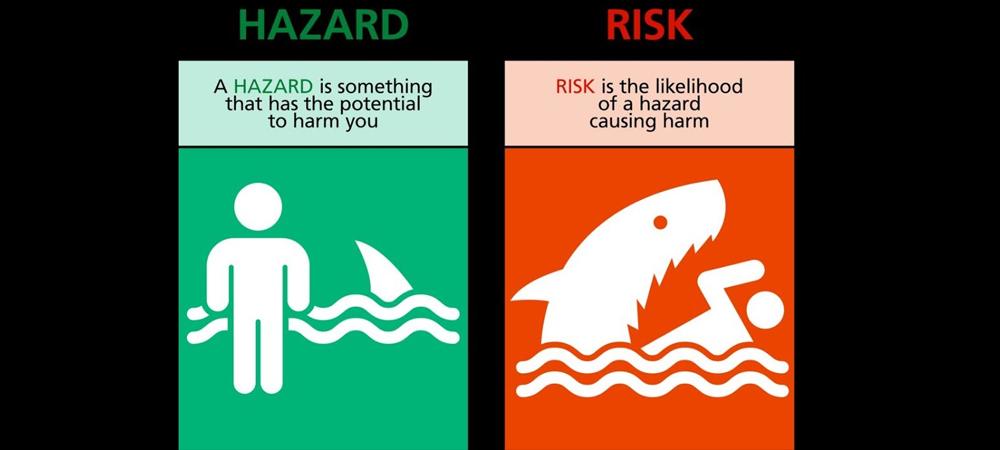
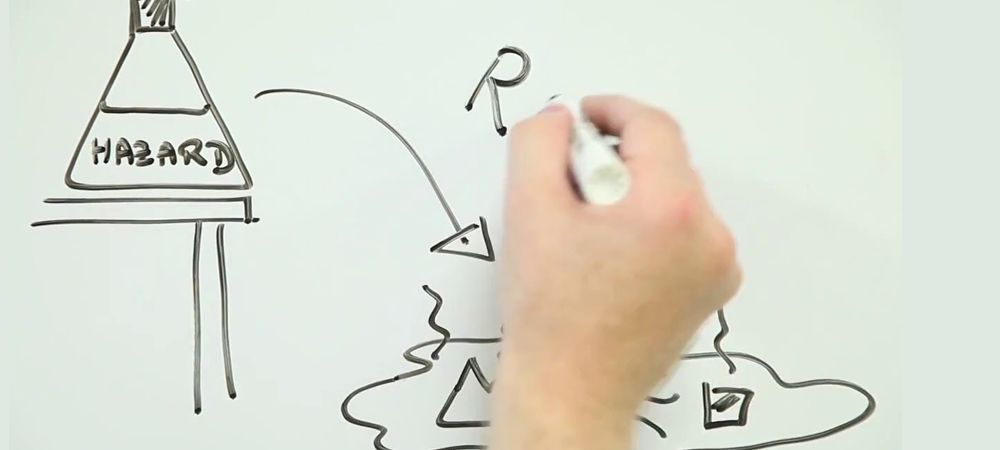
HIRA — Hazard Identification and Risk Assessment — is a structured methodology for identifying specific hazards, rating their likelihood and severity, and defining proportionate controls, rather than a general narrative safety plan. It’s the analytical process that a permit or method statement should be built from.
Does this course require any prior HSE qualification?
No, though it’s most useful for people already responsible for site safety decisions — HSE officers, supervisors and project managers. We adjust the depth of the workshop content based on the group’s existing experience.
What's the hierarchy of controls, and why does the course emphasise it?
It’s the ranked order of how seriously a control actually reduces risk: elimination, substitution, engineering controls, administrative controls, and PPE last. Most weak risk assessments jump straight to PPE because it’s the easiest control to write down, even when a better option was available.
Can this be used to prepare a risk assessment for a specific permit, like confined space or hot work?
Yes, that’s exactly the intended application — the methodology taught here is what a confined space or hot work permit’s supporting risk assessment should be built from, and we can work through your actual upcoming permits during the course.
Is this course aligned with ISO 45001?
The hazard identification and risk evaluation structure taught is compatible with ISO 45001’s approach, which is useful for organisations pursuing or maintaining that certification, though this course itself doesn’t require or confer ISO certification.
How often should a risk assessment be reviewed?
At minimum annually, and immediately after any change to the process, equipment, staffing or site conditions it covers, or following any incident or near-miss related to the activity it addresses. A static risk assessment is usually a sign nobody has actually looked at it in a while.
Do you provide a risk assessment template as part of the course?
Yes, along with the risk matrix and documentation structure used in the course, so participants leave with a working format rather than having to build one from scratch.
Is this course relevant outside construction and industrial sectors?
Very much — hospitality, events, retail and office environments all carry hazards worth formally assessing, even if the risk profile is lower. The methodology scales down as cleanly as it scales up.
Do you deliver this as classroom training or onsite workshops?
We strongly recommend onsite delivery for this course specifically, since the most valuable part is walking your actual site or reviewing your actual project scope as the working example, rather than a hypothetical case study.
Does a risk assessment written for a Dubai site need to be redone if we expand to Abu Dhabi or Sharjah?
The underlying HIRA methodology transfers, but the assessment itself needs to be re-walked against the new site — different regulator, different building, often different hazards. We treat each emirate’s assessment as its own document, not a copy-paste from another site.
How long does a HIRA workshop take?
A focused single-site workshop typically runs one day; building a full site risk register from scratch rather than reviewing an existing one usually takes two.
Can you review our existing risk assessments rather than starting from scratch?
Yes, and for most clients this is the better starting point — reviewing and strengthening what already exists usually surfaces more useful lessons than building a fresh assessment in isolation.
Is HIRA the same as a Job Safety Analysis (JSA)?
They’re related but scoped differently. HIRA is typically a broader site or activity-level assessment covering multiple hazards and controls; a JSA (or JHA) usually breaks one specific task into sequential steps with a hazard and control noted at each step. We cover both, since most sites need each for different purposes.
Build a Risk Assessment That Holds Up
Whether you need a single HIRA workshop or a full risk assessment programme built from scratch, tell us your industry and current risk assessment maturity, and we’ll build a workshop around your actual site or project rather than a generic template exercise.
Nathan Safety Training (NIMS) — Hazard identification and risk assessment training across Dubai, Abu Dhabi, Sharjah, Ajman, Ras Al Khaimah, Fujairah and Umm Al Quwain.