
Home / Steel & Metal Industry Safety Training UAE
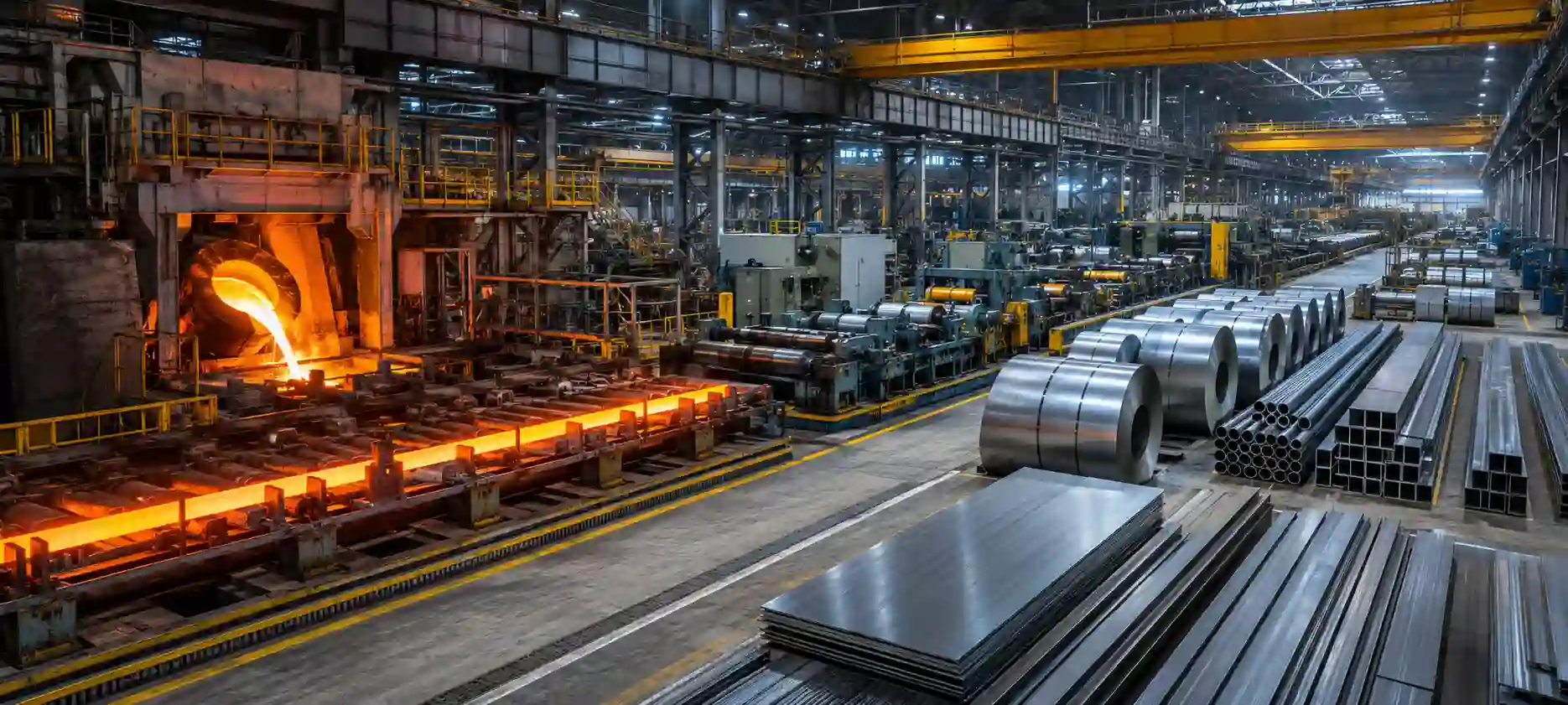
Pour molten metal onto trapped moisture and it does not cool. It explodes.
Water flashing to steam under a mass of liquid metal expands by a factor in the region of sixteen hundred, and the result throws molten material across a bay in a fraction of a second. It is the reason a damp ladle refractory, a leaking cooling line, a wet scrap charge or condensation in a mould is treated as a plant emergency in a well-run steelworks and as an inconvenience in a poorly run one.
That single hazard explains why steel and metal safety training cannot be adapted from general manufacturing material. The energy involved is of a different order, the reaction time available is close to zero, and the controls depend almost entirely on what the workforce understands about the process rather than on engineered protection alone.
Nathan Safety Training Services (NIMS) delivers steel industry safety training UAE programmes for integrated steel plants, electric arc furnace and rolling operations, aluminium smelters and casthouses, foundries, galvanising and coating lines, rebar and section producers, and the maintenance and contractor organisations that work inside them.
We deliver on site across Mussafah and ICAD, Khalifa Economic Zone and Al Taweelah in Abu Dhabi, Jebel Ali and Dubai Industrial City, Hamriyah and the Sharjah industrial areas, Ras Al Khaimah, Ajman and Fujairah.
Book On-Site Steel Plant Training → · Request a Hot Metal Competency Matrix → · Request HSE Manpower →
Steel Plant Hazards Ranked by Severity — What Training Must Address First
Training budgets in this sector are often allocated by course popularity rather than by consequence. The list below runs the other way, ordered by the severity of what goes wrong.
1. Molten Metal Contact & Steam Explosion
The defining hazard of the industry. Contact injuries occur during tapping, pouring, ladle transfer, slag handling, sampling, temperature measurement and mould filling. Steam explosion occurs when liquid metal meets moisture in any form — damp refractory, wet scrap, condensation, a cooling water leak, rain ingress, or a tool that has not been dried.
The controls are procedural and behavioural: moisture discipline across the whole plant, correct aluminised PPE selected for radiant and splash exposure, exclusion zones during pouring, tool preheating, and an ingrained understanding among every person in the bay of why a puddle near a casting pit is not a housekeeping issue.
2. Crane & Lifting Failures in Hot Metal Handling
Steel plants run overhead cranes almost continuously, frequently carrying loads over areas where people work. A dropped ladle, coil, billet or slab is catastrophic, and the causes are consistent — sling and lifting accessory deterioration in a hot environment, incorrect load estimation, hot metal crane duty cycles that wear equipment faster than standard inspection intervals assume, and communication failures between crane operator and slinger.
Rigging and slinging training and mobile crane operator training in this sector need to address heat degradation of lifting gear specifically, because a sling that would last months in a warehouse behaves very differently near a furnace.
3. Hot Work, Welding & Fire Risk
The industry generates ignition sources continuously — welding, cutting, grinding, gouging, plus the process itself. Fire load comes from hydraulic oil, grease, cable, conveyor belting and accumulated combustible dust. Hydraulic oil under pressure near a hot surface is a particularly serious combination and has caused major fires in rolling mills worldwide.
4. Confined Space Entry in Furnaces, Ladles & Ducts
Furnaces, ladles, tundishes, flues, ducts, dust collection systems, pits and reheat furnaces are all entered for relining, cleaning and repair. The atmospheric risks are oxygen deficiency from inerting or residual combustion, carbon monoxide, and dust. Residual heat is an additional and frequently underestimated hazard — a vessel that is cool enough to enter may still be hot enough to cause collapse from heat stress.
5. Mobile Plant & Pedestrian Interaction
Forklifts, coil handlers, slag pot carriers, loaders and trucks move continuously through bays where people walk. Restricted visibility around large loads, noise that masks approach, and the sheer mass involved make this the most frequent source of serious injury after the hot metal hazards themselves.
6. Occupational Health — Heat, Metal Fume, Noise & Silica
The slower hazards, and the ones least often trained. Heat stress in an environment where ambient UAE summer temperatures combine with radiant process heat. Metal fume from welding, cutting and galvanising, including zinc fume fever and the significant risk associated with hexavalent chromium in stainless steel work. Noise at levels that cause permanent loss. Silica and refractory ceramic fibre exposure during relining. Vibration from grinding and chipping.
Steel & Metal Hazards by Process Area — Melting to Despatch
Process Area | Principal Hazards | Relevant Training |
Scrap yard and charging | Mobile plant, falling material, sealed vessels, moisture on charge | |
Melting – EAF and furnaces | Molten metal, radiant heat, arc flash, CO, noise, dust | |
Ladle and hot metal transfer | Molten metal splash, crane load over personnel, refractory failure | |
Casting and continuous casting | Steam explosion risk, mould handling, hot surfaces, cooling water | |
Slag handling and disposal | Molten slag, hot residues, mobile plant, pit access | |
Reheat and rolling mills | Hydraulic oil fire, entanglement, hot product, noise | |
Finishing, cutting and shearing | Machine guarding, sharp edges, crush injury, noise | |
Galvanising and coating | Molten zinc, acid pickling, metal fume, chemical exposure | |
Furnace relining and refractory | Confined entry, residual heat, silica and RCF dust, height | |
Maintenance and shutdown | Multi-source isolation, hot work, height, SIMOPS | |
Dust collection and ducting | Confined entry, combustible dust, height, CO | |
Warehousing and despatch | Coil and bundle stability, forklift, load securing |
Heat Stress Training for Steel Plants – A Year-Round Hazard
Most heat stress guidance written for the UAE assumes outdoor work and a summer season. Neither assumption holds in a steel plant.
Radiant heat from a furnace, ladle or hot product does not follow the weather. A casting bay in January can impose a higher thermal load than a construction site in July, and the aluminised PPE that protects against molten metal splash also traps metabolic heat. The result is a workforce that faces significant heat strain year-round while the site’s heat management procedure is written around a June to September window.
Practical training content covers recognition of heat exhaustion and heat stroke in colleagues rather than in oneself – because impaired judgement is an early symptom – hydration and electrolyte practice across a full shift, work-rest cycling in hot zones, acclimatisation for new starters and returners after leave, and the interaction between PPE requirements and thermal load. First aid training should include heat illness response as a specific module in this sector.
Talk to an HSE Advisor → · Check On-Site Availability →
Steel & Metal Industry HSE Training Courses We Deliver
Hot Work Safety Training
Hot work safety training UAE covering welding, cutting, gouging and grinding in an environment that already contains ignition sources and significant fire load. Work area preparation, combustible control including hydraulic oil and accumulated dust, gas cylinder handling and storage, fire watch responsibilities including the post-work watch period, and the permit interface.
Welding Safety and Metal Fume Awareness
Delivered as part of hot work and chemical safety programmes. Covers arc eye, radiation exposure, fume composition and health effects, the specific risks of galvanised and stainless material, local exhaust ventilation, respiratory protection selection and fit, and confined space welding.
Rigging & Slinging Training
Rigging and slinging training UAE adapted to hot metal handling. Sling and accessory selection for elevated temperature service, load estimation for ladles, coils, slabs and billets, inspection and rejection criteria for gear used near heat, lifting over occupied areas, and communication protocols between slinger and crane operator.
Mobile Crane and Overhead Crane Safety
Load charts, ground and runway conditions, exclusion zones, tandem lifting, hot metal duty cycle implications for equipment condition, and emergency procedures for a load that cannot be safely landed.
Lock Out Tag Out (LOTO) Training
LOTO training UAE for rolling mills, shears, conveyors, furnaces and hydraulic systems. This industry has heavy multi-source isolation requirements — electrical, hydraulic, pneumatic, gravitational and thermal energy on a single machine is routine. Stored hydraulic pressure and suspended mill components are the two sources most often missed.
Confined Space Entry Training
Furnaces, ladles, tundishes, flues, ducts, dust collectors, pits and reheat furnaces. Atmospheric testing for oxygen deficiency and carbon monoxide, residual heat assessment, ventilation, entry permits, attendant duties and rescue planning. Residual heat is treated as an atmospheric-equivalent hazard rather than a comfort issue.
Fire Safety Training
Hydraulic oil fires, cable and belt fires, dust accumulation, and the specific challenge of firefighting in an area containing molten metal — where water application can create the exact explosion the plant is trying to avoid. Extinguisher selection, alarm and evacuation, fire warden duties.
Emergency Response Team (ERT) Training
Scenario-based training for nominated site teams covering molten metal incidents, severe burn casualty handling, entrapment and crush rescue, hydraulic fires, and coordination with Civil Defence in an environment they will not be familiar with.
Electrical Safety Training
EAF and rolling mill installations carry high fault levels. Covers shock and arc flash hazards, boundaries, PPE selection, isolation and proving dead, and the electrical interface with the plant supply.
Chemical Safety & Handling Training
Pickling acids, degreasers, galvanising flux, molten zinc, hydraulic and lubricating oils, and refractory materials. Data sheets, storage segregation, decanting, spill response and PPE selection.
Working at Height & Fall Protection
Crane runways, furnace platforms, mill galleries, duct and dust collector structures. Anchor selection, harness inspection and fit, and rescue planning. Rope access is used where structural access is impractical.
Forklift and Mobile Plant Operator Training
Coil and bundle handling, load stability, restricted visibility, pedestrian segregation and traffic management within bays.
Hand & Power Tools Safety
Grinders, cutting equipment, chipping tools and impact wrenches. Guard integrity, disc selection and storage, kickback, and vibration exposure.
Hazard Identification, Risk Assessment and Incident Investigation
Task-based risk assessment for supervisors and engineers, and incident investigation with root cause analysis. In heavy industry the organisational causes — production pressure, maintenance deferral, normalised deviation — sit behind most serious events, and investigation training that stops at the immediate cause produces reports that change nothing.
OSHAD, Civil Defence & Free Zone Requirements for Metals Plants
- OSHAD-SF — the Abu Dhabi framework governing much of the UAE’s primary metals capacity, with Codes of Practice directly applicable to hot work, energy isolation, confined spaces, occupational health, heat stress and emergency management.
- Abu Dhabi Municipality and Abu Dhabi Civil Defence — workplace, fire and life safety requirements within the emirate.
- Dubai Municipality and Dubai Civil Defence — equivalent requirements for facilities within Dubai.
- Free zone authorities — Khalifa Economic Zone, Hamriyah Free Zone, Jebel Ali Free Zone and Trakhees each maintain their own EHS conditions and inspection regimes for industrial tenants.
- MOCCAE — environmental permitting, emissions, hazardous waste and chemical handling requirements.
- MOHRE — federal occupational safety obligations, including the midday break rule where any part of the operation is outdoors.
- ESMA and product standards — relevant where certification and testing activity interfaces with plant operations.
Training can be structured to support alignment with these frameworks. Certificates evidence completion and assessment of a defined programme rather than authority accreditation.
Steel & Metal Industry Safety Training by Job Role
- Furnace and casting operators — molten metal hazard awareness, hot work, fire safety, heat stress, first aid, emergency response, chemical safety.
- Crane operators and slingers — rigging and slinging, crane operation, load communication, lifting over occupied areas, emergency procedures.
- Mill and finishing operators — LOTO, machine guarding awareness, hand and power tools, noise and vibration awareness, manual handling.
- Maintenance and shutdown teams — LOTO for multi-source isolation, permit to work, confined space entry, hot work, working at height, rigging.
- Electrical and instrumentation staff — electrical safety, arc flash awareness, LOTO, permit to work.
- Refractory and relining crews — confined space entry, gas testing, residual heat awareness, respiratory protection, working at height, manual handling.
- Mobile plant operators — forklift and mobile plant operation, traffic safety, load securing, pedestrian interaction.
- Supervisors and HSE officers — risk assessment, incident investigation and root cause analysis, permit auditing, behaviour-based safety observation, ERT leadership.
- Contractors and visiting specialists — site induction with a specific molten metal and crane awareness component, delivered before any access to hot areas.
Request a Role-Based Training Matrix → · Download Course Catalog →
Steel Industry Safety Training Across Mussafah, Jebel Ali & Hamriyah
- Abu Dhabi — Mussafah and ICAD, Khalifa Economic Zone, Al Taweelah and the wider industrial corridor, which holds the largest concentration of primary metals capacity in the country. HSE training Abu Dhabi and safety training Mussafah are core delivery routes for our trainers.
- Dubai — Jebel Ali Free Zone, Dubai Industrial City, Dubai Investments Park, Al Quoz and Ras Al Khor. Safety training Jebel Ali is regular delivery.
- Sharjah — Hamriyah Free Zone, Sajaa and the Industrial Areas, with significant rolling, section and galvanising capacity.
- Ras Al Khaimah — Al Ghail, Al Hamra and the RAK industrial zones, including metals, ceramics and aggregate-linked operations.
- Fujairah and Ajman — port-linked metals processing, scrap handling and fabrication. Industrial safety training Fujairah is delivered on site.
On-site delivery is the default. Practical assessment for rigging, crane communication, gas detector use and PPE selection has to happen with the plant’s own equipment, and shift patterns in this sector rarely allow crews to travel. Sessions are commonly scheduled around planned shutdowns and relining campaigns.
HSE Manpower Supply for Steel Plant Shutdowns & Relining Campaigns
Relining campaigns and planned shutdowns create a short, intense demand for supervision that no plant carries permanently — confined space attendants for furnace entries, fire watch for extended hot work, and additional HSE presence across a compressed programme.
Nathan Safety Training Services supplies HSE Officers, HSE Engineers, Safety Supervisors, Safety Inspectors, Fire Watchers, Confined Space Attendants and Lifting Supervisors on shutdown, campaign and long-term assignment. Personnel with prior heavy industry, foundry and hot metal experience can be requested.
Courses Offered
- First Aid Course - CPR and AED
- Confined Space
- Fire Safety Awareness
- Scaffolding Inspection
- Scaffolding Erection & Dismantling
- Flagman Safety
- Chemical Safety and Handling Training
- Hazard and Risk Assessment
- Rigging and Slinging Training
- Traffic Safety
- Hand and Power Tools Operator
- Electrical Safety
- Lock Out and Tag Out (LOTO)
- Accident Incident Investigation
- Lifeguard Training
- Advanced Risk Assessment & Compliance Service
- Behavior-Based Safety Workplace Safety Consulting
- Construction Site Safety Induction Training
- Emergency Response Team Training
- Excavator Operator Training
- Forklift Operator Training
- H2S Awareness & Breathing Apparatus Training
- Hot Work Safety Training
- Incident Reporting & Root Cause Analysis Service
- MEWP Operator Training
- Mobile Crane Operator Training
- Permit to Work System Training
- Rope Access Training
- Working at Height & Fall Protection Safety Training
- Fire Warden Training
- Manual Handling Training
- Banksman Safety Training
- Gas Tester Training
- Defensive Driving Training
- HAZMAT Awareness Training
- Machine Safety and Machine Guarding Training
- Spill Response and Spill Control Training
- Welding Safety Training
Need expert advice? Speak to our team today
FAQ
1. Why is moisture such a serious issue around molten metal?
Because water trapped beneath or within molten metal flashes to steam and expands violently, throwing molten material across a wide area almost instantaneously. The sources are varied and often overlooked — damp refractory, wet scrap, condensation in a mould, a cooling water leak, rain ingress through a roof, or a tool that has not been preheated. This is why moisture control in a steel plant is treated as a safety-critical discipline rather than housekeeping.
2. Can we use general manufacturing safety training for a steel plant?
It will cover some ground but it misses the hazards that cause the severe injuries. General manufacturing training does not address molten metal contact, steam explosion, hot metal crane duty cycles, refractory failure, or the interaction between aluminised PPE and heat strain. Those need sector-specific content, and they are precisely the areas where an incident is life-changing rather than recordable.
3. What is different about rigging and slinging in a hot environment?
Lifting accessories degrade far faster near heat. Synthetic slings lose strength at temperatures well below what feels hot to the touch, chain grades have defined temperature derating, and gear stored near a furnace can be compromised without any visible damage. Training therefore covers selection for elevated temperature service, heat-aware inspection and rejection criteria, and shorter inspection intervals than a general industrial environment would require.
4. How should heat stress be managed in a steel plant?
Differently from the way most UAE heat guidance assumes. Radiant process heat is present year-round, so a procedure written around the summer midday break window leaves the rest of the year uncontrolled. Practical measures include work-rest cycling in hot zones, hydration and electrolyte practice across the full shift, acclimatisation for new starters and those returning from leave, and training workers to recognise heat illness in colleagues — since impaired judgement is an early symptom and self-recognition is unreliable.
5. What does confined space entry involve in furnaces and ladles?
Beyond the standard atmospheric hazards of oxygen deficiency and carbon monoxide, these entries carry residual heat that can cause collapse even when the vessel is cool enough to touch. Refractory dust including silica and ceramic fibre is a respiratory hazard during relining. Access is usually through restricted openings that complicate rescue. Entry planning has to treat residual heat with the same seriousness as atmosphere.
6. Why does hydraulic oil represent a major fire risk?
Because hydraulic systems in rolling mills operate at high pressure, and a pinhole leak produces a fine mist that ignites readily on contact with hot product or hot surfaces. The resulting fire develops rapidly and is fed continuously until the system is isolated. Hose and fitting inspection, guarding and shielding of lines near heat sources, and rapid isolation capability are the controls, supported by fire safety and emergency response training.
7. What metal fume hazards should welders in this sector know about?
Composition varies with the base metal and any coating. Galvanised material produces zinc oxide fume causing metal fume fever. Stainless steel work generates hexavalent chromium, which carries significantly more serious long-term health implications and requires stronger controls. Painted or coated material can produce a range of decomposition products. Training covers fume composition, local exhaust ventilation, respiratory protection selection and fit, and confined space welding precautions.
8. Is safety training mandatory for steel and metal plants in the UAE?
The obligation to ensure worker competence is mandatory. It arises from MOHRE occupational safety duties, the applicable emirate framework — most significantly OSHAD-SF for Abu Dhabi where much of the country’s primary metals capacity sits — the relevant Civil Defence and municipality requirements, and the EHS conditions imposed by the free zone authority where the plant is located. No single document names specific courses, so the competency matrix has to be built from the hazard profile.
9. Do you train contractors working inside our plant?
Yes, and we would recommend a specific contractor induction module rather than the general site induction. Contractors entering hot areas need molten metal hazard awareness, crane and lifting exclusion zone rules, and emergency response arrangements before they set foot in a bay — regardless of how experienced they are in other industries. Maintenance and shutdown contractors are the group most exposed to hazards they have not encountered before.
10. Can training be delivered around shutdown and relining campaigns?
Yes, and that is usually when it is most needed. We schedule around the campaign programme, delivering in short modules, across shifts, or in concentrated blocks in the days before a shutdown begins. Booking ahead matters, since shutdown dates are fixed well in advance and trainer availability tightens when several plants schedule campaigns in the same window.
11. What certificates do participants receive?
A certificate of completion for each course showing participant name, course title, delivery date and validity guidance where applicable. These support contractor pre-qualification, competency files, permit authorisations and audit or inspection requirements. Specific formats can usually be accommodated with advance notice.
12. How long do the courses take?
Awareness programmes such as fire safety, heat stress or metal fume awareness generally run half a day. Practical competency courses such as confined space entry, LOTO, rigging and slinging or forklift operation typically run one to two days including assessment. Emergency response team training runs two days with scenario exercises. Incident investigation for supervisors runs two days.
13. How often should this training be refreshed?
Practical high-risk competencies such as confined space entry, LOTO, rigging and crane operation are commonly refreshed every one to two years. Hot work and fire safety are frequently refreshed annually in this sector given the continuous ignition source exposure. Molten metal hazard awareness is often repeated annually as a toolbox-level refresh. The governing requirement is usually the plant’s own competency procedure.
14. Do you provide technical safety studies for metals plants?
Yes. HAZOP and HAZID facilitation, fire and explosion risk assessment, bow tie analysis, emergency evacuation, escape and rescue assessments, safety integrity level determination and verification, safety critical elements work and reliability, availability and maintainability studies. Molten metal handling areas, hydraulic systems and gas-fired furnaces are where metals clients most often request these.
15. Do you supply HSE manpower for shutdowns and relining campaigns?
Yes. Through hsemanpower.ae we supply HSE Officers, HSE Engineers, Safety Supervisors, Safety Inspectors, Fire Watchers, Confined Space Attendants and Lifting Supervisors for shutdowns, relining campaigns, capital projects and long-term operations. Fire watch and confined space attendant roles are the most frequently requested, since campaign work generates far more of both than a plant carries permanently.
Book Steel & Metal Safety Training with Nathan Safety Training
Nathan Safety Training Services delivers on site at steel plants, smelters, foundries and rolling mills across the Emirates. If you are planning a shutdown, onboarding a maintenance contractor, or reviewing a competency matrix that treats a casting bay the same way it treats a warehouse, the useful starting point is the boundary of the hot zone and everyone who crosses it.
Book Corporate HSE Training → · Request HSE Manpower Support → · Talk to an HSE Advisor →