
Home / MEP Contractor Safety Training UAE
MEP Contractor Safety Training UAE
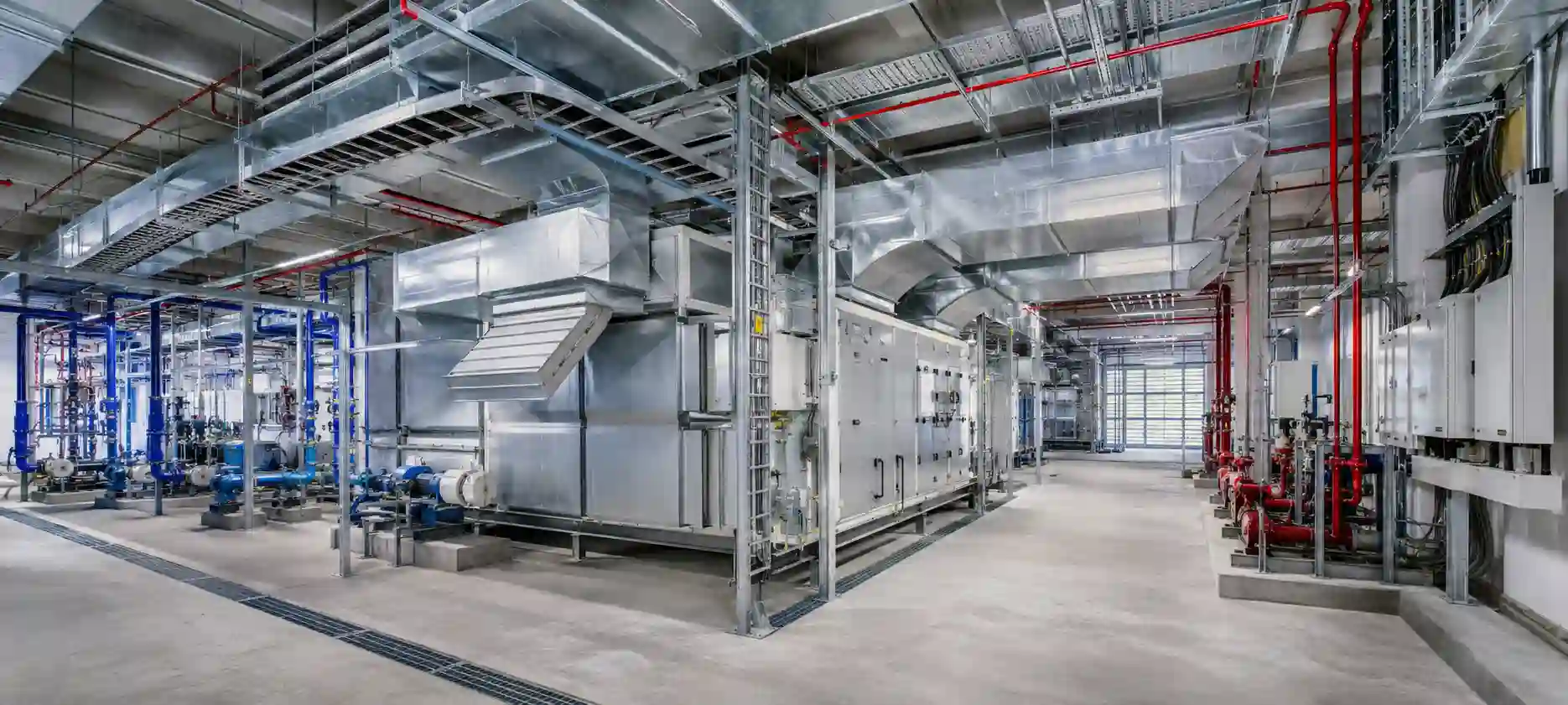
An MEP contractor carries a training problem that a single-trade specialist never has to solve. On one project, at the same time, the same company is running electricians pulling cable into live-adjacent panels, HVAC fitters brazing refrigerant lines above a ceiling, plumbers pressure-testing a riser, fire protection teams filling sprinkler mains, and BMS engineers commissioning controls that will start plant without warning.
Five trades. Five hazard profiles. One HSE manager, one certificate file, and one client asking why the electrician on level 12 was working next to an energised distribution board with no arc-rated PPE.
NIMS delivers MEP contractor safety training UAE programmes for mechanical, electrical and plumbing contractors, HVAC specialists, fire protection installers, ELV and BMS integrators, and the maintenance divisions that inherit the building afterwards.
We deliver on site across Dubai, Abu Dhabi, Sharjah, Ajman, Ras Al Khaimah, Fujairah and Umm Al Quwain, including active project delivery in Business Bay, Dubai Marina, Downtown, Dubai South, Jebel Ali, Al Quoz, Mussafah, ICAD, Al Reem and Yas Island, and Hamriyah.
Book Trade-Specific HSE Training → · Request an MEP Training Matrix → · Request HSE Manpower →
Trade by Trade – What Each Discipline Actually Faces
Electrical
The highest-severity trade in the MEP package, and the one most often trained at the wrong level. Site electricians work with LV distribution, containment, cable pulling, terminations, temporary supplies and, increasingly, LV panels that are energised on adjacent floors while installation continues above.
The two hazards that matter are shock and arc flash, and they need different controls. Shock is addressed by isolation, proving dead and testing before touch. Arc flash is addressed by boundaries, incident energy awareness and arc-rated clothing — and it can injure someone who never intended to touch anything live. Arc flash awareness training built on NFPA 70E principles is the gap we most frequently find in MEP contractor training records in the UAE.
Add to this the temporary electrical installation on site, which is often the most poorly maintained system on the entire project, and the interface with DEWA, ADDC or SEWA supplies at connection stage.
Priority training
Electrical Safety Training, Arc Flash Awareness, Lock Out Tag Out, Permit to Work, Working at Height, Hand & Power Tools Safety.
Mechanical and HVAC
Ductwork installation puts people at height for most of their working day, frequently from mobile access equipment in an incomplete building. Chiller and AHU installation brings heavy lifting into constrained plant rooms. Pipework brazing and welding is hot work, usually in a ceiling void with combustible insulation nearby. Refrigerant handling brings asphyxiation and cold burn risk, and refrigerant released into an enclosed plant room displaces oxygen without any warning smell.
Commissioning is the phase where mechanical work becomes genuinely dangerous, because plant that has been inert for months starts rotating — sometimes automatically, sometimes remotely, sometimes while a fitter still has a hand inside an AHU.
Priority training
Working at Height & Fall Protection, MEWP Operator Training, Hot Work Safety, Rigging & Slinging, Lock Out Tag Out, Confined Space Entry for plant rooms and ducts, Hand & Power Tools Safety.
Plumbing, drainage and water systems
Pressure testing is the hazard that gets underestimated. A hydrostatic test on a riser stores a large amount of energy in a system that may have a defective joint, and pneumatic testing multiplies that risk considerably. Below ground, drainage and sump work means confined space entry with the possibility of hydrogen sulphide and oxygen deficiency. Water tank cleaning and chlorination bring chemical handling. Threading, grooving and cutting machines cause a steady stream of hand injuries that better tool training would prevent.
Priority training
Confined Space Entry, Chemical Safety & Handling, Hand & Power Tools Safety, Permit to Work, Manual Handling, Working at Height.
Fire protection systems
Sprinkler and firefighting installation combines overhead work, heavy pipe handling, hot work on mains, and the commissioning of systems that discharge under pressure. Gaseous suppression installation adds cylinder handling and the discharge hazard itself. The interface with Dubai Civil Defence and the relevant authority approvals runs through this trade more than any other.
Priority training
Working at Height, Rigging & Slinging, Hot Work Safety, Fire Safety Training, Permit to Work, Manual Handling.
ELV, BMS and controls
The trade most often left out of the training plan, on the assumption that low voltage means low risk. The physical hazards are real but modest — ladder work, containment installation, confined ceiling voids, cable pulling. The serious risk is different in kind: a BMS engineer commissioning a control system can start a pump, energise a damper actuator, release a fire damper or initiate a suppression sequence remotely, while other trades are working on that equipment.
That is a permit and communication problem more than a technical one, and it is why controls engineers belong inside the permit to work training rather than outside it.
Priority training
Permit to Work, Lock Out Tag Out, Working at Height, Confined Space Awareness, Site Safety Induction, Electrical Safety Awareness.
The Phase Where MEP Contractors Get Hurt
Look at where injuries cluster on an MEP package and the pattern is consistent. It is not first fix. It is testing, commissioning and the overlap with other trades near handover.
There are three reasons for that, and none of them are about individual carelessness.
- Systems become live for the first time. Electrical supplies are energised, pumps run, dampers actuate, sprinkler mains fill, and refrigerant enters pipework. Equipment that everyone has treated as inert for six months becomes hazardous overnight, and the mental model of the workforce does not update at the same speed.
- The site becomes crowded. Finishing trades, cleaners, client representatives, testing engineers and snagging teams occupy the same floor plate as MEP crews. Simultaneous operations that were manageable at first fix become genuinely difficult to control.
- Programme pressure peaks. Handover dates are fixed and visible. Permits get rushed, isolations get shortened, and the person who would normally insist on a lock accepts a verbal assurance instead.
Training that addresses this phase specifically – permit to work discipline, LOTO under time pressure, SIMOPS awareness and near-miss reporting – has a much better return than adding another general induction.
Project Phase | Dominant MEP Hazard | Training Focus |
First fix and containment | Height, manual handling, power tools, cable pulling | Working at Height, Hand & Power Tools, Manual Handling |
Plant installation | Heavy lifting in confined plant rooms, hot work | Rigging & Slinging, MEWP, Hot Work, Risk Assessment |
Second fix and terminations | Live-adjacent electrical work, ladder work, ceiling voids | Electrical Safety, Arc Flash Awareness, LOTO |
Pressure and hydrostatic testing | Stored pressure energy, joint failure, pneumatic test risk | Permit to Work, Risk Assessment, Site Induction |
Energisation and commissioning | First-time live systems, remote start, SIMOPS | LOTO, PTW, Electrical Safety, Incident Investigation |
Snagging and handover | Crowded floor plate, programme pressure, mixed trades | PTW, Behaviour-Based Safety, Site Induction |
O&M and defects liability | Live building, occupied areas, working alone | Electrical Safety, LOTO, Confined Space, First Aid |
Talk to an HSE Advisor → · Request a Commissioning-Phase Training Plan →
Core Training Programmes for MEP Contractors
Electrical Safety Training
Electrical safety training UAE covering shock and arc hazards, isolation and proving dead, test-before-touch discipline, temporary site electrical installations, PPE selection and inspection, and the boundary between de-energised work and work authorised to proceed live. Delivered at different depths for electricians, supervisors and non-electrical trades who work in electrical environments.
Arc Flash Awareness
Incident energy concepts, arc flash and approach boundaries, equipment labelling, arc-rated PPE selection, and safe work practice around energised panels. Built on NFPA 70E principles. This module is frequently the missing piece in an MEP contractor’s electrical training and is increasingly requested by clients at pre-qualification stage.
Lock Out Tag Out (LOTO) Training
LOTO training UAE for electrical, mechanical and controls personnel. Energy source identification, isolation point selection, lock and tag application, group lockout across trades, stored energy dissipation, and verification. On MEP projects the group lockout element matters most, because a single item of plant is routinely worked on by three different trades in the same week.
Permit to Work System Training
Work authorisation, hazard identification at permit stage, isolation certificates, cross-referencing permits during simultaneous operations, shift handover, suspension and closure. Delivered to permit issuers, receivers and supervisors, and aligned to whichever permit model the main contractor or client operates.
Working at Height & Fall Protection
Ductwork, containment, ceiling voids, plant rooms, risers and external plant. Anchor selection, harness inspection and fit, restraint versus arrest, ladder and step platform discipline, and rescue planning. Riser work deserves specific attention — an unprotected riser opening is one of the most consistent fall hazards on any MEP package.
MEWP Operator Training
Scissor lifts and boom lifts are the default access method for MEP first fix, and the main causes of MEWP injury — crushing against overhead structure, overturning on uneven slab, and unfamiliarity with emergency lowering — are all trainable.
Hot Work Safety Training
Brazing, welding, cutting and grinding in ceiling voids, plant rooms and risers. Work area preparation, combustible control including insulation and cable, fire watch responsibilities, gas cylinder handling, and the permit interface.
Hand & Power Tools Safety
The unglamorous course that prevents the highest number of actual injuries on an MEP package. Grinders, threading machines, core drills, crimping tools, hole saws and nail guns. Guard integrity, correct blade and disc selection, kickback, tool inspection and the disciplined use of the right tool for the task.
Rigging & Slinging Training
Chillers, AHUs, pumps, transformers, generators and tanks moved into plant rooms with limited headroom and no crane access. Sling selection, load estimation, lifting accessory inspection, and the pull-lift and skate techniques that MEP teams actually use.
Confined Space Entry Training
Plant rooms with limited ventilation, ducts, water tanks, sumps, drainage chambers and deep risers. Atmospheric testing, ventilation, entry permits, attendant duties and rescue planning.
Fire Safety Training
Extinguisher selection for electrical and flammable liquid fires, alarm and evacuation, fire warden duties, and the specific fire load created by cable, insulation and packaging accumulating on an MEP floor plate.
Hazard Identification & Risk Assessment
Task-based risk assessment for supervisors and engineers, feeding the method statements that main contractors require before any MEP activity starts.
Accident & Incident Investigation and Root Cause Analysis
Evidence preservation, timeline reconstruction, causal analysis and corrective action design for supervisors and HSE personnel.
Applicable Authority Requirements
MEP contractors deal with more permitting authorities than almost any other trade, because the systems they install are the ones authorities inspect and approve.
- Dubai Municipality — building and workplace safety requirements, plus approvals affecting mechanical, plumbing and drainage installations.
- Dubai Civil Defence — fire protection system approvals, fire alarm and suppression installation, and inspection of life safety systems. The dominant authority interface for fire protection subcontractors.
- Trakhees – EHS — applies to projects within Ports, Customs and Free Zone Corporation jurisdiction, including Jebel Ali, Dubai South, Palm Jumeirah and other master-planned areas. Trakhees maintains its own contractor HSE requirements and inspection regime.
- DEWA, ADDC, AADC, SEWA and Etihad Water & Electricity — contractor requirements governing supply connection, metering and network interface at energisation stage.
- OSHAD-SF — the Abu Dhabi framework, with Codes of Practice directly relevant to electrical safety, energy isolation, working at height, hot work and confined spaces.
- Abu Dhabi Civil Defence and Abu Dhabi Municipality — equivalent approval and inspection functions within the emirate.
- MOHRE — federal occupational safety obligations, including the midday break rule affecting external plant, rooftop and riser work through the summer months.
- TDRA, e& and du — requirements affecting ELV and telecom infrastructure installation and interface.
Training can be structured to support alignment with these requirements. Certificates evidence completion and assessment of a defined programme rather than authority accreditation.
Training by Role Within an MEP Organisation
- Project and construction managers — risk assessment, incident investigation, permit system ownership, behaviour-based safety, and emergency response coordination.
- Site engineers and foremen — permit to work, LOTO, risk assessment, working at height, and the trade-specific module for their discipline.
- Electricians and electrical technicians — electrical safety, arc flash awareness, LOTO, hand and power tools, working at height.
- HVAC fitters and mechanical technicians — working at height, MEWP, hot work, rigging and slinging, confined space, hand and power tools.
- Plumbers and drainage teams — confined space, chemical safety, hand and power tools, manual handling, permit to work.
- Fire protection installers — working at height, hot work, rigging and slinging, fire safety, manual handling.
- ELV and BMS engineers — permit to work, LOTO, electrical safety awareness, working at height, confined space awareness.
- HSE officers and supervisors — risk assessment, incident investigation and root cause analysis, permit auditing, behaviour-based safety observation, emergency response.
- Helpers, labourers and new starters — site safety induction, manual handling, hand and power tools awareness, fire and evacuation.
Request a Role-Based Training Matrix → · Download Course Catalog →
Delivery Across the Emirates
- Dubai — Business Bay, Downtown, Dubai Marina, JLT, Dubai Hills, Dubai South and Expo City, Jebel Ali, Dubai Investments Park, Al Quoz and Dubai Industrial City. Safety training Jebel Ali and Dubai South is a routine delivery route for our trainers.
- Abu Dhabi — Al Reem Island, Yas Island, Saadiyat, Khalifa City, and the contractor and fabrication base in Mussafah and ICAD. HSE training Abu Dhabi for MEP packages is delivered on site.
- Sharjah — Al Nahda, Muwaileh, the industrial areas, Hamriyah Free Zone and Sharjah Airport Free Zone.
- Ajman, Umm Al Quwain and Ras Al Khaimah — residential, hospitality and industrial projects across the Northern Emirates.
- Fujairah — port, industrial and hospitality projects on the east coast. Industrial safety training Fujairah is delivered on site.
Training is delivered at the project site, at the contractor’s labour accommodation or head office, or at a combination of both. For MEP contractors running several projects at once, we frequently run a rolling schedule at head office so that new starters can be trained before mobilisation rather than after.
HSE Manpower for MEP Projects
MEP contractors typically win work faster than they can recruit HSE staff, and the shortfall shows up precisely when the project reaches its most hazardous phase.
We supply HSE Officers, HSE Engineers, Safety Supervisors, Safety Inspectors, Fire Watchers and Confined Space Attendants on project and long-term assignment. Personnel with prior MEP, high-rise, hospitality and industrial project experience can be requested, along with CICPA-cleared, DDA-familiar and Trakhees-experienced staff where the site regime demands it.
Courses Offered
- First Aid Course - CPR and AED
- Confined Space
- Fire Safety Awareness
- Scaffolding Inspection
- Scaffolding Erection & Dismantling
- Flagman Safety
- Chemical Safety and Handling Training
- Hazard and Risk Assessment
- Rigging and Slinging Training
- Traffic Safety
- Hand and Power Tools Operator
- Electrical Safety
- Lock Out and Tag Out (LOTO)
- Accident Incident Investigation
- Lifeguard Training
- Advanced Risk Assessment & Compliance Service
- Behavior-Based Safety Workplace Safety Consulting
- Construction Site Safety Induction Training
- Emergency Response Team Training
- Excavator Operator Training
- Forklift Operator Training
- H2S Awareness & Breathing Apparatus Training
- Hot Work Safety Training
- Incident Reporting & Root Cause Analysis Service
- MEWP Operator Training
- Mobile Crane Operator Training
- Permit to Work System Training
- Rope Access Training
- Working at Height & Fall Protection Safety Training
- Fire Warden Training
- Manual Handling Training
- Banksman Safety Training
- Gas Tester Training
- Defensive Driving Training
- HAZMAT Awareness Training
- Machine Safety and Machine Guarding Training
- Spill Response and Spill Control Training
- Welding Safety Training
Need expert advice? Speak to our team today
FAQ
1. What is MEP safety training and why does it need to be trade-specific?
MEP safety training covers the hazards created by mechanical, electrical and plumbing installation work. It needs to be trade-specific because the shared hazards — height, housekeeping, fire — are not the ones causing severe injury. Arc flash affects electricians, refrigerant asphyxiation affects HVAC fitters, stored pressure affects plumbers, and remote plant start affects controls engineers. A common package covers none of these adequately.
2. Is safety training mandatory for MEP contractors in the UAE?
The obligation to ensure worker competence is mandatory, and it comes from several directions at once: MOHRE occupational safety duties, the applicable emirate framework such as OSHAD-SF in Abu Dhabi or Dubai Municipality requirements in Dubai, Trakhees where the project sits in a free zone, and Dubai Civil Defence for fire protection work. On top of that, main contractors impose their own competency requirements at subcontractor pre-qualification, which are frequently the strictest of the lot.
3. What is arc flash awareness training and do our electricians need it?
It covers the burn and blast hazard created by an electrical arc, which can injure someone standing near a panel without any contact with a live conductor. It addresses incident energy, arc flash and approach boundaries, equipment labelling, arc-rated PPE selection and safe work practice, based on NFPA 70E principles. If your electricians open, rack or test energised panels — and on almost every UAE project at commissioning stage they do — then yes, they need it. It is also increasingly asked for at pre-qualification.
4. Why is commissioning the highest-risk phase for MEP work?
Because systems become live for the first time, the site becomes crowded with other trades, and programme pressure peaks simultaneously. Equipment that has been inert for months starts rotating, energising and pressurising, while the workforce’s mental picture of the building has not updated. Permit discipline and LOTO under time pressure are the controls that matter here, and they are worth training specifically rather than assuming the induction covered it.
5. Do you train ELV and BMS engineers?
Yes, and they are frequently omitted from MEP training plans on the assumption that low voltage means low risk. The physical hazards are moderate, but a controls engineer commissioning a system can start a pump, drive a damper actuator or initiate a suppression sequence remotely while another trade is working on that equipment. That makes them a permit-to-work population, not an exempt one.
6. Can training be delivered at our labour accommodation or head office?
Yes. For MEP contractors running several projects simultaneously this is usually the more practical arrangement. We frequently run a rolling schedule at head office or accommodation so that new starters complete their induction and core modules before mobilising to site, rather than losing production time afterwards. Site delivery remains available where the training needs to reference the actual installation.
7. How do you handle training for a multinational workforce?
Courses are delivered in English as standard, with bilingual delivery and interpreted sessions available. On MEP packages this is a frequent requirement for operative and helper-level groups. Materials and assessments can be adapted, and practical assessment components work well across language barriers because they are demonstrated rather than described.
8. What training does a confined space entry in a plant room require?
Plant rooms, ducts, water tanks, sumps, drainage chambers and deep risers can all meet confined space criteria. Training covers atmospheric testing, ventilation, entry permits, attendant duties, communication and rescue planning, and can be structured separately for entrants, attendants, supervisors and rescue personnel. The rescue plan is the part most often missing — it has to exist before the first entry, not after an incident.
9. Do you provide MEWP and rigging training as well as classroom courses?
Yes. MEWP operator training and rigging and slinging training both include practical components, and we deliver them on site using the equipment the team actually operates. That matters more than it sounds — a scissor lift familiarisation on a machine the crew will never use again has limited value.
10. What certificates do participants receive?
A certificate of completion for each course showing participant name, course title, delivery date and validity guidance where applicable. These support main contractor pre-qualification, subcontractor competency files, gate pass applications and client audit requirements. Specific formats or project branding can usually be accommodated with advance notice.
11. How long does each course take?
Awareness programmes such as fire safety, arc flash awareness or manual handling generally run half a day. Practical competency courses such as confined space entry, LOTO, working at height or MEWP operation typically run one to two days including assessment. Incident investigation and root cause analysis for supervisors runs two days. Site induction is usually a half day.
12. How often should MEP training be refreshed?
Practical high-risk competencies such as confined space entry, LOTO, working at height and MEWP operation are commonly refreshed every one to two years. Electrical safety and arc flash awareness are frequently refreshed annually. Site induction is repeated at every new project. The governing requirement is usually the main contractor’s HSE specification or the client contract.
13. Can you build a training matrix covering all our trades at once?
Yes, and this is the most common request from MEP clients. We work from the organisational chart and the trade breakdown, map each role against its actual hazard exposure, and produce a matrix showing required training, assessment method, record location and refresher interval for every trade in the business. Most clients then use it as the basis for both their competency system and their annual training budget.
14. Do you offer risk assessment and technical safety support beyond training?
Yes. Task-based risk assessment support, method statement review, incident investigation and root cause analysis services, behaviour-based safety programmes, and advanced risk assessment and compliance services are all available. For larger MEP contractors we also support fire and explosion risk assessment and emergency evacuation, escape and rescue assessments on complex buildings.
15. Do you supply HSE manpower for MEP projects?
Yes. Through hsemanpower.ae we supply HSE Officers, HSE Engineers, Safety Supervisors, Safety Inspectors, Fire Watchers and Confined Space Attendants for MEP packages on project and long-term assignment. Personnel with prior MEP, high-rise and industrial project experience can be requested, along with CICPA-cleared, DDA-familiar and Trakhees-experienced staff where the site access regime requires it.
Build a Stronger Investigation Process
Whether you need full root cause investigation training or a condensed evidence-preservation session for supervisors, tell us your current investigation process, and we’ll show you where root cause analysis and corrective action tracking are likely to close the biggest gaps.
Nathan Safety Training (NIMS) — Accident and incident investigation training across Dubai, Abu Dhabi, Sharjah, Ajman, Ras Al Khaimah, Fujairah and Umm Al Quwain.