
Home / Shopping Mall & Retail Centre Safety Training UAE
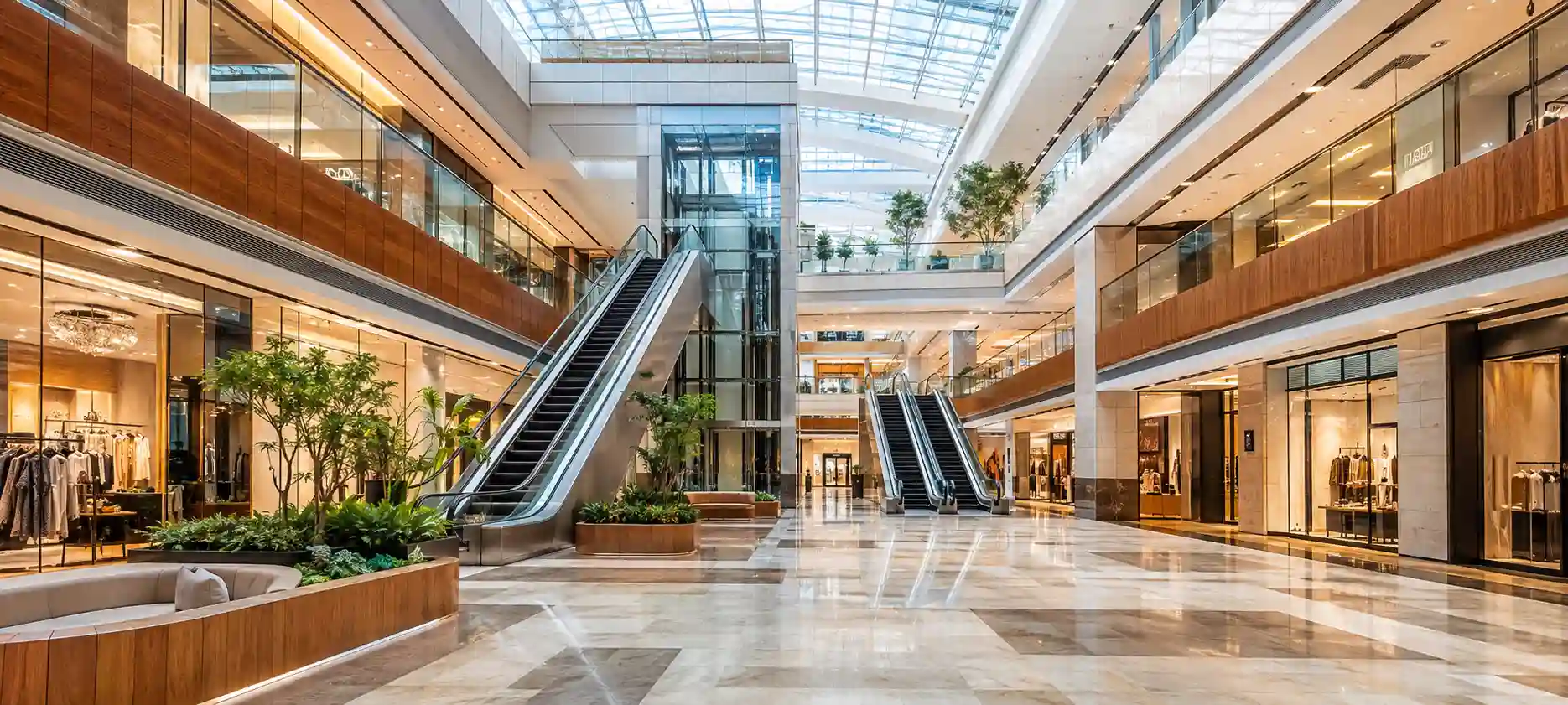
A large UAE mall operates under a single fire strategy, a single evacuation plan and a single occupancy certificate — shared by four hundred separate businesses, none of which report to the mall operator, most of which have their own head office in another country, and several of which change hands every year.
That is the structural problem of retail centre safety. The mall operator is accountable for the building and for everyone inside it, but directly controls only a fraction of what happens in it. A tenant who props a fire exit open, overloads a stockroom, blocks a sprinkler head with signage or runs a fit-out without a permit is creating a risk the mall carries and the mall will answer for.
Meanwhile the building never closes long enough to do anything properly. Fit-out works, maintenance, deliveries and cleaning all happen around trading hours, frequently with the public a few metres away behind a hoarding.
Nathan Safety Training Services (NIMS) delivers shopping mall safety training UAE programmes for mall owners and operators, facilities management companies holding retail contracts, retail tenants and anchor stores, fit-out and shopfitting contractors, mall security and customer service teams, and the cleaning, catering and logistics providers who work across the estate.
We deliver across The Dubai Mall and Downtown, Mall of the Emirates and Al Barsha, Ibn Battuta and Jebel Ali, Dubai Festival City, Dubai Hills, Nakheel and Palm Jumeirah retail, City Centre Deira and Mirdif, Yas Mall and Marina Mall in Abu Dhabi, Dalma Mall and Al Wahda, Al Ain, Sharjah, Ajman, Ras Al Khaimah and Fujairah.
Three Estates, One Fire Strategy
The most useful way to structure mall safety training is by who controls the space, because that determines who can actually be trained and how the requirement has to be enforced.
Estate 1 — Common Areas: Directly Controlled
Malls, atria, corridors, food court seating, washrooms, car parks, service yards and external areas. The operator controls these directly, employs or contracts the staff working in them, and can mandate training as a condition of employment or contract.
The dominant risks are public-facing: crowd density at peak periods, slips on polished floors and around cleaning operations, escalator and travelator incidents, medical emergencies among visitors, and evacuation of a large unfamiliar public population. This is where fire warden, crowd safety, first aid and evacuation training does the most work.
Estate 2 — Tenant Units: Controlled Only by Contract
Four hundred businesses operating inside the operator’s fire strategy, each with its own staff, its own turnover, its own training standards and its own commercial pressures. The operator cannot instruct a tenant’s employee directly, and enforcement runs through the lease, the tenant handbook and the fit-out approval process.
The recurring failures are consistent across every mall we have worked with: fire exits obstructed by stock, exit doors propped or locked during trading, sprinkler heads blocked by signage or shelving, stockroom overloading that exceeds the fire loading assumed in the building design, unauthorised electrical modification, extinguishers moved or missing, and staff who have never been told where their assembly point is.
The practical answer is a tenant safety induction delivered to every unit, repeated on tenant change and on staff turnover, backed by a documented inspection regime. Training the mall’s own inspection team to know what to look for and to have the authority to escalate is frequently more valuable than training the tenants.
Estate 3 — Back of House: Industrial Work Inside a Retail Building
Service corridors, loading docks, waste compaction, plant rooms, chiller yards, tank rooms, roof plant, electrical rooms and the fit-out zones behind hoardings. Nothing about this estate is retail. It is an industrial environment operating inside a building full of shoppers.
The hazard set is conventional and serious: LOTO on plant and building services, confined space entry into tanks, ducts and pits, working at height on roofs and plant, electrical safety on distribution and life safety systems, traffic safety in loading docks with continuous vehicle movement, and waste compaction equipment.
Tenant Fit-Out A Construction Site Inside a Trading Mall
Fit-out is where malls carry their highest concentrated risk, and it is the activity mall operators most often manage as a leasing process rather than a safety one.
Behind a hoarding in a trading mall, a contractor is welding, cutting, drilling into slabs, working at height, running temporary power, and doing it overnight against a fixed handover date. On the other side of that hoarding are shoppers. Above and below are trading units. And the contractor is frequently appointed by the tenant’s overseas head office, has never worked in this mall, and will not return.
Where fit-out control fails
- Hot work without permit. Welding, cutting and grinding inside an occupied building with live sprinkler and detection systems. The related failure is isolating a detection zone to avoid nuisance alarms and forgetting to reinstate it.
- Fire system impairment. Sprinklers drained, detectors covered, alarm zones isolated during works — each individually justifiable, collectively leaving a section of a trading mall unprotected.
- Means of escape obstruction. Materials, hoardings and works blocking escape routes that serve neighbouring trading units, not just the unit under construction.
- Working at height above and beside the public. Ceiling voids, mezzanines and shopfront works with dropped object exposure into common areas.
- Temporary electrics. Installed progressively, frequently by whoever is available, and rarely inspected once energised.
- Waste and combustible accumulation. Packaging, timber and offcuts accumulating in a building whose fire loading was calculated without them.
- Noise, dust and odour into trading areas, which is a nuisance issue that becomes a safety issue when it triggers evacuation or masks an alarm.
- Handover gaps. Works completed and the unit opened before fire systems are reinstated and tested.
Training addresses this from both directions: permit to work, hot work safety, working at height and site induction for the contractor, and permit issue, impairment control and inspection competence for the mall’s own operations and FM team. The impairment register — knowing at any moment which fire systems are out of service and where — is the single most important control in an operating mall.
Escalators, Travelators & Lifts — The Mall-Specific Hazard
Almost every mall injury statistic in the world has escalators near the top, and the casualties are disproportionately children and elderly visitors.
The mechanisms are well established and largely preventable. Entrapment of soft footwear, loose clothing and long items at the comb plate and skirt panel. Falls from loss of balance, particularly among elderly users and people carrying bags or children. Children sitting, climbing or riding handrails. Pushchairs, trolleys and wheelchairs taken onto escalators where they cannot be stabilised. Falls over the balustrade from height into an atrium. And crush or entrapment during maintenance, which is a staff rather than a public risk.
What the training covers
- Emergency stop location and use — every customer-facing staff member on the floor should be able to reach and operate the nearest stop without hesitation. This is the highest-value item on this list and it takes ten minutes to teach.
- Recognition of at-risk users and intervention technique — approaching a family before the escalator rather than after.
- Trolley and pushchair policy enforcement, including directing users to lifts and travelators.
- Incident response — stopping the unit, casualty management, isolation, preservation and reporting.
- Atrium and balustrade risk — the fall-from-height dimension in multi-level malls, including the specific risk of children being lifted or seated on balustrades.
- Maintenance safety — LOTO for escalator and lift work, pit entry as a confined space, and control of the public boundary during works.
Peak Footfall & Crowd Management in UAE Malls
UAE retail has an unusually pronounced peak profile, and the peaks are predictable, which means they can be planned for and trained for.
Peak Period | What Changes | Training Emphasis |
Ramadan evenings and Suhoor | Late-night density, food court surge, altered trading hours | Crowd Safety, First Aid, Fire Warden |
Eid periods | Sustained very high footfall across several days, family groups | Crowd Safety, Lost Child Procedure, Evacuation |
Dubai Shopping Festival and sale events | Queueing, door-opening surges, promotional crowds | Queue and surge management, Crowd Safety |
Weekends and school holidays | Sustained density, high proportion of children | Escalator intervention, First Aid, Crowd Awareness |
Product launches and celebrity appearances | Concentrated crowd at a single point, counterflow | Crowd Safety, Security coordination, Capacity control |
New Year and national holidays | Very high density plus events and displays | Crowd Safety, Evacuation, Emergency Response |
Summer months | Malls as indoor refuge, extended dwell times, high child numbers | First Aid, Lost Child Procedure, Crowd Awareness |
Cinema and attraction release peaks | Localised surge at one anchor, atrium congestion | Crowd Safety, Pinch point staffing |
The distinctive challenge is that evacuation of a crowded mall is genuinely difficult. Visitors will move toward the entrance they arrived through and the car park where their vehicle is, not toward the nearest exit. Families will refuse to move until separated members are located. Tenant staff, if untrained, will lock up and secure stock before leaving. Fire warden and evacuation training in a mall has to account for all three behaviours rather than assume orderly compliance.
Car Parks, Loading Docks & Service Yards
The parts of a mall with the highest vehicle-pedestrian interaction and the least supervision.
- Multi-storey and basement car parks — pedestrian and vehicle conflict, poor sightlines at ramps and corners, ventilation and carbon monoxide accumulation, lighting, and the fire loading and smoke management challenge of a basement vehicle fire.
- Electric vehicle charging — an increasing consideration in UAE malls. EV battery fires behave differently from conventional vehicle fires, burn intensely, are difficult to extinguish, and can reignite, which affects response planning and Civil Defence coordination.
- Loading docks — continuous reversing vehicle movement, dock levellers and edges, manual handling of deliveries, and pedestrian routes crossing vehicle paths.
- Waste and compaction — compactor and baler equipment with severe crush potential, plus the hidden hazards arriving in retail and food court waste including lithium batteries and aerosols.
- Service corridors — shared by trolleys, cages, cleaning equipment and staff, frequently congested and used for informal storage that obstructs escape routes.
Shopping Mall & Retail HSE Training Courses We Deliver
- Fire Safety and Fire Warden Training — the core mall competency. Evacuation of a large unfamiliar public population, phased evacuation strategies, atrium and smoke control system awareness, assisting mobility-impaired visitors, sweeping tenant units, and coordination with Civil Defence on arrival.
- Crowd Safety Awareness — density recognition, pinch point staffing, queue and surge management, counterflow, and communication during peak periods.
- First Aid, CPR & AED — cardiac events, paediatric response, falls, choking in food courts and heat illness at entrances. Coverage across all trading hours is the objective.
- Tenant Safety Induction — short, repeatable, delivered to every unit and repeated on tenant change: escape routes, assembly points, extinguisher use, obstruction rules, hot work and fit-out permit requirements, incident reporting.
- Permit to Work System Training — for mall operations and FM teams issuing permits, and for contractors receiving them.
- Hot Work Safety Training — fit-out and maintenance works inside an occupied building with live fire systems.
- Working at Height & Fall Protection — atrium and ceiling void works, signage and lighting, roof plant, and MEWP operation in public areas outside trading hours.
- Lock Out Tag Out and Electrical Safety — building services, escalator and lift plant, HVAC, and life safety systems.
- Confined Space Entry — water tanks, ducts, lift pits, grease interceptors and plant voids.
- Chemical Safety & Handling — cleaning chemicals across a large estate, cooling tower and water treatment, and pest control products.
- Traffic Safety and Flagman Safety — loading docks, service yards, car park management and delivery scheduling.
- Manual Handling — retail stock, deliveries, cleaning and back-of-house logistics.
- Food Hygiene and HACCP Awareness — food courts, restaurants, supermarkets and kiosks across the estate.
- Hazard Identification & Risk Assessment — for operations, FM and tenant liaison teams, including inspection regime design.
- Accident & Incident Investigation — including incidents involving members of the public, with evidence and insurer considerations.
Civil Defence, Dubai Municipality, DET & SIRA Requirements for Malls
- Civil Defence and the UAE Fire and Life Safety Code of Practice — the dominant framework for retail centres. Means of escape and travel distances, occupancy calculation, detection and suppression, atrium and smoke management systems, fire system impairment procedures, evacuation planning and drill frequency, and approval of tenant fit-out works affecting life safety systems.
- Dubai Municipality and Abu Dhabi Municipality — building and workplace safety requirements, food safety for food courts and outlets, public health requirements, and lift and escalator inspection and registration obligations.
- Trakhees – EHS — where the mall sits within Ports, Customs and Free Zone Corporation jurisdiction, including parts of the Jebel Ali and Palm Jumeirah retail estate, with its own contractor and fit-out approval regime.
- Dubai Department of Economy and Tourism and Abu Dhabi DCT — licensing, and event permitting for mall activations, promotions and public events.
- SIRA in Dubai and the Private Security Business Department in Abu Dhabi — licensing and training requirements for mall security personnel, which is separate from crowd safety competency.
- ADAFSA and municipality food safety departments — food handler requirements and inspection for the substantial F&B population inside a mall.
- MOHRE — federal occupational safety obligations covering staff across the estate, including tenants and contractors.
- OSHAD-SF — the Abu Dhabi occupational safety framework, applicable to retail operations within the emirate.
- Insurer requirements — frequently the strictest source of impairment control, hot work permit and inspection obligations for large retail assets.
Training can be structured to support alignment with these frameworks. Certificates evidence completion and assessment of a defined programme rather than authority approval, security licensing or fit-out permit issue.
Shopping Mall Safety Training by Role
- Mall operations and duty managers — risk assessment, incident investigation, fire warden and evacuation command, permit issue, impairment control, crowd safety, contractor and tenant control.
- Security teams — crowd safety, fire warden and evacuation leadership, first aid with AED, escalator emergency response, lost child procedure, incident reporting, alongside their licensed security training.
- Customer service and guest experience staff — first aid, escalator emergency stop and intervention, evacuation duties, crowd awareness, incident reporting.
- FM and maintenance teams — LOTO, electrical safety, confined space, working at height, hot work, permit to work, chemical safety.
- Cleaning teams — chemical safety, slips and spill response, manual handling, sharps awareness, lone working in back-of-house areas.
- Loading dock and logistics staff — traffic safety, reversing and flagman duties, manual handling, waste compaction safety.
- Tenant store managers and staff — tenant safety induction, fire safety and evacuation, obstruction rules, manual handling, first aid awareness.
- Fit-out and shopfitting contractors — site induction, permit to work, hot work, working at height, electrical safety, hand and power tools.
- Food court and F&B staff — food hygiene, HACCP awareness, allergen awareness, fire safety with kitchen content, chemical safety, manual handling.
Mall Safety Training Across Dubai, Abu Dhabi & the UAE
- Dubai — The Dubai Mall and Downtown, Mall of the Emirates and Al Barsha, Ibn Battuta and Jebel Ali, Dubai Festival City, Dubai Hills Mall, Nakheel and Palm Jumeirah retail, City Centre Deira and Mirdif, Dubai Marina Mall, and community retail centres across the emirate.
- Abu Dhabi — Yas Mall and the Yas Island retail cluster, Marina Mall, Al Wahda, Dalma Mall and Mussafah area retail, Reem and Saadiyat developments. HSE training Abu Dhabi for mall operators and FM contractors is delivered on site.
- Al Ain — Al Ain Mall, Bawadi Mall and community retail centres.
- Sharjah and Ajman — City Centre Sharjah, Mega Mall, Sahara Centre, City Centre Ajman and community retail.
- Ras Al Khaimah, Umm Al Quwain and Fujairah — Al Naeem and Manar retail, City Centre Fujairah and regional shopping centres.
Delivery is scheduled around trading hours. Operations, security and FM training runs in short modules at shift changeover or during quieter trading periods. Tenant induction works best as a rolling programme delivered in the mall itself, in short sessions store managers can actually release staff for. Fit-out contractor induction is delivered at mobilisation, before hoarding goes up.
HSE Manpower Supply for Malls & Retail Centres
Mall demand is peak-driven. A retail centre that runs comfortably through August needs materially more safety and crowd supervision through Ramadan, Eid, the shopping festival season and major fit-out programmes.
Nathan Safety Training Services supplies HSE Officers, HSE Engineers, Safety Supervisors, Fire Safety Officers, Fire Watchers, First Aiders and Crowd Safety Stewards on seasonal, project and long-term assignment. Fire watch cover during fire system impairment is one of the most frequently requested roles in this sector, since an impairment in a trading mall usually requires continuous watch until systems are reinstated.
Courses Offered
- First Aid Course - CPR and AED
- Confined Space
- Fire Safety Awareness
- Scaffolding Inspection
- Scaffolding Erection & Dismantling
- Flagman Safety
- Chemical Safety and Handling Training
- Hazard and Risk Assessment
- Rigging and Slinging Training
- Traffic Safety
- Hand and Power Tools Operator
- Electrical Safety
- Lock Out and Tag Out (LOTO)
- Accident Incident Investigation
- Lifeguard Training
- Advanced Risk Assessment & Compliance Service
- Behavior-Based Safety Workplace Safety Consulting
- Construction Site Safety Induction Training
- Emergency Response Team Training
- Excavator Operator Training
- Forklift Operator Training
- H2S Awareness & Breathing Apparatus Training
- Hot Work Safety Training
- Incident Reporting & Root Cause Analysis Service
- MEWP Operator Training
- Mobile Crane Operator Training
- Permit to Work System Training
- Rope Access Training
- Working at Height & Fall Protection Safety Training
- Fire Warden Training
- Manual Handling Training
- Banksman Safety Training
- Gas Tester Training
- Defensive Driving Training
- HAZMAT Awareness Training
- Machine Safety and Machine Guarding Training
- Spill Response and Spill Control Training
- Welding Safety Training
Need expert advice? Speak to our team today
FAQ
1. What makes shopping mall safety different from other commercial buildings?
Split control. The mall operator holds a single fire strategy, evacuation plan and occupancy certificate covering the whole building, but directly controls only the common areas and back of house. Several hundred tenant businesses operate inside that strategy with their own staff, their own turnover and their own commercial pressures, and the operator cannot instruct a tenant’s employee directly. Enforcement runs through the lease, the tenant handbook and the fit-out approval process rather than through management authority.
2. How do you get tenants to comply with mall safety requirements?
Through a combination of induction, inspection and contractual leverage, in that order. A short tenant safety induction delivered to every unit and repeated on tenant change and staff turnover covers escape routes, assembly points, obstruction rules, extinguisher use and permit requirements. A documented inspection regime then verifies it. In practice, training the mall’s own inspection team to recognise the recurring failures and to have clear escalation authority delivers more than training tenants alone.
3. What are the most common tenant safety failures in malls?
They repeat across every mall we have worked with: fire exits obstructed by stock, exit doors propped open or locked during trading, sprinkler heads blocked by signage or shelving, stockroom overloading beyond the fire loading the building was designed for, unauthorised electrical modification, extinguishers moved or missing, and staff who have never been told where their assembly point is. None are complicated; all are persistent.
4. Why is tenant fit-out the highest-risk activity in a mall?
Because it is genuine construction work happening inside an occupied building. Behind a hoarding a contractor is welding, cutting, drilling, working at height and running temporary power, overnight, against a fixed handover date, with shoppers on the other side and trading units above and below. The contractor is frequently appointed by the tenant’s overseas head office, has never worked in that mall, and will not return — so there is no accumulated familiarity with the building’s rules.
5. What is an impairment register and why does it matter so much?
It is the record of which fire protection systems are out of service at any moment, where, since when, and what compensatory measures are in place. It matters because impairments in an operating mall are constant and individually justifiable — a sprinkler zone drained for fit-out, detectors covered to prevent nuisance alarms during hot work, an alarm zone isolated for testing. Each is reasonable alone; collectively they can leave a trading section unprotected without anyone holding the full picture. Knowing the total position at any moment is the single most important control in an operating retail centre.
6. Why are escalators such a significant hazard?
Because they combine continuous public use, no supervision, and casualties concentrated among children and elderly visitors. The mechanisms are entrapment of soft footwear and loose clothing at the comb plate and skirt panel, falls from loss of balance, children climbing or riding handrails, pushchairs and trolleys taken onto units where they cannot be stabilised, and falls over balustrades into atria. Escalators appear near the top of mall injury statistics almost everywhere in the world.
7. What is the single most valuable escalator training item?
Emergency stop location and use. Every customer-facing staff member on the floor should be able to reach and operate the nearest emergency stop without hesitation or hunting for it. It takes about ten minutes to teach, costs nothing, and is the difference between an entrapment that stops immediately and one that continues. Most malls have the buttons; considerably fewer have staff who could find one under pressure.
8. How should mall evacuation training account for actual visitor behaviour?
By assuming three behaviours rather than orderly compliance. Visitors move toward the entrance they arrived through and the car park where their vehicle is, not the nearest exit. Families refuse to move until separated members are located. And untrained tenant staff secure stock and lock up before leaving. Fire warden training has to address redirecting people to nearer exits, managing family separation, and getting tenant staff moving — which is largely why tenant induction matters to the operator’s own evacuation performance.
9. How do UAE peak periods change the crowd risk?
Substantially, and predictably — which means they can be planned for. Ramadan brings late-night density and food court surges with altered trading hours. Eid brings sustained very high footfall across several days with a high proportion of family groups. Shopping festival and sale events bring queueing and door-opening surges. Summer turns malls into indoor refuges with extended dwell times and large numbers of children. Because the calendar is known, staffing of pinch points, crowd training and additional cover can be scheduled in advance rather than improvised.
10. What should we know about electric vehicle charging in mall car parks?
That EV battery fires behave differently from conventional vehicle fires. They burn intensely, are difficult to extinguish with conventional means, produce toxic off-gassing, and can reignite after apparent control. In a basement or multi-storey car park this creates a smoke management and access challenge that the building’s original fire strategy may not have contemplated. Response planning and Civil Defence coordination should be reviewed as charging provision expands, and staff should understand that the correct response is evacuation and specialist response rather than an extinguisher.
11. Do you train fit-out contractors as well as mall staff?
Yes, and both sides need it. Contractors need site induction, permit to work, hot work safety, working at height and electrical safety, delivered at mobilisation before hoarding goes up. The mall’s own operations and FM team need permit issue competence, impairment control and inspection capability — because the permit system only works if the person issuing it understands what they are authorising and the person inspecting knows what a breach looks like.
12. Is safety training mandatory for shopping malls in the UAE?
Civil Defence requirements under the UAE Fire and Life Safety Code are the dominant obligation, covering evacuation planning, drill frequency, fire warden provision, impairment procedures and approval of works affecting life safety systems. Municipality requirements cover building and workplace safety, food safety for the F&B population, and lift and escalator inspection. SIRA or the Private Security Business Department licenses security personnel. MOHRE occupational safety duties cover staff across the estate, with OSHAD-SF applying in Abu Dhabi. Insurer conditions are frequently stricter than any of these.
13. Can training be delivered without disrupting trading?
Yes. Operations, security and FM training runs in short modules at shift changeover or during quieter trading periods. Tenant induction works best as a rolling programme delivered inside the mall in short sessions that store managers can realistically release staff for — a two-hour session will not be attended, a twenty-minute one will. Fit-out contractor induction happens at mobilisation, and practical maintenance training runs outside trading hours.
14. How often should mall safety training be refreshed?
Fire warden training and evacuation drills follow the frequency set by the fire and life safety code and the building fire strategy, which for a large retail centre is typically more than annual. Crowd safety is usefully refreshed ahead of the peak season each year. First aid follows its certification validity. Tenant induction is driven by tenant change and staff turnover rather than by a calendar — in a mall with high tenant churn that means a continuous rolling programme rather than an annual event.
15. Do you supply fire watch and crowd cover for peak periods?
Yes. Through hsemanpower.ae, Nathan Safety Training Services supplies HSE Officers, HSE Engineers, Safety Supervisors, Fire Safety Officers, Fire Watchers, First Aiders and Crowd Safety Stewards. Fire watch during fire system impairment is the most frequently requested role in this sector, because an impairment in a trading mall generally requires continuous watch until systems are reinstated — and that demand arrives with the fit-out programme rather than on a predictable schedule.
Book Shopping Mall Safety Training with Nathan Safety Training
Nathan Safety Training Services works with mall owners and operators, retail FM contractors, anchor tenants and fit-out contractors across the Emirates. If you are preparing for the peak season, running a fit-out programme through a trading mall, or trying to bring several hundred tenants onto a consistent safety standard, the three estates and the impairment register are where the conversation should start.
Book Corporate HSE Training → · Request HSE Manpower Support → · Talk to an HSE Advisor →