
Home / Welding Safety Training
Welding Safety Training In dubai, abu dhabi & Across the Uae
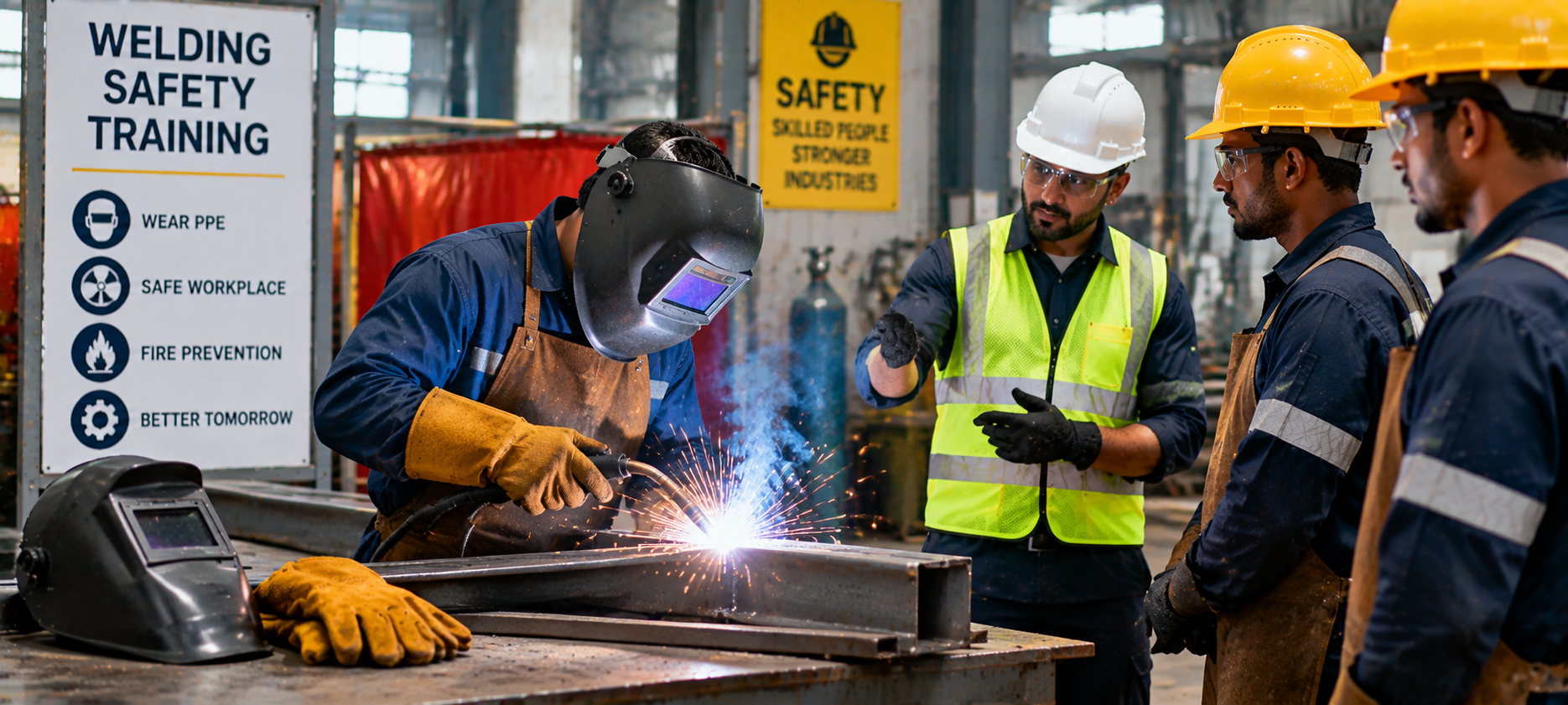
Welding Safety Training in UAE – Practical Safety for Welders and Fabrication Teams
A welding arc may be small, but the hazards around it are not. The same task can expose a welder to intense light, heat, electrical energy, metal fumes, sparks, hot surfaces and compressed gases.
NIMS provides Welding Safety Training in Dubai, Abu Dhabi and across the UAE for welders,
fabricators, helpers, maintenance teams, contractors and supervisors working in construction, engineering and industrial environments.
Unlike general Hot Work Training, this programme focuses more closely on the hazards created by welding equipment and welding processes themselves.
Why Choose Nathan Safety Training for Welding Safety?
Welding safety requires more technical understanding than general hot work awareness.
A welder may face electrical hazards, arc radiation, fumes, compressed gases, burns and fire risks during the same task.
Nathan Safety Training provides Welding Safety Training in UAE with a stronger focus on the hazards directly associated with welding and fabrication work.
How NIMS Can Assist
NIMS can support welding and fabrication teams with training covering:
- Arc welding hazards
- Welding PPE and eye protection
- Welding screens and protection of nearby employees
- Electrical safety during welding
- Welding lead and equipment inspection
- Welding fume exposure
- Local exhaust ventilation
- Gas cylinder storage and handling
- Flashback prevention awareness
- Hot Work Permit requirements
- Fire watch responsibilities
- Confined-space welding awareness
- Safe preparation and close-out of welding work.
Training can be delivered for welders, helpers, fabrication teams, maintenance employees, supervisors and HSE personnel.
What Makes NIMS Different?
NIMS can bridge the gap between technical welding safety and the wider Permit to Work system.
The welding activity itself may be only one part of the job. Depending on the workplace, safe
execution may also depend on gas testing, fire watch arrangements, confined-space controls,
electrical safety and isolation.
Because NIMS already covers these related HSE areas, organisations can develop a more
coordinated training programme around welding rather than relying only on general Hot Work
Training.
This approach is particularly useful for steel fabrication, EPC, oil & gas, marine, manufacturing and industrial maintenance companies where welding forms part of routine operations.
Understanding Welding Hazards
The exact risk depends on the process and workplace, but common welding hazards include:
- Electric shock
- Arc radiation
- Ultraviolet and infrared exposure
- Eye injuries
- Burns
- Sparks and hot slag
- Molten metal
- Welding fumes
- Harmful gases
- Fire
- Explosion
- Compressed-gas cylinders
- Noise
- Poor ventilation
- Confined-space conditions
A welding job therefore needs more than a helmet and gloves.
Welding Arc and Eye Protection
Arc welding generates intense visible and invisible radiation.
Exposure can damage the eyes and skin, while nearby workers can also be affected if suitable welding screens are not used.
Participants learn about:
- Welding helmets
- Appropriate filter lenses
- Safety glasses under helmets where required
- Welding screens and curtains
- Skin protection
- Protecting employees working nearby
The training reinforces the need to select PPE according to the welding task rather than relying on whatever equipment happens to be available.
Welding Fumes and Ventilation
Welding fumes are one of the less visible risks of the job.
The amount and composition of fume may vary according to:
- Welding process
- Base metal
- Electrode or wire
- Surface coatings
- Contamination
- Ventilation
Participants learn why putting the head directly into the welding plume should be avoided and why local exhaust ventilation and fume extraction may be necessary.
Ventilation becomes especially important in enclosed workshops, tanks and confined spaces.
Electrical Safety During Welding
Arc welding equipment relies on electrical energy, often in demanding site conditions.
Damaged insulation, wet areas, poor connections or incorrectly maintained equipment can increase shock risk.
The course includes awareness of:
- Welding lead condition
- Electrode holders
- Cable insulation
- Connections and plugs
- Ground or work-return connections
- Equipment inspection
- Wet working conditions
- Defect reporting
Damaged equipment should be taken out of use rather than repaired temporarily and returned to work.
Gas Cylinder Safety
Gas welding and cutting introduce additional hazards involving oxygen and fuel-gas cylinders.
Participants learn practical precautions for:
- Safe cylinder storage
- Securing cylinders upright
- Keeping valve protection in place
- Separating cylinders where required
- Protecting hoses from damage
- Checking connections
- Leak awareness
- Flashback arrestors
- Keeping cylinders away from heat
Oxygen equipment must also be kept free from oil and grease contamination.
Welding as Hot Work
Welding can easily ignite combustible materials several metres away from the immediate work
point.
Before work begins, employees may need to consider:
- Hot Work Permit
- Removal of combustible materials
- Welding curtains
- Fire-resistant blankets
- Suitable extinguishers
- Fire watch
- Gas testing
- Ventilation
- Post-work fire checks
Where welding is carried out inside a confined space, additional controls are required for
atmosphere, ventilation, entry and emergency arrangements.
What Does Welding Safety Training Cover?
The NIMS programme includes:
- Welding hazard identification
- Arc radiation
- Welding PPE
- Electrical hazards
- Fume exposure
- Ventilation and extraction
- Fire prevention
- Sparks and hot metal
- Gas cylinder safety
- Hose and connection awareness
- Flashback prevention
- Workplace preparation
- Hot Work Permit awareness
- Fire-watch responsibilities
- Confined-space welding awareness
- Equipment inspection
- Emergency actions
Who Should Attend?
- Welders
- Welding helpers
- Fabricators
- Mechanical technicians
- Maintenance teams
- Workshop employees
- Contractors
- Supervisors
- HSE personnel
- Fire-watch personnel
- Steel erection teams
Industries Where Welding Safety Is Essential
The course is highly relevant to steel fabrication, construction, EPC, oil & gas, petrochemical plants, manufacturing, engineering workshops, marine and shipyards, power, utilities, pipelines and industrial maintenance.
Courses Offered
- First Aid Course - CPR and AED
- Confined Space
- Fire Safety Awareness
- Scaffolding Inspection
- Scaffolding Erection & Dismantling
- Flagman Safety
- Chemical Safety and Handling Training
- Hazard and Risk Assessment
- Rigging and Slinging Training
- Traffic Safety
- Hand and Power Tools Operator
- Electrical Safety
- Lock Out and Tag Out (LOTO)
- Accident Incident Investigation
- Lifeguard Training
- Advanced Risk Assessment & Compliance Service
- Behavior-Based Safety Workplace Safety Consulting
- Construction Site Safety Induction Training
- Emergency Response Team Training
- Excavator Operator Training
- Forklift Operator Training
- H2S Awareness & Breathing Apparatus Training
- Hot Work Safety Training
- Incident Reporting & Root Cause Analysis Service
- MEWP Operator Training
- Mobile Crane Operator Training
- Permit to Work System Training
- Rope Access Training
- Working at Height & Fall Protection Safety Training
- Oil & Gas Safety Training
- Fire Warden Training
- Manual Handling Training
- Banksman Safety Training
- Gas Tester Training
- Defensive Driving Training
- HAZMAT Awareness Training
- Machine Safety and Machine Guarding Training
- Spill Response and Spill Control Training
- Welding Safety Training
Need expert advice? Speak to our team today
FAQ
What is Welding Safety Training and who should attend in the UAE?
Welding Safety Training UAE prepares welders, fabricators, helpers, supervisors and maintenance teams to identify and control the hazards specific to welding and fabrication work, including electric shock, arc radiation, metal fumes, fire risk, compressed gases and hot surfaces encountered in industrial and construction environments.
How is Welding Safety Training different from general Hot Work Training?
General Hot Work Training covers broad principles for all spark-generating activities. NIMS Welding Safety Training goes deeper into welding-specific hazards including arc radiation, welding lead inspection, electrode holder safety, fume generation by welding process, oxy-fuel equipment risks and confined-space welding considerations specific to fabrication environments.
What are the main health and safety hazards associated with welding?
Welding hazards include electric shock from faulty leads, arc radiation causing eye and skin damage, metal fume inhalation, burns from hot slag and spatter, fire and explosion from sparks near flammables, compressed gas cylinder hazards, noise and poor ventilation in enclosed or confined work areas.
What eye protection is required during arc welding operations?
Welders must use a welding helmet or welding shield with a correctly rated filter lens appropriate to the process and welding current used. Safety glasses must also be worn under the helmet. Nearby employees and helpers must be protected by welding screens or curtains to prevent arc flash exposure.
What is welder's flash and how can it be prevented?
Welder’s flash, also called arc eye or photokeratitis, is a painful eye inflammation caused by ultraviolet radiation from a welding arc without adequate protection. It can result from even brief, indirect arc exposure. Prevention requires correct welding helmets, appropriate filter shades and welding screens protecting bystanders.
Why are welding fumes hazardous and what controls are required?
Welding fumes contain fine metal particles and toxic compounds generated by the base metal, electrodes and coatings. Some fumes from stainless steel, galvanised or painted metal are classified as carcinogenic. NIMS Welding Safety Training covers local exhaust ventilation, general ventilation requirements and respiratory protection for specific fume types.
What ventilation is required during welding operations in UAE facilities?
Adequate general ventilation combined with local exhaust ventilation positioned at the source is required to capture welding fumes before they enter the breathing zone. In enclosed or confined areas, mechanical ventilation is mandatory and respiratory protective equipment should be used alongside ventilation controls.
What is a Hot Work Permit and when is it required for welding?
A Hot Work Permit is a formal authorisation that must be obtained before welding or other spark-generating work in areas where flammable materials, gases or vapours may be present. NIMS Welding Safety Training covers permit-to-work requirements, pre-work area inspection and fire watch responsibilities applicable to UAE industrial sites.
What fire prevention measures are required during and after welding?
Flammable materials must be removed or shielded from sparks before welding begins. A portable fire extinguisher must be immediately accessible. A fire watch must be maintained during welding and for at least 30 minutes after completion to detect any smouldering materials ignited by heat or spatter.
What checks should be completed on welding equipment before starting work?
Pre-use checks should include inspecting welding leads and electrode holders for damage or exposed insulation, verifying earth clamp connections, checking gas hoses and regulator fittings for leaks, confirming cylinder security and valve operation and ensuring the immediate work area is clear of flammable or combustible materials.
Does NIMS Welding Safety Training cover oxy-fuel welding and cutting hazards?
Yes. NIMS Welding Safety Training addresses oxy-fuel equipment hazards including cylinder storage and handling, regulator use, hose condition inspection, safe lighting procedures, backfire and flashback risks, flashback arrestor requirements and safe shutdown procedures for oxy-acetylene and oxy-fuel welding and cutting operations.
What are the electrical safety requirements for welding operations?
Welding machines must be properly earthed. Leads should be inspected before each use for damage. Electrode holders must be insulated and in good condition. Welders must never change electrodes with wet hands or in wet conditions. NIMS Welding Safety Training covers electrical safety principles relevant to welding equipment.
Can NIMS integrate Welding Safety Training with confined space and gas testing programmes?
Yes. NIMS bridges welding safety with the wider permit-to-work system covering gas testing, confined space entry controls, fire watch arrangements and electrical isolation. This integrated approach is especially valuable for oil and gas, marine, EPC, steel fabrication and industrial maintenance operations in the UAE.
Welding Safety Training Across the UAE
NIMS supports Welding Safety Training in Dubai, Abu Dhabi, Sharjah, Ajman, Ras Al Khaimah, Fujairah, Umm Al Quwain and Al Ain.
Industrial demand is strong around Jebel Ali, JAFZA, Dubai Industrial City, Mussafah, KEZAD, Ruwais, Hamriyah Free Zone, Sharjah Industrial Areas, fabrication yards, marine facilities and ports.
- First Aid Course - CPR and AED
- Confined Space
- Fire Safety Awareness
- Scaffolding Inspection
- Scaffolding Erection & Dismantling
- Flagman Safety
- Chemical Safety and Handling Training
- Hazard and Risk Assessment
- Rigging and Slinging Training
- Traffic Safety
- Hand and Power Tools Operator
- Electrical Safety
- Lock Out and Tag Out (LOTO)
- Accident Incident Investigation
- Lifeguard Training
- Advanced Risk Assessment & Compliance Service
- Behavior-Based Safety Workplace Safety Consulting
- Construction Site Safety Induction Training
- Emergency Response Team Training
- Excavator Operator Training
- Forklift Operator Training
- H2S Awareness & Breathing Apparatus Training
- Hot Work Safety Training
- Incident Reporting & Root Cause Analysis Service
- MEWP Operator Training
- Mobile Crane Operator Training
- Permit to Work System Training
- Rope Access Training
- Working at Height & Fall Protection Safety Training
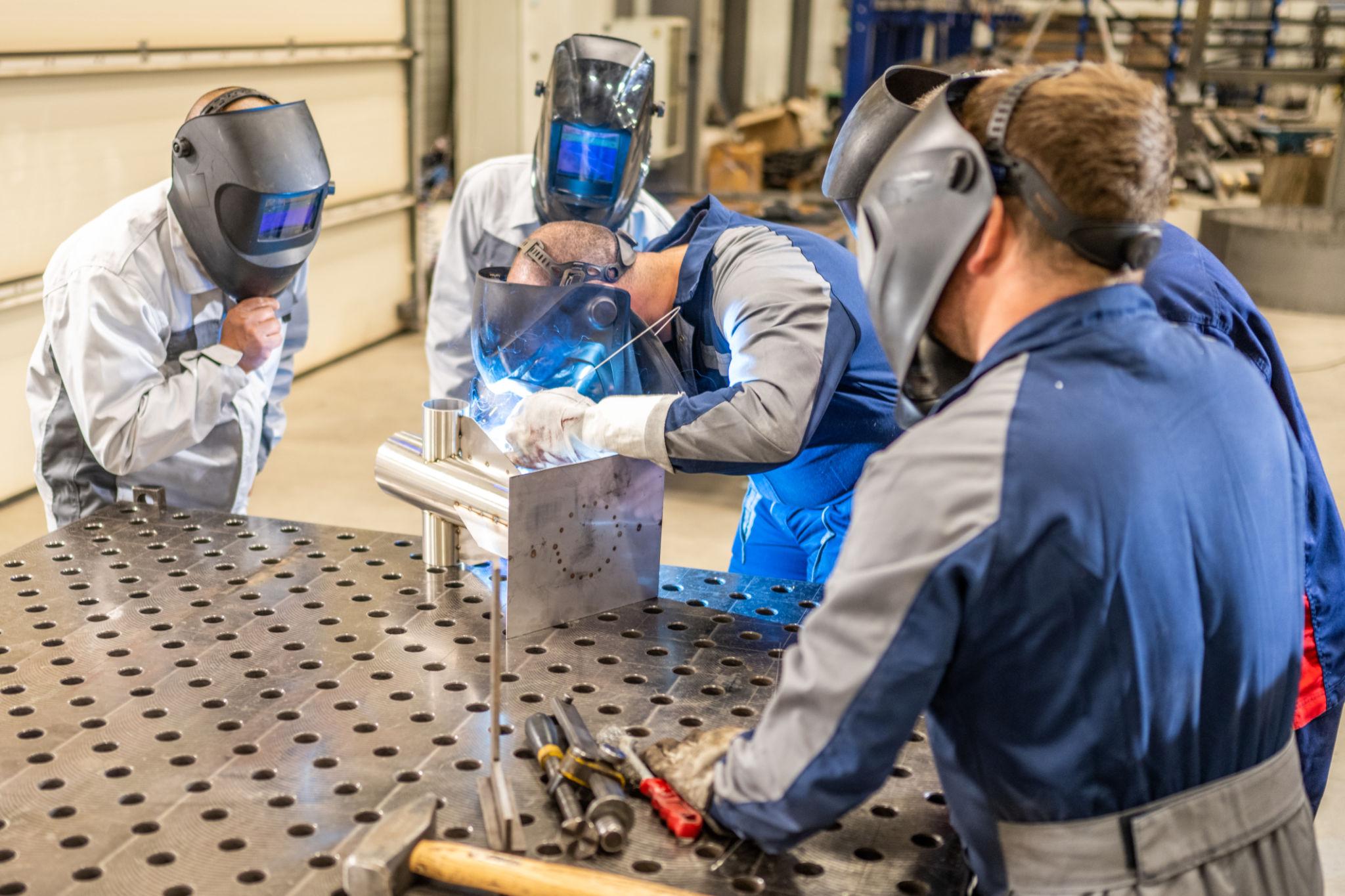
Welding Safety Training in UAE – Practical Safety for Welders and Fabrication Teams
A welding arc may be small, but the hazards around it are not. The same task can expose a welder to intense light, heat, electrical energy, metal fumes, sparks, hot surfaces and compressed gases.
NIMS provides Welding Safety Training in Dubai, Abu Dhabi and across the UAE for welders,
fabricators, helpers, maintenance teams, contractors and supervisors working in construction, engineering and industrial environments.
Unlike general Hot Work Training, this programme focuses more closely on the hazards created by welding equipment and welding processes themselves.
Why Choose Nathan Safety Training for Welding Safety?
Welding safety requires more technical understanding than general hot work awareness.
A welder may face electrical hazards, arc radiation, fumes, compressed gases, burns and fire risks during the same task.
Nathan Safety Training provides Welding Safety Training in UAE with a stronger focus on the hazards directly associated with welding and fabrication work.
Confined Space Course Modules
How NIMS Can Assist
NIMS can support welding and fabrication teams with training covering:
- Arc welding hazards
- Welding PPE and eye protection
- Welding screens and protection of nearby employees
- Electrical safety during welding
- Welding lead and equipment inspection
- Welding fume exposure
- Local exhaust ventilation
- Gas cylinder storage and handling
- Flashback prevention awareness
- Hot Work Permit requirements
- Fire watch responsibilities
- Confined-space welding awareness
- Safe preparation and close-out of welding work
Training can be delivered for welders, helpers, fabrication teams, maintenance employees, supervisors and HSE personnel.
What Makes NIMS Different?
NIMS can bridge the gap between technical welding safety and the wider Permit to Work system.
The welding activity itself may be only one part of the job. Depending on the workplace, safe
execution may also depend on gas testing, fire watch arrangements, confined-space controls,
electrical safety and isolation.
Because NIMS already covers these related HSE areas, organisations can develop a more
coordinated training programme around welding rather than relying only on general Hot Work
Training.
This approach is particularly useful for steel fabrication, EPC, oil & gas, marine, manufacturing and industrial maintenance companies where welding forms part of routine operations.
Understanding Welding Hazards
The exact risk depends on the process and workplace, but common welding hazards include:
- Electric shock
- Arc radiation
- Ultraviolet and infrared exposure
- Eye injuries
- Burns
- Sparks and hot slag
- Molten metal
- Welding fumes
- Harmful gases
- Fire
- Explosion
- Compressed-gas cylinders
- Noise
- Poor ventilation
- Confined-space conditions
A welding job therefore needs more than a helmet and gloves.
Welding Arc and Eye Protection
Arc welding generates intense visible and invisible radiation.
Exposure can damage the eyes and skin, while nearby workers can also be affected if suitable welding screens are not used.
Participants learn about:
- Welding helmets
- Appropriate filter lenses
- Safety glasses under helmets where required
- Welding screens and curtains
- Skin protection
- Protecting employees working nearby
The training reinforces the need to select PPE according to the welding task rather than relying on whatever equipment happens to be available.
Welding Fumes and Ventilation
Welding fumes are one of the less visible risks of the job.
The amount and composition of fume may vary according to:
- Welding process
- Base metal
- Electrode or wire
- Surface coatings
- Contamination
- Ventilation
Participants learn why putting the head directly into the welding plume should be avoided and why local exhaust ventilation and fume extraction may be necessary.
Ventilation becomes especially important in enclosed workshops, tanks and confined spaces.
Electrical Safety During Welding
Arc welding equipment relies on electrical energy, often in demanding site conditions.
Damaged insulation, wet areas, poor connections or incorrectly maintained equipment can increase shock risk.
The course includes awareness of:
- Welding lead condition
- Electrode holders
- Cable insulation
- Connections and plugs
- Ground or work-return connections
- Equipment inspection
- Wet working conditions
- Defect reporting
Damaged equipment should be taken out of use rather than repaired temporarily and returned to work.
Gas Cylinder Safety
Gas welding and cutting introduce additional hazards involving oxygen and fuel-gas cylinders.
Participants learn practical precautions for:
- Safe cylinder storage
- Securing cylinders upright
- Keeping valve protection in place
- Separating cylinders where required
- Protecting hoses from damage
- Checking connections
- Leak awareness
- Flashback arrestors
- Keeping cylinders away from heat
Oxygen equipment must also be kept free from oil and grease contamination.
Welding as Hot Work
Welding can easily ignite combustible materials several metres away from the immediate work
point.
Before work begins, employees may need to consider:
- Hot Work Permit
- Removal of combustible materials
- Welding curtains
- Fire-resistant blankets
- Suitable extinguishers
- Fire watch
- Gas testing
- Ventilation
- Post-work fire checks
Where welding is carried out inside a confined space, additional controls are required for
atmosphere, ventilation, entry and emergency arrangements.
What Does Welding Safety Training Cover?
The NIMS programme includes:
- Welding hazard identification
- Arc radiation
- Welding PPE
- Electrical hazards
- Fume exposure
- Ventilation and extraction
- Fire prevention
- Sparks and hot metal
- Gas cylinder safety
- Hose and connection awareness
- Flashback prevention
- Workplace preparation
- Hot Work Permit awareness
- Fire-watch responsibilities
- Confined-space welding awareness
- Equipment inspection
- Emergency actions
Who Should Attend?
- Welders
- Welding helpers
- Fabricators
- Mechanical technicians
- Maintenance teams
- Workshop employees
- Contractors
- Supervisors
- HSE personnel
- Fire-watch personnel
- Steel erection teams
Industries Where Welding Safety Is Essential
The course is highly relevant to steel fabrication, construction, EPC, oil & gas, petrochemical plants, manufacturing, engineering workshops, marine and shipyards, power, utilities, pipelines and industrial maintenance.
Welding Safety Training Across the UAE
NIMS supports Welding Safety Training in Dubai, Abu Dhabi, Sharjah, Ajman, Ras Al Khaimah,
Fujairah, Umm Al Quwain and Al Ain.
Industrial demand is strong around Jebel Ali, JAFZA, Dubai Industrial City, Mussafah, KEZAD,
Ruwais, Hamriyah Free Zone, Sharjah Industrial Areas, fabrication yards, marine facilities and
ports.