
Home / Spill Response and spill contol Training
Spill response and spill control Training In dubai, abu dhabi & Across the Uae
Spill Response and Spill Control Training in UAE – Be Ready Before a Leak Spreads
A leaking chemical drum may start with a few drops. A damaged fuel hose can release a much larger quantity within minutes. What happens next depends heavily on whether employees know how to assess the situation and respond without putting themselves at greater risk.
NIMS provides Spill Response and Spill Control Training in Dubai, Abu Dhabi and across the UAE for employees working around chemicals, oils, fuels and other hazardous liquids.
The course covers initial spill assessment, PPE, containment, spill-kit use, drain protection, escalation and safe clean-up principles.
Do Not Rush Into a Spill
The first action is not always to start cleaning.
Employees should first identify what has been released and consider whether it is safe to approach.
A simple response sequence taught during training is:
Identify – Isolate – Protect – Stop – Contain – Report
If the substance is unknown, highly toxic, reactive or beyond the employee's training and available equipment, the area should be isolated, and the emergency procedure followed.
Understanding Different Types of Spills
A spill response method that works for engine oil may not be suitable for a corrosive chemical.
Participants learn the difference between common workplace releases such as:
- Oil spills
- Fuel and diesel spills
- Chemical spills
- Solvent releases
- Corrosive material spills
- Water-treatment chemical spills
- Process liquid releases
The hazards may include skin contact, inhalation, fire, slips, environmental contamination or
dangerous chemical reactions.
Check the SDS Before Choosing a Response
Where chemicals are involved, the Safety Data Sheet (SDS) provides important information about exposure risks, PPE, firefighting, accidental release and safe handling.
Training helps participants understand how SDS information supports spill-response decisions rather than relying only on the appearance or smell of the material.
Why Choose Nathan Safety Training for Spill Response?
The effectiveness of spill response depends heavily on what happens during the first few minutes.
Employees need to know whether they can safely handle the spill, which spill kit to use, how to stop the material from spreading and when the situation needs to be escalated.
NIMS Safety Training focuses on these practical decisions during Spill Response and Spill Control Training.
How NIMS Can Assist
NIMS can help organisations prepare employees for realistic workplace spill scenarios through:
- Chemical and oil spill response awareness
- Practical spill kit familiarisation
- Selection of suitable absorbents
- Spill containment techniques
- Drain and environmental protection awareness
- SDS-based spill assessment
- PPE awareness during spill response
- Incident isolation and escalation procedures
- Training for Emergency Response Team members
- Spill response refreshers for operational employees
Where required, the training can be related to the materials normally handled at the clients facility.
For example, a maintenance workshop may focus more heavily on oils and fuels, while a chemical or water-treatment operation may require greater emphasis on corrosive or hazardous process chemicals.
What Makes NIMS Different?
NIMS does not treat spill response simply as a cleaning activity.
The training focuses first on protecting people, then controlling the release and protecting the environment.
Participants are encouraged to understand their own response limits. Not every spill should be handled by the employee who first discovers it.
This approach is especially relevant for oil & gas, petrochemical, utilities, water treatment,
manufacturing and industrial clients where different types of spills may require very different
responses.
NIMS can also combine Spill Response Training with HAZMAT Awareness, Chemical Safety and
Emergency Response Team training to provide a broader chemical emergency preparedness
programme.Spill Kits: Having One Is Not Enough
Many workplaces have spill kits positioned around warehouses, workshops and process areas.
The real question is whether employees know how to use them.
Spill Kit Training introduces common components such as:
- Absorbent pads
- Socks
- Booms
- Absorbent granules
- Chemical-resistant absorbents
- Disposal bags
- Gloves
- Drain covers
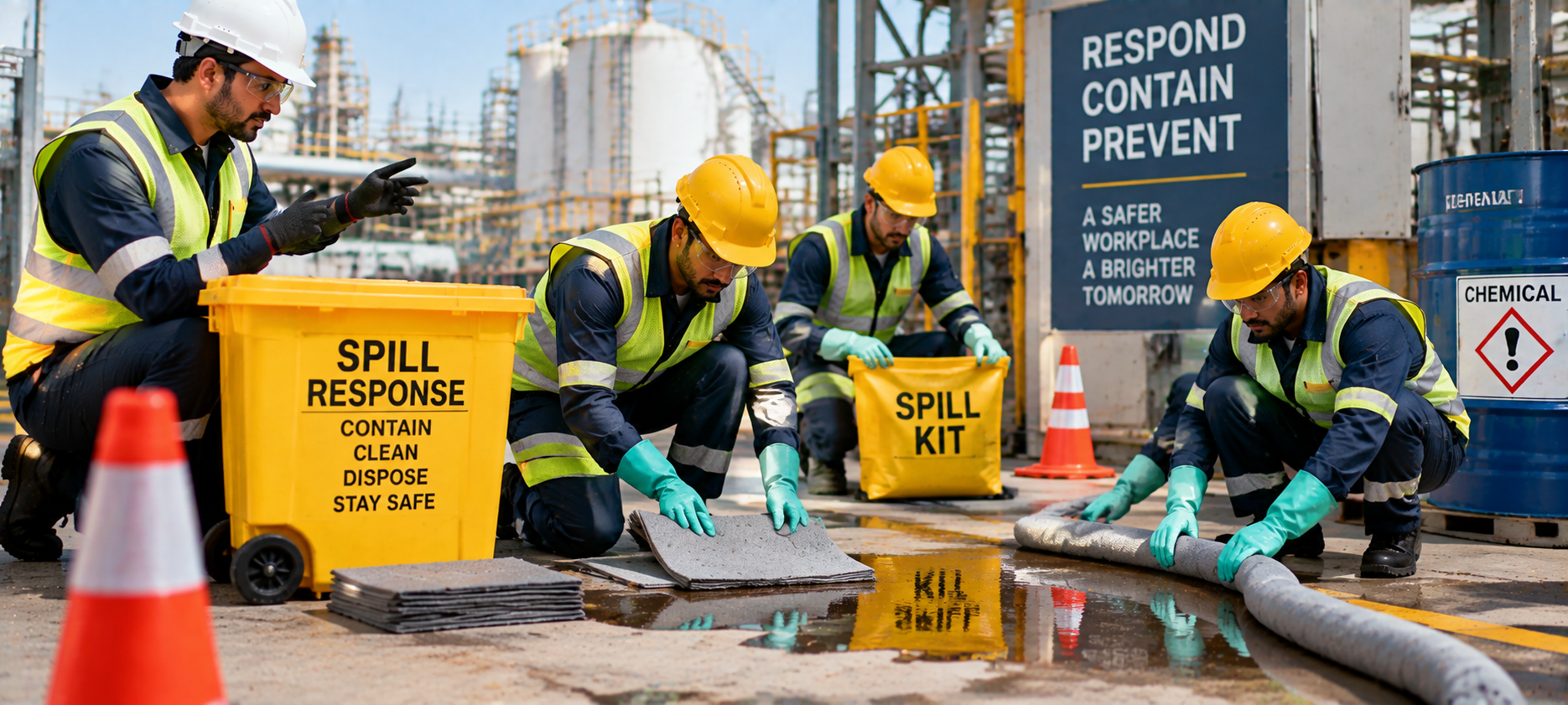
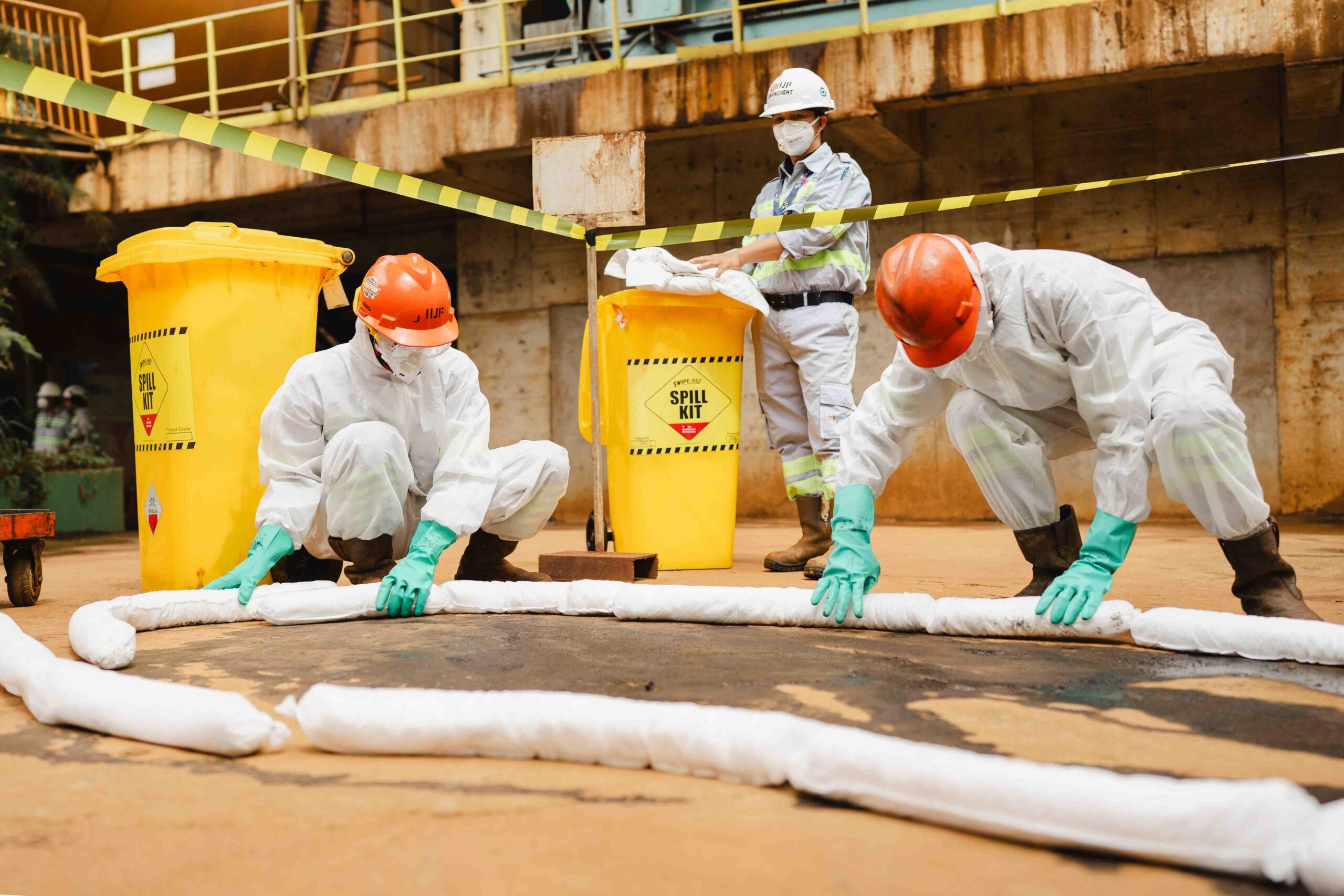
Participants learn how pads can absorb a local spill, socks can be placed around a release to prevent spreading and booms may be used to control a larger affected area where appropriate.
Different spill kits may be designed for oil, general-purpose liquids or chemicals, so selection
matters.
Stopping and Containing the Release
Where it is safe and within the employee’s responsibility, stopping the source early can reduce the scale of an incident.
This might involve closing a valve, standing a damaged container upright or isolating equipment.
Containment focuses on preventing the material from reaching larger areas, particularly surface water drains, soil or water bodies.
Employees are taught not to place themselves in direct contact with the substance simply to stop a leak.
PPE During Spill Response
The appropriate level of protection depends on the material.
It may include:
- Chemical-resistant gloves
- Safety goggles
- Face shields
- Protective clothing
- Safety footwear
- Respiratory protection where specifically required
Employees should understand both the capability and limitation of the PPE available to them.
Course Content
The NIMS Spill Response Training Course covers:
- Common causes of spills
- Oil, fuel and chemical hazards
- Initial scene assessment
- SDS awareness
- PPE selection
- Area isolation
- Source control
- Spill containment techniques
- Spill kit selection and use
- Absorbent materials
- Drain protection
- Waste collection
- Contaminated absorbent handling
- Reporting and escalation
- Environmental protection awareness
- Emergency-response limitations
Who Should Attend?
Spill Control Training is suitable for:
- HSE officers
- Emergency response teams
- Chemical handlers
- Maintenance personnel
- Warehouse staff
- Storekeepers
- Operators
- Facility management employees
- Environmental personnel
- Supervisors
- Oil & gas workers
- Waste management employees
- Water-treatment teams
Industries That Commonly Require Spill Response Training
The course is particularly relevant to oil & gas, petrochemical, chemical industries, fuel storage, manufacturing, construction, EPC, water and wastewater treatment, marine, ports, warehouses, logistics, utilities and facility management.
For these workplaces, a spill can affect employee safety as well as fire protection, environmental control and business operations.
Related NIMS Courses
- Chemical Safety & Handling
- HAZMAT Awareness
- Emergency Response Team Training
- Fire Safety Training
- H2S Awareness
- Gas Tester Training
- Hazard & Risk Assessment
- Permit to Work Training
Control the Spill Without Creating Another Emergency
A good spill response is controlled, informed and carried out within the responders level of
competence.
NIMS helps teams understand when they can manage a small workplace spill and, just as
importantly, when they should isolate the area and call for specialist support.
Contact NIMS for Spill Response Training UAE, Spill Control Training Dubai, Chemical Spill
Response Training, Oil Spill Training Abu Dhabi, Spill Kit Training and Hazardous Material Spill
Response Training across the UAE.
Courses Offered
- First Aid Course - CPR and AED
- Confined Space
- Fire Safety Awareness
- Scaffolding Inspection
- Scaffolding Erection & Dismantling
- Flagman Safety
- Chemical Safety and Handling Training
- Hazard and Risk Assessment
- Rigging and Slinging Training
- Traffic Safety
- Hand and Power Tools Operator
- Electrical Safety
- Lock Out and Tag Out (LOTO)
- Accident Incident Investigation
- Lifeguard Training
- Advanced Risk Assessment & Compliance Service
- Behavior-Based Safety Workplace Safety Consulting
- Construction Site Safety Induction Training
- Emergency Response Team Training
- Excavator Operator Training
- Forklift Operator Training
- H2S Awareness & Breathing Apparatus Training
- Hot Work Safety Training
- Incident Reporting & Root Cause Analysis Service
- MEWP Operator Training
- Mobile Crane Operator Training
- Permit to Work System Training
- Rope Access Training
- Working at Height & Fall Protection Safety Training
- Oil & Gas Safety Training
- Fire Warden Training
- Manual Handling Training
- Banksman Safety Training
- Gas Tester Training
- Defensive Driving Training
- HAZMAT Awareness Training
- Machine Safety and Machine Guarding Training
- Spill Response and Spill Control Training
- Welding Safety Training
Need expert advice? Speak to our team today
FAQ
What is Spill Control Training and why is it important in UAE workplaces?
Spill Control Training UAE teaches employees how to safely assess, contain and clean up chemical, oil and fuel spills in the workplace. Effective spill response prevents personal injury, environmental contamination, regulatory penalties and fire risk, making trained employees a critical part of any industrial emergency response plan.
What is the NIMS spill response sequence taught during training?
NIMS Spill Response Training teaches the Identify — Isolate — Protect — Stop — Contain — Report sequence. This structured approach ensures employees assess the substance and hazard level before approaching, apply appropriate PPE, contain the release and escalate correctly rather than rushing into an uncontrolled situation.
When should an employee not attempt to respond to a chemical spill themselves?
Employees should not attempt an independent spill response if the substance is unknown, highly toxic, reactive, flammable near ignition sources or the quantity exceeds their available equipment and training level. In these cases, the area must be evacuated and isolated while emergency response procedures are activated.
What is a spill kit and what should it contain for an industrial workplace?
A spill kit is a collection of absorbents, containment tools and PPE for managing workplace spills. Contents include absorbent pads and booms, chemical-resistant gloves, goggles, disposal bags and drain covers. Spill kit contents should match the types of substances stored or used at the facility.
How should a drain be protected during a chemical or fuel spill?
Employees must place drain covers or plugs before the spill reaches the drainage system. Absorbent booms or socks can form a secondary barrier. Preventing substances from entering drains is critical as it avoids environmental contamination and potential regulatory penalties from UAE environmental authorities.
What PPE is required when responding to a hazardous material spill?
Minimum PPE for spill response includes chemical-resistant gloves, safety goggles and safety footwear. Volatile, corrosive or highly toxic spills may also require face shields, chemical-resistant suits and respiratory protection. The Safety Data Sheet for the specific substance determines the correct PPE for safe response.
How does the Safety Data Sheet support spill response decisions?
The SDS provides critical information about the substance including flash point, toxicity, reactivity, correct absorbent materials, PPE requirements, drain and environmental precautions and emergency contact information. NIMS Spill Control Training teaches employees to consult SDS information before selecting their spill response approach.
What types of spills are covered in NIMS Spill Response Training?
NIMS Spill Response and Spill Control Training covers oil spills, diesel and fuel spills, chemical spills, solvent releases, corrosive substance spills, water-treatment chemical releases and process liquid incidents, allowing training content to be tailored to the actual materials handled at each client facility.
How should contaminated absorbent materials be disposed of after a spill?
Used absorbents contaminated with hazardous substances are classified as chemical or hazardous waste. They must be placed in labelled, sealed waste containers, stored in a designated waste area and collected for disposal by a licensed UAE hazardous waste contractor under applicable waste management regulations.
What environmental obligations apply after a chemical spill in the UAE?
Spills reaching the ground, drainage or water bodies must be reported to relevant UAE environmental authorities. Employers are legally responsible for clean-up costs and remediation. NIMS Spill Control Training covers notification obligations and the importance of accurate incident recording for regulatory compliance and insurance purposes.
Can NIMS combine Spill Control Training with HAZMAT Awareness and emergency response?
Yes. NIMS can combine Spill Response Training with HAZMAT Awareness, Chemical Safety Training and Emergency Response Team development to build a comprehensive chemical emergency preparedness programme suited to oil and gas, petrochemical, utilities, water treatment and manufacturing operations across the UAE.
How long is the NIMS Spill Response and Spill Control Training course?
The standard NIMS Spill Control Training programme runs for approximately half a day and includes practical spill kit familiarisation, absorbent selection exercises, drain protection demonstrations and realistic spill scenario practice using materials relevant to each client’s specific workplace environment.
Spill Response Training Across the UAE
NIMS supports companies requiring Spill Response Training in Dubai, Abu Dhabi, Sharjah, Ajman, Ras Al Khaimah, Fujairah, Umm Al Quwain and Al Ain.
Demand is particularly relevant around Jebel Ali, JAFZA, Dubai Industrial City, Mussafah, KEZAD, Ruwais, Hamriyah Free Zone, Fujairah Port and major UAE industrial areas.
- First Aid Course - CPR and AED
- Confined Space
- Fire Safety Awareness
- Scaffolding Inspection
- Scaffolding Erection & Dismantling
- Flagman Safety
- Chemical Safety and Handling Training
- Hazard and Risk Assessment
- Rigging and Slinging Training
- Traffic Safety
- Hand and Power Tools Operator
- Electrical Safety
- Lock Out and Tag Out (LOTO)
- Accident Incident Investigation
- Lifeguard Training
- Advanced Risk Assessment & Compliance Service
- Behavior-Based Safety Workplace Safety Consulting
- Construction Site Safety Induction Training
- Emergency Response Team Training
- Excavator Operator Training
- Forklift Operator Training
- H2S Awareness & Breathing Apparatus Training
- Hot Work Safety Training
- Incident Reporting & Root Cause Analysis Service
- MEWP Operator Training
- Mobile Crane Operator Training
- Permit to Work System Training
- Rope Access Training
- Working at Height & Fall Protection Safety Training
Spill Response and Spill Control Training in UAE – Be Ready Before a Leak Spreads
A leaking chemical drum may start with a few drops. A damaged fuel hose can release a much larger quantity within minutes. What happens next depends heavily on whether employees know how to assess the situation and respond without putting themselves at greater risk.
NIMS provides Spill Response and Spill Control Training in Dubai, Abu Dhabi and across the UAE for employees working around chemicals, oils, fuels and other hazardous liquids.
The course covers initial spill assessment, PPE, containment, spill-kit use, drain protection, escalation and safe clean-up principles.
Do Not Rush Into a Spill
The first action is not always to start cleaning.
Employees should first identify what has been released and consider whether it is safe to approach.
A simple response sequence taught during training is:
Identify – Isolate – Protect – Stop – Contain – Report
If the substance is unknown, highly toxic, reactive or beyond the employee's training and available equipment, the area should be isolated, and the emergency procedure followed.
Confined Space Course Modules
Understanding Different Types of Spills
A spill response method that works for engine oil may not be suitable for a corrosive chemical.
Participants learn the difference between common workplace releases such as:
- Oil spills
- Fuel and diesel spills
- Chemical spills
- Solvent releases
- Corrosive material spills
- Water-treatment chemical spills
- Process liquid releases
The hazards may include skin contact, inhalation, fire, slips, environmental contamination or
dangerous chemical reactions.
Check the SDS Before Choosing a Response
Where chemicals are involved, the Safety Data Sheet (SDS) provides important information about exposure risks, PPE, firefighting, accidental release and safe handling.
Training helps participants understand how SDS information supports spill-response decisions rather than relying only on the appearance or smell of the material.
Why Choose Nathan Safety Training for Spill Response?
The effectiveness of spill response depends heavily on what happens during the first few minutes.
Employees need to know whether they can safely handle the spill, which spill kit to use, how to stop the material from spreading and when the situation needs to be escalated.
NIMS Safety Training focuses on these practical decisions during Spill Response and Spill Control Training.
How NIMS Can Assist
NIMS can help organisations prepare employees for realistic workplace spill scenarios through:
- Chemical and oil spill response awareness
- Practical spill kit familiarisation
- Selection of suitable absorbents
- Spill containment techniques
- Drain and environmental protection awareness
- SDS-based spill assessment
- PPE awareness during spill response
- Incident isolation and escalation procedures
- Training for Emergency Response Team members
- Spill response refreshers for operational employees
Where required, the training can be related to the materials normally handled at the clients facility.
For example, a maintenance workshop may focus more heavily on oils and fuels, while a chemical or water-treatment operation may require greater emphasis on corrosive or hazardous process chemicals.
What Makes NIMS Different?
NIMS does not treat spill response simply as a cleaning activity.
The training focuses first on protecting people, then controlling the release and protecting the environment.
Participants are encouraged to understand their own response limits. Not every spill should be handled by the employee who first discovers it.
This approach is especially relevant for oil & gas, petrochemical, utilities, water treatment,
manufacturing and industrial clients where different types of spills may require very different
responses.
NIMS can also combine Spill Response Training with HAZMAT Awareness, Chemical Safety and
Emergency Response Team training to provide a broader chemical emergency preparedness
programme.Spill Kits: Having One Is Not Enough
Many workplaces have spill kits positioned around warehouses, workshops and process areas.
The real question is whether employees know how to use them.
Spill Kit Training introduces common components such as:
- Absorbent pads
- Socks
- Booms
- Absorbent granules
- Chemical-resistant absorbents
- Disposal bags
- Gloves
- Drain covers
Participants learn how pads can absorb a local spill, socks can be placed around a release to prevent spreading and booms may be used to control a larger affected area where appropriate.
Different spill kits may be designed for oil, general-purpose liquids or chemicals, so selection
matters.
Stopping and Containing the Release
Where it is safe and within the employee’s responsibility, stopping the source early can reduce the scale of an incident.
This might involve closing a valve, standing a damaged container upright or isolating equipment.
Containment focuses on preventing the material from reaching larger areas, particularly surface water drains, soil or water bodies.
Employees are taught not to place themselves in direct contact with the substance simply to stop a leak.
PPE During Spill Response
The appropriate level of protection depends on the material.
It may include:
- Chemical-resistant gloves
- Safety goggles
- Face shields
- Protective clothing
- Safety footwear
- Respiratory protection where specifically required
Employees should understand both the capability and limitation of the PPE available to them.
Course Content
The NIMS Spill Response Training Course covers:
- Common causes of spills
- Oil, fuel and chemical hazards
- Initial scene assessment
- SDS awareness
- PPE selection
- Area isolation
- Source control
- Spill containment techniques
- Spill kit selection and use
- Absorbent materials
- Drain protection
- Waste collection
- Contaminated absorbent handling
- Reporting and escalation
- Environmental protection awareness
- Emergency-response limitations
Who Should Attend?
Spill Control Training is suitable for:
- HSE officers
- Emergency response teams
- Chemical handlers
- Maintenance personnel
- Warehouse staff
- Storekeepers
- Operators
- Facility management employees
- Environmental personnel
- Supervisors
- Oil & gas workers
- Waste management employees
- Water-treatment teams
Industries That Commonly Require Spill Response Training
The course is particularly relevant to oil & gas, petrochemical, chemical industries, fuel storage, manufacturing, construction, EPC, water and wastewater treatment, marine, ports, warehouses, logistics, utilities and facility management.
For these workplaces, a spill can affect employee safety as well as fire protection, environmental control and business operations.
Spill Response Training Across the UAE
NIMS supports companies requiring Spill Response Training in Dubai, Abu Dhabi, Sharjah, Ajman, Ras Al Khaimah, Fujairah, Umm Al Quwain and Al Ain.
Demand is particularly relevant around Jebel Ali, JAFZA, Dubai Industrial City, Mussafah, KEZAD, Ruwais, Hamriyah Free Zone, Fujairah Port and major UAE industrial areas.
Related NIMS Courses
- Chemical Safety & Handling
- HAZMAT Awareness
- Emergency Response Team Training
- Fire Safety Training
- H2S Awareness
- Gas Tester Training
- Hazard & Risk Assessment
- Permit to Work Training
Control the Spill Without Creating Another Emergency
A good spill response is controlled, informed and carried out within the responders level of
competence.
NIMS helps teams understand when they can manage a small workplace spill and, just as
importantly, when they should isolate the area and call for specialist support.
Contact NIMS for Spill Response Training UAE, Spill Control Training Dubai, Chemical Spill
Response Training, Oil Spill Training Abu Dhabi, Spill Kit Training and Hazardous Material Spill
Response Training across the UAE.