

Home / Mobile Crane Operator Training
Mobile Crane Operator Training
Mobile Crane Operator Training for UAE Construction and Heavy Lift Sites
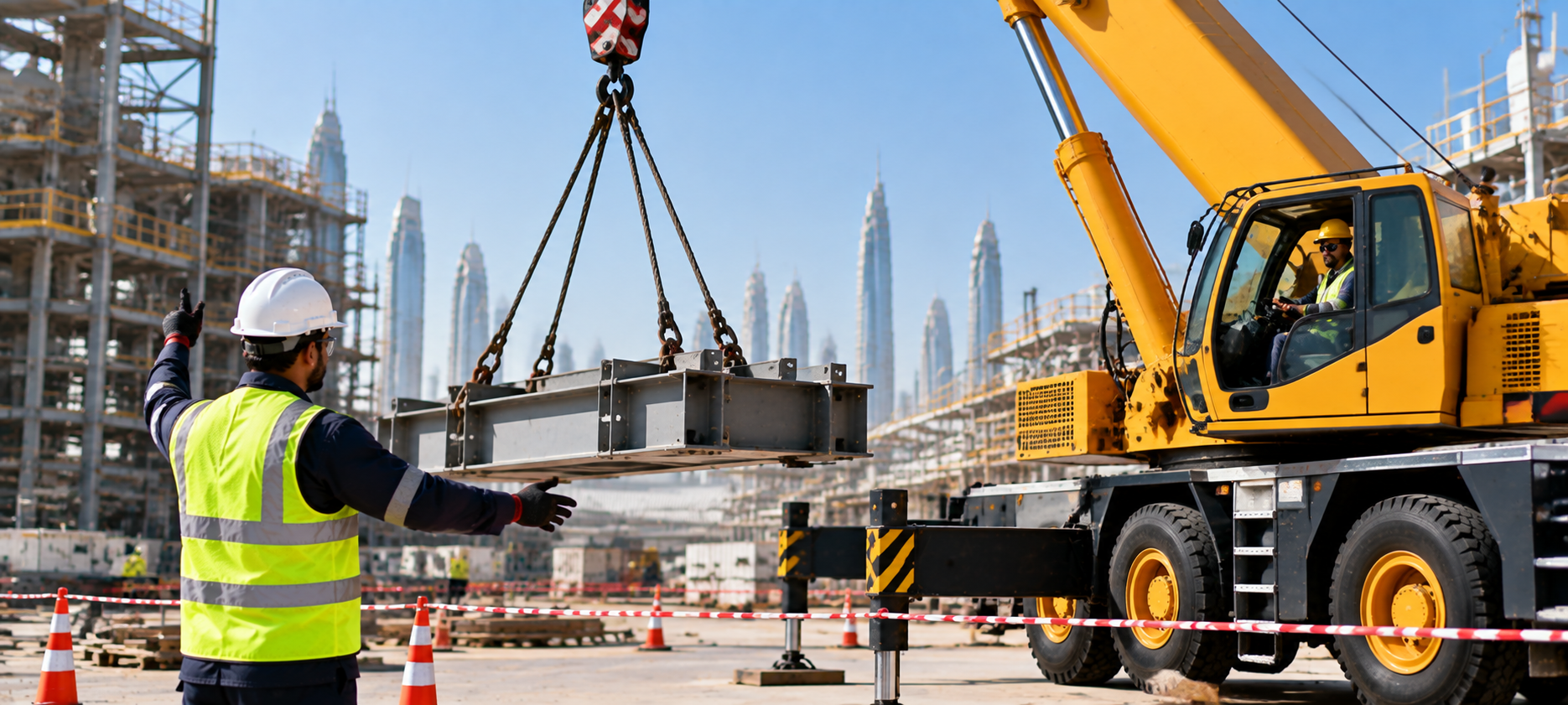
The crane operator and the rigger are solving different halves of the same lift, and confusing the two roles is a genuine, recurring gap on UAE sites. The rigger decides how the load is attached and communicates the signal; the operator translates that signal into boom angle, radius and load chart limits from inside the cab — and it’s the operator’s judgement on outrigger setup and ground-bearing capacity that determines whether the crane itself stays upright throughout the lift.
Nathan Safety Training (NIMS) trains mobile crane operators across the UAE on load chart interpretation, outrigger and ground-bearing assessment, and the operator-side half of the signal communication our separate Rigging and Slinging course covers from the rigger’s side — the two courses are built to work together, not duplicate each other.
The Two-Certificate Structure, Applied to Crane Operation
Mobile crane operation follows the same split as other UAE heavy equipment roles: an RTA Category 8 Heavy Mechanical Equipment licence is the federal legal requirement to operate the machine, obtained through an authorised driving institute. Separately, workplace competency certification — validated through Dubai Municipality and ADOSH-SF frameworks — assesses load chart interpretation, outrigger setup and site-specific lift planning that the RTA road test doesn’t examine.
Lifting operations across UAE construction and industrial sites require a documented lifting plan, with third-party thorough examination records for the crane itself retained and produced on request. None of that removes the operator’s own real-time judgement: reading the load chart correctly for the day’s specific boom angle and radius, confirming ground-bearing capacity under the outriggers, and staying inside safe working load with margin, not right up against the limit.
We provide the workplace competency certificate. If your operator needs the RTA Category 8 licence itself, that runs through a separate authorised driving institute process — we can point clients to the right route.
What Crane Operator Error Actually Risks
Mobile crane incidents concentrate around a specific pattern: outriggers set on inadequately assessed ground, load chart misread for the actual boom configuration in use, and operator-rigger signal miscommunication during a blind lift. Each is a judgement failure the machine’s mechanical soundness doesn’t protect against.
A crane tip-over or dropped load doesn’t stay contained to the immediate incident — it typically halts every lift on site pending investigation, triggers scrutiny of every other lift that crew has performed recently, and on a live construction programme can cost far more in schedule delay than the incident’s direct damage.
Who Needs This Certification
Mobile crane competency is needed wherever a load leaves the ground under a truck-mounted or all-terrain crane, distinct from tower crane or fixed lifting appliance operation.
- Construction contractors lifting precast elements, structural steel and plant equipment
- Oil & gas fabrication yards performing module and vessel lifts
- Ports and marine operations using mobile cranes for cargo and equipment handling
- Plant hire companies certifying operators before crane deployment to client sites
- Event production companies using mobile cranes for large-scale stage and structure lifts
Where We Deliver This Training
Lift complexity and typical crane class vary by emirate’s dominant industry. We deliver onsite across all seven:
- Dubai — high-rise construction and JAFZA logistics drive the country’s highest mobile crane operator demand, spanning a wide range of crane classes
- Abu Dhabi — Mussafah fabrication yards and government megaprojects generate some of the heaviest single-lift operations in the UAE
- Sharjah — Hamriyah Port cargo handling and Industrial Areas construction, generally mid-capacity crane operations
- Ajman — Ajman Port and growing construction activity, smaller-scale lifts than Dubai or Abu Dhabi
- Ras Al Khaimah — RAK Maritime City and quarrying-adjacent heavy equipment moves
- Fujairah — Port of Fujairah cargo and bunker operations move some of the highest lift volumes on the UAE’s east coast
- Umm Al Quwain — smaller-scale operations, still requiring the same load chart and ground-bearing competency
What Each Certificate Covers
Requirement | Issued By | What It Proves |
RTA Category 8 Licence | RTA-authorised driving institute | Legal right to operate the crane |
Workplace Competency Certificate | Third-party HSE provider (e.g. NIMS) | Load chart, outrigger and site lift-planning competency |
Where Crane Operator Judgement Actually Fails
he crane itself is rarely mechanically at fault. The failure is almost always in ground assessment, load chart interpretation, or the handoff between operator and rigger.
If I had to check one thing first on a lift plan review, it’s whether ground-bearing capacity under the outriggers was actually assessed for that day’s specific ground conditions, not assumed from the last time a crane worked that area.
- Outriggers set without confirming ground-bearing capacity, particularly after rain or on recently backfilled ground
- Load chart read for the wrong boom configuration — radius and angle both change the safe working load significantly
- Operator and rigger using inconsistent or informal hand signals instead of a shared standard set
- Blind lifts conducted without a radio link when the load isn’t in the operator’s direct line of sight
- A lift plan that exists on paper but wasn’t actually reviewed against the site’s current layout before the lift began
What Our Crane Operator Certification Covers
We built this course to interlock with our Rigging and Slinging training specifically — the same hand signal standard, the same lift-plan structure — so an operator and rigger we’ve trained separately still work from one shared system.
hsemanpower.ae, part of the same group, can supply additional certified crane operators for projects needing lift capacity as well as certification for existing staff.
- Load chart interpretation across varying boom angle and radius configurations, not a single static example
- Ground-bearing and outrigger setup assessment as hands-on, site-specific judgement
- Signal communication training that’s deliberately consistent with our Rigging and Slinging course, so operators and riggers we train work predictably together
- Blind lift and radio communication protocol covered explicitly, not assumed
- Certification documentation ready for immediate production during a site inspection
Courses Offered
- First Aid Course - CPR and AED
- Confined Space
- Fire Safety Awareness
- Scaffolding Inspection
- Scaffolding Erection & Dismantling
- Flagman Safety
- Chemical Safety and Handling Training
- Hazard and Risk Assessment
- Rigging and Slinging Training
- Traffic Safety
- Hand and Power Tools Operator
- Electrical Safety
- Lock Out and Tag Out (LOTO)
- Accident Incident Investigation
- Lifeguard Training
- Advanced Risk Assessment & Compliance Service
- Behavior-Based Safety Workplace Safety Consulting
- Construction Site Safety Induction Training
- Emergency Response Team Training
- Excavator Operator Training
- Forklift Operator Training
- H2S Awareness & Breathing Apparatus Training
- Hot Work Safety Training
- Incident Reporting & Root Cause Analysis Service
- MEWP Operator Training
- Mobile Crane Operator Training
- Permit to Work System Training
- Rope Access Training
- Working at Height & Fall Protection Safety Training
- Oil & Gas Safety Training
- Fire Warden Training
- Manual Handling Training
- Banksman Safety Training
- Gas Tester Training
- Defensive Driving Training
- HAZMAT Awareness Training
- Machine Safety and Machine Guarding Training
- Spill Response and Spill Control Training
- Welding Safety Training
Need expert advice? Speak to our team today
FAQ
Is this the same as your Rigging and Slinging course?
No — they’re complementary, covering opposite sides of the same lift. This course trains the crane operator: load charts, outrigger setup, ground assessment. Rigging and Slinging trains the rigger and banksman: sling selection, load attachment, hand signals. Most sites need people trained in both roles, and we build the two courses to use the same signalling standard.
Do I need an RTA licence and your training, or just one of them?
Both. The RTA Category 8 licence is the legal requirement to operate the crane, obtained through an authorised driving institute. Our workplace competency certificate covers load chart interpretation, outrigger setup and site-specific lift planning that the RTA test doesn’t examine.
Can you issue the RTA Category 8 licence directly?
No — that’s issued by RTA-authorised driving institutes after their road test. We issue the separate workplace competency certificate and can point clients toward an authorised institute for the RTA process.
Does this course cover all mobile crane sizes and types?
We cover truck-mounted and all-terrain mobile cranes across the capacity ranges most common on UAE construction and industrial sites; very large or specialised crane classes may need supplementary manufacturer-specific training alongside this course.
Why does ground-bearing assessment matter so much for outrigger setup?
A crane’s stability depends entirely on the ground under its outriggers holding the load without settling — recently backfilled ground, ground softened by rain, or unmarked buried services underneath can all cause outrigger settlement mid-lift, which is one of the more common causes of a tip-over incident.
How is signal communication trained, and does it match your rigging course?
Yes, deliberately — we train operators and riggers on the same hand signal standard across both courses, so an operator we’ve certified can work predictably with any banksman trained to our system, and vice versa.
What happens during a blind lift, when the operator can't see the load?
A trained banksman or signaller directs the lift by radio or relayed hand signal, and we train operators specifically on this communication protocol — a blind lift without a reliable communication link is one of the higher-risk scenarios this course addresses directly.
How long does mobile crane operator certification take?
Our core workplace competency course runs two to three days depending on prior experience and crane class, combining load chart theory with practical operating and setup assessment.
How long is the certificate valid?
We recommend renewal every two to three years, and immediately following any lifting incident or near-miss involving crane operation, given how much judgement is involved beyond mechanical operation.
Is this certification accepted by Dubai Municipality and ADOSH-SF?
Yes, our course content and documentation are built to match what both frameworks expect an employer to demonstrate for crane operator competency.
Can plant hire companies certify multiple operators at once?
Yes, this is a common booking pattern ahead of a major project mobilisation or crane fleet deployment.
Do you deliver this training across all seven emirates?
Yes, with the highest demand in Dubai and Abu Dhabi given construction and fabrication yard volume, and significant activity around Fujairah and Sharjah’s port operations.
- First Aid Course - CPR and AED
- Confined Space
- Fire Safety Awareness
- Scaffolding Inspection
- Scaffolding Erection & Dismantling
- Flagman Safety
- Chemical Safety and Handling Training
- Hazard and Risk Assessment
- Rigging and Slinging Training
- Traffic Safety
- Hand and Power Tools Operator
- Electrical Safety
- Lock Out and Tag Out (LOTO)
- Accident Incident Investigation
- Lifeguard Training
- Advanced Risk Assessment & Compliance Service
- Behavior-Based Safety Workplace Safety Consulting
- Construction Site Safety Induction Training
- Emergency Response Team Training
- Excavator Operator Training
- Forklift Operator Training
- H2S Awareness & Breathing Apparatus Training
- Hot Work Safety Training
- Incident Reporting & Root Cause Analysis Service
- MEWP Operator Training
- Mobile Crane Operator Training
- Permit to Work System Training
- Rope Access Training
- Working at Height & Fall Protection Safety Training
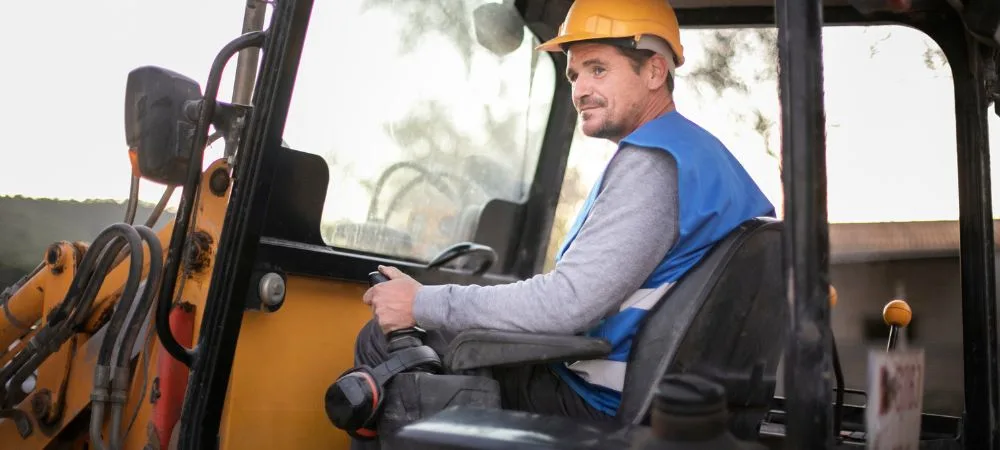
Mobile Crane Operator Training for UAE Construction and Heavy Lift Sites
The crane operator and the rigger are solving different halves of the same lift, and confusing the two roles is a genuine, recurring gap on UAE sites. The rigger decides how the load is attached and communicates the signal; the operator translates that signal into boom angle, radius and load chart limits from inside the cab — and it’s the operator’s judgement on outrigger setup and ground-bearing capacity that determines whether the crane itself stays upright throughout the lift.
Nathan Safety Training (NIMS) trains mobile crane operators across the UAE on load chart interpretation, outrigger and ground-bearing assessment, and the operator-side half of the signal communication our separate Rigging and Slinging course covers from the rigger’s side — the two courses are built to work together, not duplicate each other.
The Two-Certificate Structure, Applied to Crane Operation
Mobile crane operation follows the same split as other UAE heavy equipment roles: an RTA Category 8 Heavy Mechanical Equipment licence is the federal legal requirement to operate the machine, obtained through an authorised driving institute. Separately, workplace competency certification — validated through Dubai Municipality and ADOSH-SF frameworks — assesses load chart interpretation, outrigger setup and site-specific lift planning that the RTA road test doesn’t examine.
Lifting operations across UAE construction and industrial sites require a documented lifting plan, with third-party thorough examination records for the crane itself retained and produced on request. None of that removes the operator’s own real-time judgement: reading the load chart correctly for the day’s specific boom angle and radius, confirming ground-bearing capacity under the outriggers, and staying inside safe working load with margin, not right up against the limit.
We provide the workplace competency certificate. If your operator needs the RTA Category 8 licence itself, that runs through a separate authorised driving institute process — we can point clients to the right route.
What Crane Operator Error Actually Risks
Mobile crane incidents concentrate around a specific pattern: outriggers set on inadequately assessed ground, load chart misread for the actual boom configuration in use, and operator-rigger signal miscommunication during a blind lift. Each is a judgement failure the machine’s mechanical soundness doesn’t protect against.
A crane tip-over or dropped load doesn’t stay contained to the immediate incident — it typically halts every lift on site pending investigation, triggers scrutiny of every other lift that crew has performed recently, and on a live construction programme can cost far more in schedule delay than the incident’s direct damage.
Who Needs This Certification
Mobile crane competency is needed wherever a load leaves the ground under a truck-mounted or all-terrain crane, distinct from tower crane or fixed lifting appliance operation.
- Construction contractors lifting precast elements, structural steel and plant equipment
- Oil & gas fabrication yards performing module and vessel lifts
- Ports and marine operations using mobile cranes for cargo and equipment handling
- Plant hire companies certifying operators before crane deployment to client sites
- Event production companies using mobile cranes for large-scale stage and structure lifts
Where We Deliver This Training
Lift complexity and typical crane class vary by emirate’s dominant industry. We deliver onsite across all seven:
- Dubai — high-rise construction and JAFZA logistics drive the country’s highest mobile crane operator demand, spanning a wide range of crane classes
- Abu Dhabi — Mussafah fabrication yards and government megaprojects generate some of the heaviest single-lift operations in the UAE
- Sharjah — Hamriyah Port cargo handling and Industrial Areas construction, generally mid-capacity crane operations
- Ajman — Ajman Port and growing construction activity, smaller-scale lifts than Dubai or Abu Dhabi
- Ras Al Khaimah — RAK Maritime City and quarrying-adjacent heavy equipment moves
- Fujairah — Port of Fujairah cargo and bunker operations move some of the highest lift volumes on the UAE’s east coast
- Umm Al Quwain — smaller-scale operations, still requiring the same load chart and ground-bearing competency
What Each Certificate Covers
Requirement | Issued By | What It Proves |
RTA Category 8 Licence | RTA-authorised driving institute | Legal right to operate the crane |
Workplace Competency Certificate | Third-party HSE provider (e.g. NIMS) | Load chart, outrigger and site lift-planning competency |
Where Crane Operator Judgement Actually Fails
The crane itself is rarely mechanically at fault. The failure is almost always in ground assessment, load chart interpretation, or the handoff between operator and rigger.
If I had to check one thing first on a lift plan review, it’s whether ground-bearing capacity under the outriggers was actually assessed for that day’s specific ground conditions, not assumed from the last time a crane worked that area.
- Outriggers set without confirming ground-bearing capacity, particularly after rain or on recently backfilled ground
- Load chart read for the wrong boom configuration — radius and angle both change the safe working load significantly
- Operator and rigger using inconsistent or informal hand signals instead of a shared standard set
- Blind lifts conducted without a radio link when the load isn’t in the operator’s direct line of sight
- A lift plan that exists on paper but wasn’t actually reviewed against the site’s current layout before the lift began
What Our Crane Operator Certification Covers
We built this course to interlock with our Rigging and Slinging training specifically — the same hand signal standard, the same lift-plan structure — so an operator and rigger we’ve trained separately still work from one shared system.
hsemanpower.ae, part of the same group, can supply additional certified crane operators for projects needing lift capacity as well as certification for existing staff.
- Load chart interpretation across varying boom angle and radius configurations, not a single static example
- Ground-bearing and outrigger setup assessment as hands-on, site-specific judgement
- Signal communication training that’s deliberately consistent with our Rigging and Slinging course, so operators and riggers we train work predictably together
- Blind lift and radio communication protocol covered explicitly, not assumed
- Certification documentation ready for immediate production during a site inspection
FAQ
Is this the same as your Rigging and Slinging course?
No — they’re complementary, covering opposite sides of the same lift. This course trains the crane operator: load charts, outrigger setup, ground assessment. Rigging and Slinging trains the rigger and banksman: sling selection, load attachment, hand signals. Most sites need people trained in both roles, and we build the two courses to use the same signalling standard.
Do I need an RTA licence and your training, or just one of them?
Both. The RTA Category 8 licence is the legal requirement to operate the crane, obtained through an authorised driving institute. Our workplace competency certificate covers load chart interpretation, outrigger setup and site-specific lift planning that the RTA test doesn’t examine.
Can you issue the RTA Category 8 licence directly?
No — that’s issued by RTA-authorised driving institutes after their road test. We issue the separate workplace competency certificate and can point clients toward an authorised institute for the RTA process.
Does this course cover all mobile crane sizes and types?
We cover truck-mounted and all-terrain mobile cranes across the capacity ranges most common on UAE construction and industrial sites; very large or specialised crane classes may need supplementary manufacturer-specific training alongside this course.
Why does ground-bearing assessment matter so much for outrigger setup?
A crane’s stability depends entirely on the ground under its outriggers holding the load without settling — recently backfilled ground, ground softened by rain, or unmarked buried services underneath can all cause outrigger settlement mid-lift, which is one of the more common causes of a tip-over incident.
How is signal communication trained, and does it match your rigging course?
Yes, deliberately — we train operators and riggers on the same hand signal standard across both courses, so an operator we’ve certified can work predictably with any banksman trained to our system, and vice versa.
What happens during a blind lift, when the operator can't see the load?
A trained banksman or signaller directs the lift by radio or relayed hand signal, and we train operators specifically on this communication protocol — a blind lift without a reliable communication link is one of the higher-risk scenarios this course addresses directly.
How long does mobile crane operator certification take?
Our core workplace competency course runs two to three days depending on prior experience and crane class, combining load chart theory with practical operating and setup assessment.
How long is the certificate valid?
We recommend renewal every two to three years, and immediately following any lifting incident or near-miss involving crane operation, given how much judgement is involved beyond mechanical operation.
Is this certification accepted by Dubai Municipality and ADOSH-SF?
Yes, our course content and documentation are built to match what both frameworks expect an employer to demonstrate for crane operator competency.
Can plant hire companies certify multiple operators at once?
Yes, this is a common booking pattern ahead of a major project mobilisation or crane fleet deployment.
Do you deliver this training across all seven emirates?
Yes, with the highest demand in Dubai and Abu Dhabi given construction and fabrication yard volume, and significant activity around Fujairah and Sharjah’s port operations.
Get Your Crane Operators Certified
Whether you’re certifying operators on their own or alongside a rigging team, tell us your crane classes and typical lift types, and we’ll scope training that matches how your crew actually works.
Nathan Safety Training (NIMS) — Mobile crane operator training across Dubai, Abu Dhabi, Sharjah, Ajman, Ras Al Khaimah, Fujairah and Umm Al Quwain.